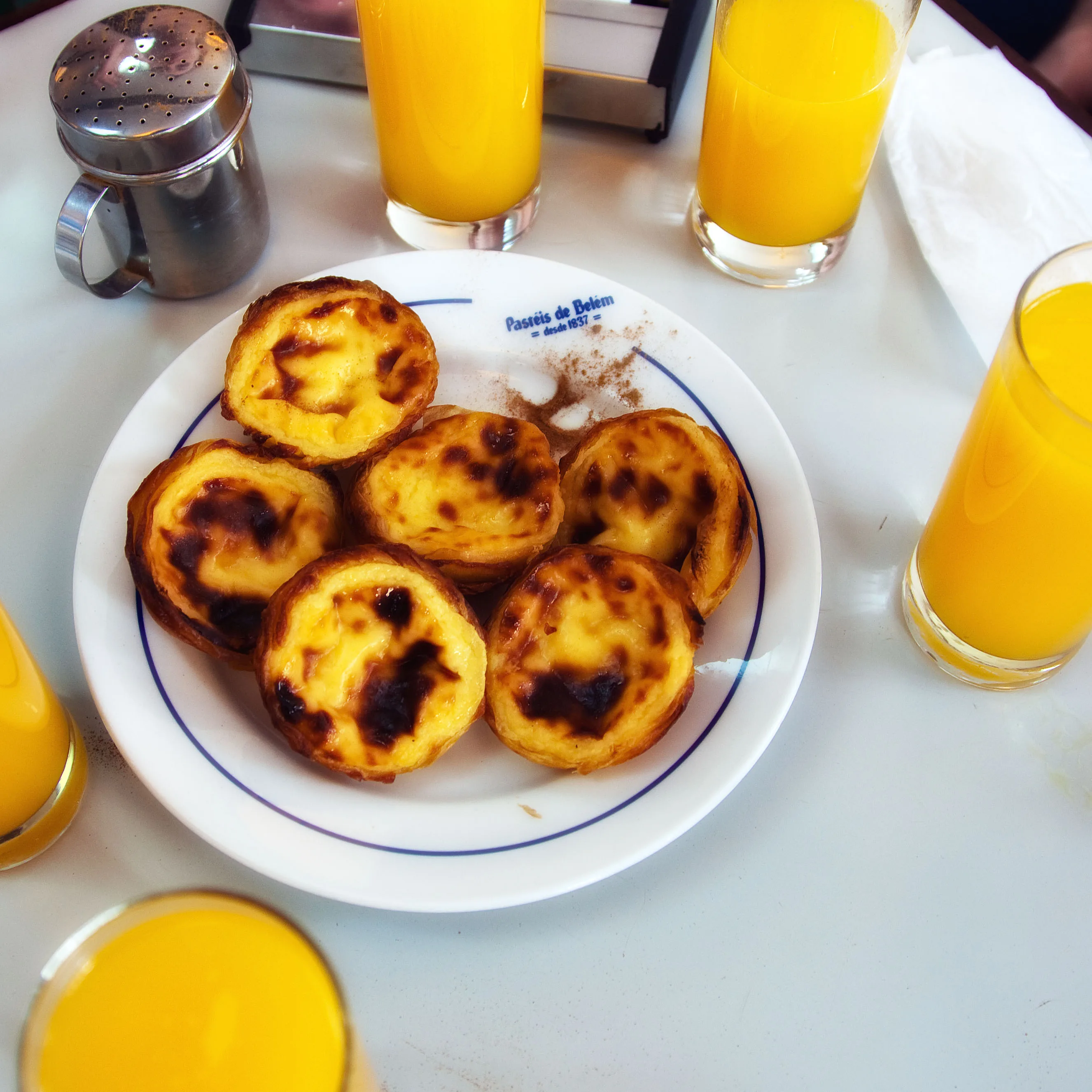
"Portugal's most famous pastry: an egg custard in puff pastry, blistered in a 300°C oven. The recipe is a secret held by three people. Eat it warm with cinnamon."
About Pastel de Nata
Portugal's most famous pastry and one of the world's great baked goods: a crisp, caramelised tartlet shell of laminated puff pastry holding a custard of egg yolk, cream and sugar that blisters and chars in a 300°C oven into dark leopard spots of caramel; invented by monks at the Jerónimos Monastery in Belém before 1837; the original recipe remains a secret held by three people; eaten warm with cinnamon.
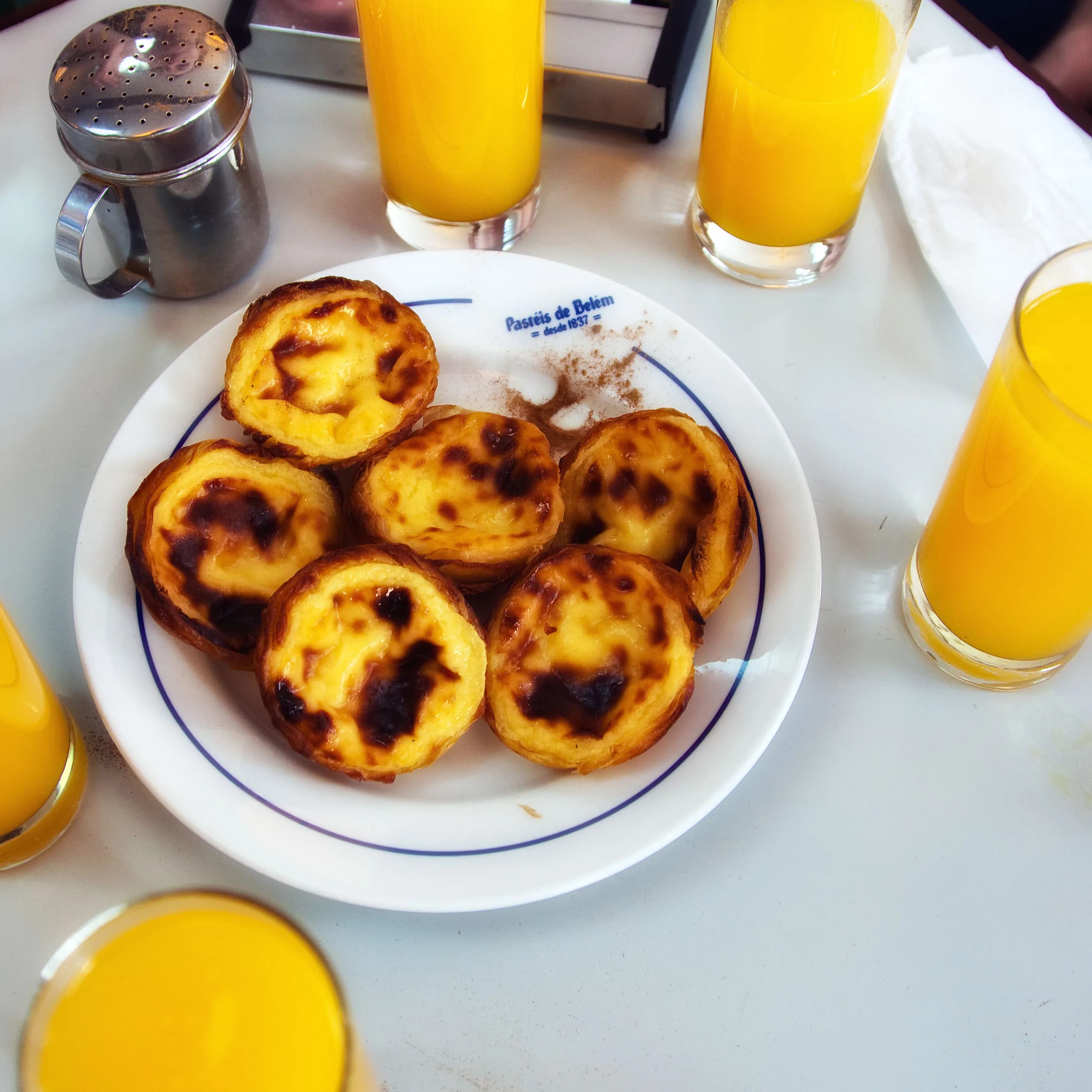
Pastel de Nata, a staple of Portugal's cuisine
The Tart
The pastel de nata is Portugal's most famous pastry: a crisp, caramelised puff-pastry shell holding a rich egg custard that blisters and chars in a very hot oven into dark spots. Small, warm and just set, it is eaten with a dusting of cinnamon and sugar. It is the country's edible icon.
A Monastery Origin
The tart was created by monks at the Jeronimos Monastery in Lisbon, who sold them to survive after the religious orders were dissolved in the nineteenth century. The original recipe passed to a nearby bakery in Belem, where a closely guarded version is still made. That secret recipe and that bakery remain the benchmark.
The Temperature
The defining technique is heat. The oven must be extremely hot so the surface of the custard caramelises into its characteristic leopard spots before the inside overcooks. At a lower temperature the custard sets dull and pale, missing the blistered top. Getting that scorch right is the whole craft.
Warm Is Everything
A pastel de nata is at its best warm from the oven, when the pastry shatters and the custard is barely set, soft but not liquid. Cold from a case, it is a lesser thing entirely. Eaten warm with cinnamon, ideally near its Belem birthplace, it is one of Lisbon's most concentrated pleasures.
What to Expect
At Pastéis de Belém the tart arrives warm from the oven, the surface blistered with dark caramel spots. Cinnamon is shaken on top. The pastry shatters and the custard flows slightly, not fully set, not liquid.
Why Try It
The pastel de nata is Lisbon's most concentrated food experience, the warm custard, the shattered pastry and the Belém context are inseparable.
✦ Photo Gallery
Insider Tips
Pastéis de Belém on Rua de Belém is the original bakery, always busy, always worth it.
Eat warm, room temperature pastéis de nata are a different and lesser experience.
The custard should be just barely set, if it's firm, it's overcooked.