America's most disputed food: Texas brisket over post oak, Kansas City burnt ends, Memphis dry-rub ribs. Each region is correct and all the others are wrong.
About BBQ
America's most argued-about regional food, smoked low and slow over wood for 4 to 18 hours; Texas brisket over post oak is the pinnacle: a bark of black pepper and salt crust concealing 11 kg of USDA Prime beef with a smoke ring reaching a centimetre deep; Kansas City's burnt ends are the fatty brisket tip twice-smoked; Memphis ribs need no sauce; the regional differences are a matter of state identity.
America's Most Argued Food
American barbecue is meat smoked low and slow over wood for hours, and it is among the most fiercely regional foods in the country. Texas is known for beef brisket, the Carolinas for pulled pork, Kansas City for its sauce and burnt ends, Memphis for ribs. Each region holds its own style to be the right one and the others wrong, and the differences run as deep as local identity.
“American barbecue is meat smoked low and slow over wood for hours, and it is among the most fiercely regional foods in the country.”
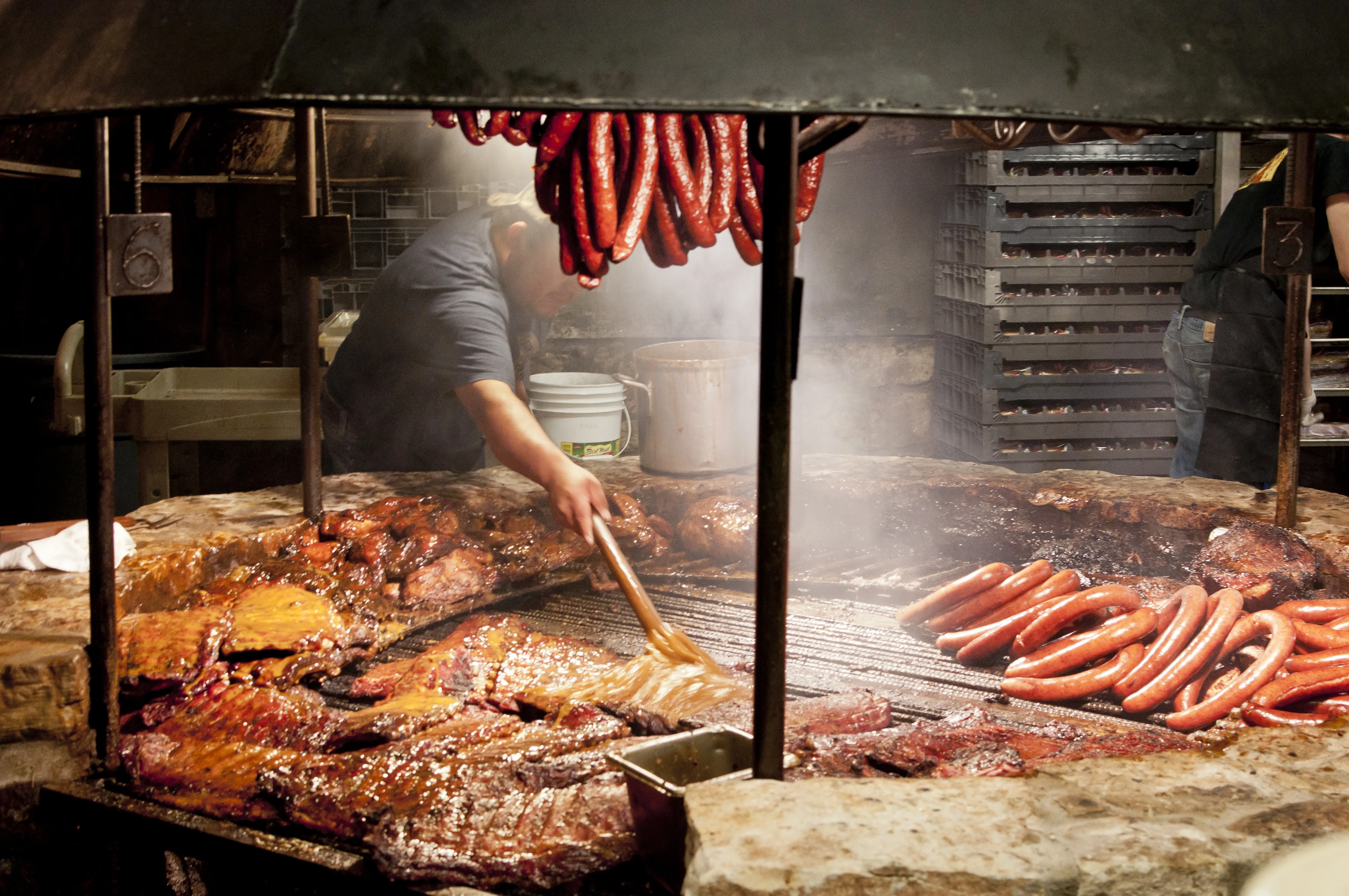
The Wood and the Smoke
The fuel is part of the flavour, and the wood is not interchangeable: post oak in Texas, hickory in much of the South, fruit woods elsewhere, each lending a different smoke character. The tell-tale sign of real wood smoke is the smoke ring, a band of pink just under the dark bark. Liquid smoke and shortcuts cannot reproduce it.
Low and Slow
The technique that unites all the regions is patience: tough, fatty cuts cooked for many hours at low temperature until the connective tissue breaks down and the fat renders. A great brisket can take the better part of a day, building a black, peppery bark outside and staying moist within. There is no rushing it.
A Regional Identity
What goes on the meat, and whether it is sauced at all, is itself a regional statement, from the vinegar of the Carolinas to the tomato-sweet sauce of Kansas City and the dry rubs of Memphis. The cut, the wood and the sauce together map a particular geography. American barbecue is less a single dish than a set of proud local traditions.
What to Expect
At Franklin Barbecue in Austin the brisket arrives already sliced, the bark visible on the outer edge, the smoke ring a centimetre deep. The fat is rendered to translucency. The inside is pink and moist.
Why Try It
American BBQ reflects regional identity through wood selection, meat cut and the presence or omission of sauce, each element tracing a particular geography.
Insider Tips
- Franklin Barbecue in Austin (arrive before 7 a.m. to queue) is the most celebrated address.
- Burnt ends (the twice-smoked brisket tip) at Joe's Kansas City are the other essential experience.
- The smoke ring (the pink band under the bark) indicates real wood smoke, not liquid smoke.