Catedral Metropolitana — modern landmark in Brazil
🏙️ ModernBrazil ·

Catedral Metropolitana

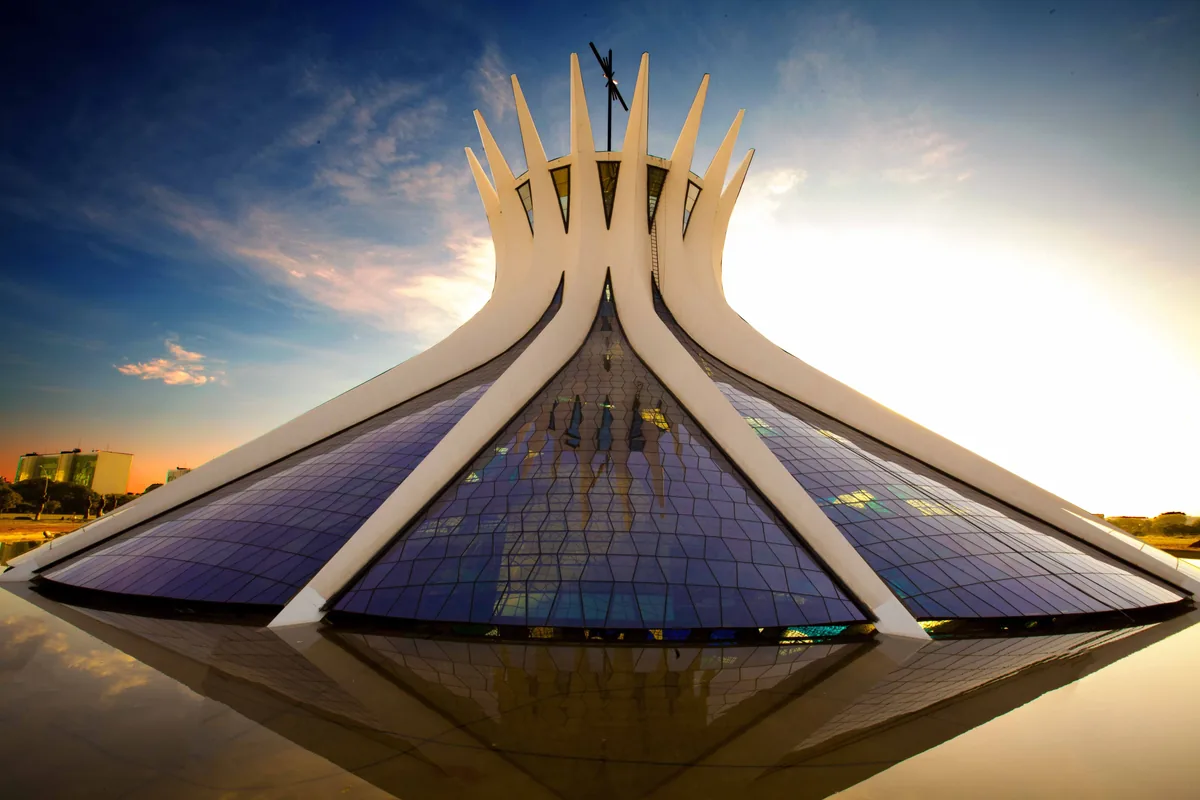
Oscar Niemeyer 1970 modernist masterpiece is defined by 16 parabolic concrete columns weighing 80 tons each; representing hands reaching toward the heavens; the nave is submerged below ground level and bathed in shifting blue and brown light from 2;000 square metres of stained glass; enter through the dark; sound-dampening tunnel at 4 pm; the transition into the soaring; sun-drenched interior is a sharp; architectural inhalation.

Twenty thousand people can stand inside this concrete volcano of a church, yet the only thing that truly dominates the room is a four-way waterfall of kaleidoscopic light pouring from the ceiling.

About Catedral Metropolitana

Cardinal D. Jaime de Barros Câmara initiated the project in the early 1960s, commissioning Edgar de Oliveira da Fonseca to create a structure that could match the ambition of a growing Rio de Janeiro. The first stone was laid in 1964, but the complexity of pouring such massive, inclined concrete walls meant the project took nearly two decades to reach completion. During these years, the cathedral became a symbol of the 'Brazilian Miracle'—a period of intense economic growth and architectural experimentation. The four stained-glass panels were designed to represent the four marks of the Church: One, Holy, Catholic, and Apostolic. By the time it was officially inaugurated in 1979, the cathedral had become a landmark of the Brutalist movement, standing as a stark, purposeful departure from the ornate, gold-drenched churches of the city’s colonial past.

Rising like a concrete Mayan pyramid from the asphalt grid of Rio’s central business district, the Catedral Metropolitana de São Sebastião defies every traditional expectation of sacred architecture. Most cathedrals whisper of the past through gothic arches or gilded baroque altars, but this brutalist giant speaks a language of futuristic geometry and raw industrial power. The exterior presents a rugged, honeycombed texture of grey cement that seems almost fortress-like against the bright Brazilian sun. Stepping inside, however, reveals a transformation of light that feels like entering a hollowed-out mountain or a celestial observatory. The sheer scale of the cavernous interior makes the city's frantic traffic outside disappear into a heavy, reverent silence.

Architect Edgar de Oliveira da Fonseca drew inspiration from the ancient stepped pyramids of the Yucatán, seeking to bridge the gap between indigenous Latin American forms and modern Catholic identity. Construction began in 1964 and spanned fifteen years, a period during which the city was rapidly reinventing itself through bold, modernist strokes. Fonseca rejected the traditional cruciform floor plan, opting instead for a conical structure that tapers toward a skyward cross. This design choice was both aesthetic and functional, allowing for a vast, unobstructed space that can hold twenty thousand people. When the cathedral was finally dedicated in 1979, it replaced a much smaller, colonial-era predecessor, signaling Rio’s arrival as a metropolis that wasn't afraid to break from its European stylistic shackles.

The air inside the nave is notably cooler than the humid streets of the Centro district, carrying the faint, clean scent of incense and old stone. Four towering floor-to-ceiling stained-glass windows dominate the walls, each reaching over sixty meters high. These windows cast long, vivid ribbons of ruby, emerald, and sapphire light across the pews, shifting slowly as the tropical sun moves overhead. You notice how the sound of a single footstep or a whispered prayer travels upward, disappearing into the dark, vaulted apex where a transparent cross serves as a skylight. Below the main floor, the Sacred Art Museum houses a collection of relics that offer a quiet, historical counterpoint to the monumental modernism above.

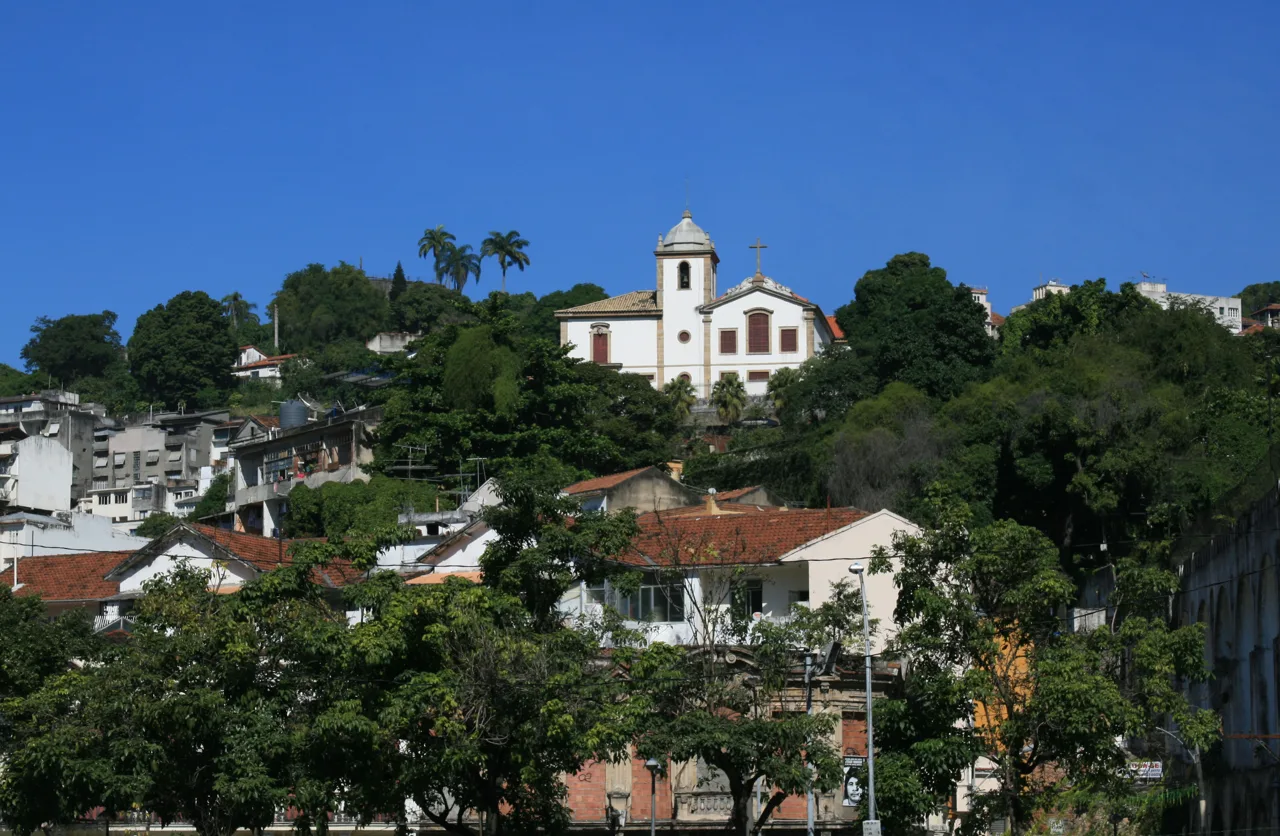
Navigating to the cathedral is best done via the Carioca or Cinelândia metro stations, followed by a short walk past the sleek headquarters of Brazil's national oil company. Approaching from the Arcos da Lapa offers the most striking visual contrast, as the white colonial arches of the old aqueduct frame the dark, volcanic silhouette of the cathedral. The surrounding plaza is often filled with office workers on their lunch breaks, providing a glimpse into the daily life of Rio that exists far away from the beaches of Copacabana. Entering through the massive bronze doors feels like a deliberate departure from the secular world, a transition into a space where gravity and light seem to operate by different rules.

The Experience

The transition from the blinding white heat of the street into the dim, cool womb of the nave is an immediate physical relief. You feel the immense volume of the space pressing against you, a sensation of being inside a massive, hollowed-out bell. Looking up, the way the dust motes dance in the beams of colored light gives the air a liquid quality. Many visitors fail to notice the acoustics; if you stand in the center and hum a low note, the building seems to vibrate back at you. Late afternoon is the most theatrical time to visit, as the sun hits the western glass panels and ignites the concrete interior with deep reds and purples. It is a place that manages to feel both ancient and like something from a distant, better future.

Why It Matters

This cathedral serves as a bold rejection of European mimicry, proving that Latin American spirituality could find a home in radical, indigenous-inspired forms. It marks a turning point in religious architecture where the church became a civic monument as much as a theological one. In a city defined by natural curves, its rigid, brutalist geometry provides a necessary and grounding architectural anchor.

Why Visit

Skip the tired colonial chapels for an afternoon and see what happens when faith meets the Space Age. You visit because the light inside this building creates a visceral emotional response that transcends religion. It is the only place in Rio where you can experience the crushing weight of concrete and the weightlessness of pure color in the same breath.

✦ Photo Gallery

Best Season

🌤 Visit during the summer months of December or January at midday, when the sun is directly overhead and pierces the top cross to illuminate the altar with a single, vertical shaft of light.

Quick Facts

Location

Brazil

Type

attraction

Insider Tips

  • 1

    Head to the basement museum to see the throne used by Dom Pedro II, a piece of imperial history hidden beneath the modernist concrete.

  • 2

    Photograph the exterior from the far side of Avenida República do Chile to capture the contrast between the cathedral's grey slopes and the blue glass of the Petrobras building.

  • 3

    Check the schedule for a choral performance; the acoustics in the conical nave are unlike any traditional concert hall in the world.

  • 4

    Walk the perimeter of the interior slowly to see how the colors of the stained glass blend on the floor like spilled ink.

  • 5

    Avoid visiting during the rush hour commute as the surrounding streets of the Centro district become a chaotic bottleneck of office workers and buses.

All of Brazil
Free Travel Tools
Games & Discover

Featured

Conquer the World

195 nations. One dart. Build your empire.

New Game

FateLand

Three darts. The world decides your fortune, heartbreak & legacy.

FateLand
Fortune. Heartbreak. Legacy. Throw & find out.
Show on Map