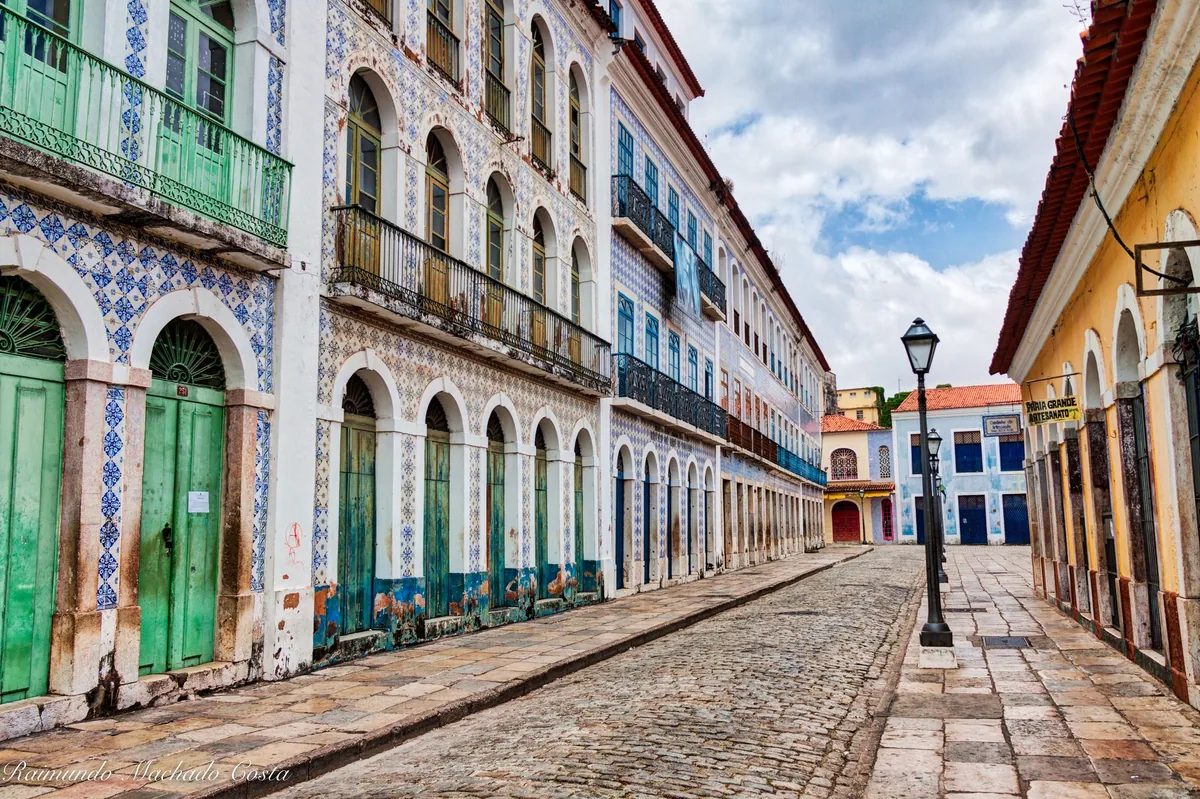
“Equatorial heat meets Portuguese porcelain in this coastal labyrinth, where the walls are armored in thousands of hand-painted tiles designed to bounce the sun's glare back toward the Atlantic.”
About Centro Histórico de São Luís
French explorers planted a cross here in 1612, but their 'France Équinoxiale' lasted only three years before Portuguese forces arrived to claim the coast. By the 1800s, the city had grown into a powerhouse of the cotton trade, a period of opulence that saw the arrival of the famous azulejos used to insulate the stone mansions against the relentless Maranhão humidity. The 1997 UNESCO World Heritage designation saved the district from a slow decay, preserving a grid of more than four thousand historic buildings. Unlike the baroque gold of Minas Gerais, the history here is written in the ceramic glaze of the mercantile class, reflecting a northern Brazil that was more closely connected to Lisbon by sea than it was to the distant, inland capitals.
Centro Histórico de São Luís in Brazil
Rainwater slicks the ceramic facades of the Reviver district, turning the city into a glistening gallery of Portuguese azulejos that have survived the salt-heavy air of the Maranhão coast for centuries. Inside the Centro Histórico of São Luís feels like navigating a sprawling, sun-drenched porcelain museum where the architecture serves a clever thermal purpose. These tiles were not merely decorative; they were designed to reflect the fierce equatorial sun and protect the thick stone walls from the torrential rains of the Amazonian fringe. The resulting aesthetic is a compelling repetition of blues, yellows, and whites that frame narrow, sloping streets where the Atlantic breeze carries the faint, steady pulse of reggae music.
Inside the Centro Histórico of São Luís feels like navigating a sprawling, sun-drenched porcelain museum where the architecture serves a clever thermal purpose.
History
French privateers led by Daniel de La Touche established this island foothold in 1612, naming it after King Louis XIII, making it the only Brazilian state capital founded by France. The Portuguese eventually seized the territory, transforming the settlement into a crowded cotton and sugar port that demanded a grander architectural expression. Throughout the 18th and 19th centuries, wealthy merchants imported thousands of hand-painted tiles from Lisbon and Porto to clad their mansions, creating a uniform elegance that defied the rugged surroundings. While the economic tides eventually ebbed, leaving many of the grand estates to the mercy of the jungle humidity, a major restoration effort in the late 1980s breathed life back into the stone arches and wrought-iron balconies. Today, the district remains born from a time when Brazil’s north looked directly toward Europe for its cultural and stylistic cues.
The air in the historic center carries
The air in the historic center carries a heavy, humid sweetness, smelling of tropical fruit fermenting in the markets and the sharp tang of the nearby sea. The way the light bounces off the glazed tiles at mid-morning, creating a soft, blue-tinted glow that illuminates even the deepest shadows of the Beco do Catarino. Footsteps echo sharply against the uneven cobblestones, often accompanied by the distant, rhythmic thrum of a percussion rehearsal in a nearby courtyard. The majority focus on the grandeur of the Palácio dos Leões, but the real magic is found in the crumbling doorways where the original 19th-century tilework remains cracked and unpolished, telling a story of survival. As evening approaches, the district sheds its quiet, museum-like atmosphere for a vibrant street life. Tables spill out onto the squares, and the sound of Maranhão’s unique brand of roots reggae begins to dominate the soundscape. A remnant of the temperature drop just enough to make a walk down the Rua do Giz bearable, watching as the locals lean against the massive stone portals to escape the lingering heat. It is a place that feels simultaneously trapped in the colonial past and fiercely alive in a rhythmic, modern present.
Reaching the heart of the Reviver district usually
Reaching the heart of the Reviver district usually involves a taxi or bus ride from the modern neighborhoods of Ponta d'Areia or Renascença, crossing the bridges that separate the island’s contemporary life from its ancient core. Most explorers begin their journey at the Praça Dom Pedro II, using the towering palm trees of the governor’s palace as a landmark. Exploring on foot is the only practical option, as the narrowest alleys are strictly pedestrian and frequently involve steep, weathered stairs. Arriving by sea via the ferry from Alcântara provides the most dramatic view, as the city’s tiled skyline rises slowly from the mudflats of São Marcos Bay like a shimmering, ceramic mirage.
Most explorers begin their journey at the Praça Dom Pedro II, using the towering palm trees of the governor’s palace as a landmark.
The Experience
The glare off the blue-and-white tiles can be blinding at noon, forcing you to find shade under the deep stone arches of the Casa das Tulhas market. The first thing you register is that the city has a unique cadence; it is slower than the south, with a lingering, salt-air fatigue that makes every cold glass of Guaraná Jesus feel essential. Reggae music is the unexpected heartbeat of these streets, a cultural import that found its soul here decades ago and never left. The vibration of the bass through the cobblestones while you watch the sunset over the bay from the ramparts. Just about everyone miss the intricate stone drainage systems carved into the street corners, designed by 18th-century engineers to handle the sudden, violent rains that can wash over the city in minutes. It is a place of textures, the smoothness of glaze, the roughness of volcanic stone, and the damp warmth of the northern wind.
Why It Matters
São Luís stands as the most complete and authentic example of a Portuguese colonial town in the Americas. It matters because it represents a rare fusion of French origins, Portuguese aesthetics, and a deep Afro-Brazilian cultural identity that manifested in the Bumba Meu Boi festivals. It is a living record of the 19th-century mercantile wealth that once rivaled the largest ports in Europe.
Why Visit
The visual contradiction of a city that looks like a Lisbon suburb but dances like a Caribbean island. You come to São Luís to see the tiles, but you stay because it is the only place in Brazil where you can walk through a 17th-century fortress while listening to the best reggae collection in the Southern Hemisphere. It is an aesthetic experience that feels entirely disconnected from the rest of the country.
✦ Insider Tips
- 1
Head to the Casa das Tulhas market on a Friday evening to experience the local tradition of drinking 'tiquira', a potent purple liquor made from manioc.
- 2
Look for the 'azulejos de tapete' or carpet tiles on the Rua do Giz, which are the rarest and most intricate patterns found in the city.
- 3
Time your arrival for the low tide if coming by boat, as the massive tidal shifts in São Marcos Bay can change the city's coastal profile by several meters in an hour.
- 4
Visit the Museu do Reggae to understand why this northern city became the unlikely Jamaican capital of Brazil.
- 5
Wear footwear with rubber soles, as the centuries of rain have polished the cobblestones to a precarious, glass-like finish.