Six million soapstone triangles shield the concrete heart of this mountain giant, each one hand-pasted by volunteers who hid secret messages beneath the statue’s skin before it was hoisted into the clouds.
About Cristo Redentor
The Catholic Circle of Rio proposed the monument in 1920, fearing a tide of godlessness in the wake of World War I. Engineer Heitor da Silva Costa won the commission, but the sheer technical challenge of building a 635-ton structure on a narrow mountain peak required the expertise of Albert Caquot. Between 1922 and 1931, the project became a feat of international logistics, with the head and hands sculpted in clay in a Parisian suburb before being shipped to Brazil in pieces. Lightning struck the statue even during its inauguration, a recurring theme that has necessitated constant maintenance over the decades. Despite the initial religious intent, the opening ceremony on October 12, 1931, transformed the site into a national symbol. The railway that carries visitors today actually predates the statue, having been inaugurated by Emperor Dom Pedro II in 1884 specifically to facilitate excursions to the viewpoint that would eventually host the Christ.
What Cristo Redentor in Brazil is
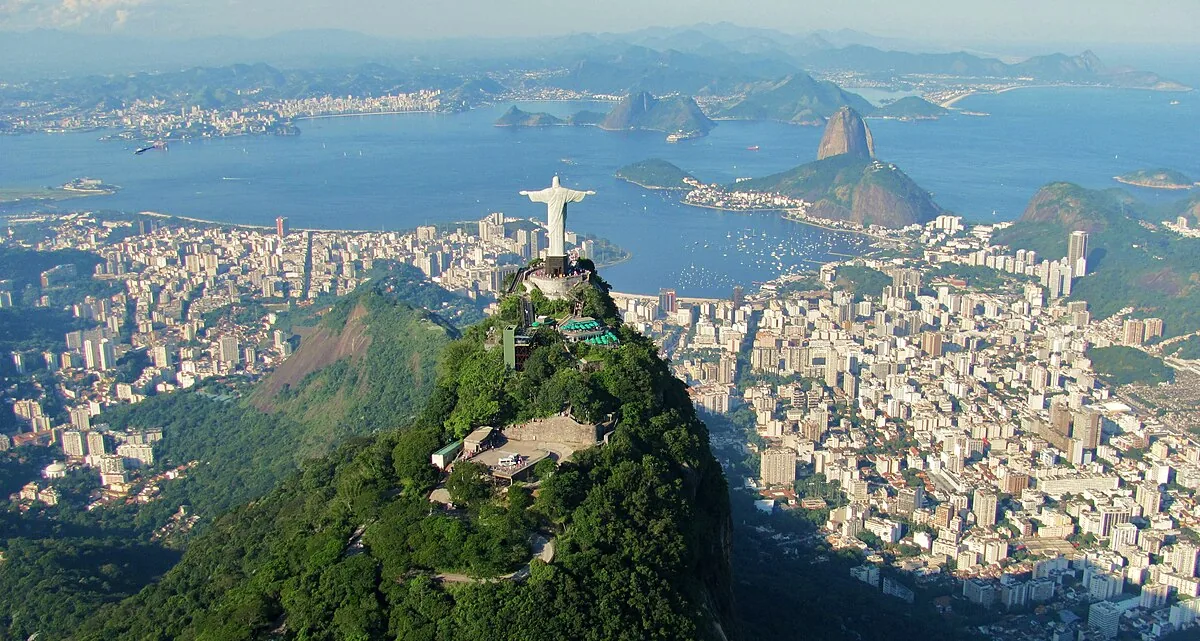
High above the chaotic pulse of Rio de Janeiro, the granite peak of Corcovado is a pedestal for a figure that has become the silent witness to Brazil’s history. Reaching skyward through the thick Atlantic Forest, the statue stands seventy feet taller than the Statue of Liberty, yet its presence feels oddly intimate when the clouds part. Most people expect a cold, distant monument, but the soapstone tiles covering the structure catch the tropical light in a way that suggests softness rather than stone. To stand at the base is to realize that the figure does not merely overlook the city; it seems to hold the entire Guanabara Bay in a wide, permanent embrace.
Heitor da Silva Costa envisioned a monument
Heitor da Silva Costa envisioned a monument that would reclaim the city’s spiritual heart following the separation of church and state. The design evolved from a Christ carrying a cross into the open-armed sentinel we see today, a collaboration that stretched across the Atlantic to the studio of French-Polish sculptor Paul Landowski. Construction required engineers to haul massive concrete blocks up a precarious railway, battling lightning strikes and torrential rains throughout the 1920s. Thousands of women gathered to glue tiny, triangular soapstone tiles onto sheets of mesh, often scribbling prayers and secrets on the back of the stones before they were permanently affixed to the concrete skin. These millions of individual fragments now form a mosaic that protects the core from the relentless salt air and temperature shifts of the rainforest.
The journey begins in the Cosme Velho neighborhood , where the Cog Railway creaks through the Tijuca National Park. Humidity clings to the air, smelling of damp earth and crushed ferns, as the red train climbs the steep incline. Monkeys often swing through the canopy just feet from the windows, indifferent to the pilgrims and tourists above. Upon reaching the summit, the scale of the landscape takes over. The wind whips across the ridge with surprising force, carrying the faint sound of Rio’s traffic and the distant crashing of Atlantic waves. Looking down, the Maracanã Stadium looks like a child’s toy, and the Sugarloaf Mountain sits like a stray pebble in the turquoise water. As evening approaches, the white soapstone begins to glow with a pale, ghostly luminescence before the floodlights roar to life.
Securing a seat on the funicular train offers
Securing a seat on the funicular train offers the most atmospheric approach, though the vans from Largo do Machado provide a quicker transit through the winding mountain roads. Those visiting rush for the elevators at the top, but the flight of escalators allows the statue to reveal itself slowly, inch by inch, until the head finally clears the horizon. Arriving before the first mist clears provides a rare chance to see the figure floating on a bed of white clouds, completely severed from the city below. The atmosphere shifts from quiet reverence in the early morning to a vibrant, loud celebration of the view by midday, reflecting the dual nature of Rio itself.
The Experience
Standing beneath the fingertips of the Christ, you feel the vibration of the wind as it whistles through the reinforced concrete. At seven hundred meters is noticeably thinner and cooler than the sweltering streets of Ipanema, often smelling of the ozone that precedes a mountain storm. Right away you see how the light changes the color of the statue from a pale grey to a warm cream as the sun moves toward the horizon. The crowd’s energy is a frantic mix of religious awe and digital vanity, yet there is a specific moment when the clouds roll in and swallow the platform, plunging everyone into a silent, white void. In that brief window, the noise of the city vanishes, and the statue feels like an ancient, solitary lighthouse. The majority forget to look at the small chapel of Nossa Senhora Aparecida tucked into the base, where the quiet murmur of prayer provides a grounding contrast to the spectacle outside.
Why It Matters
Beyond its status as an icon of faith, the monument serves as a masterwork of Art Deco engineering and proof of the resilience of the Rio spirit. It marks the transition of Brazil into a modern global power while honoring the traditional craftsmanship of the thousands of women who assembled its protective mosaic. Culturally, it functions as the city’s compass, a constant navigational point that ensures no one in Rio is ever truly lost.
Why Visit
Ignore the postcards and the crowded gift shops because the real draw is the vertigo-inducing perspective of the world's most dramatic urban geography. You can see the exact seam where the rainforest attempts to reclaim the skyscrapers and where the Atlantic punches into the bay. No other viewpoint on earth offers this specific, visceral sense of a city struggling to contain the wilderness that surrounds it.
✦ Photo Gallery
Best Season
🌤 Time your visit for the clear, crisp mornings of June or July when the humidity drops and the visibility extends all the way to the Organ Mountains.
Quick Facts
Entry
Around 100 BRL or more, usually including the official van or train up; prices vary by access option.
Opening hours
Open daily, roughly 8am to 7pm.
Time needed
About 2 to 3 hours including transport up and down.
Best time to visit
Time your visit for the clear, crisp mornings of June or July when the humidity drops and the visibility extends all the way to the Organ Mountains.
Getting there
Atop Corcovado mountain in Rio de Janeiro; reached by the cog train from Cosme Velho or official vans, not private car.
Location
Rio de Janeiro, Brazil
Type
attraction
Insider Tips
- 1
Book the 8:00 AM train on a Tuesday to avoid the cruise ship crowds that swarm the summit by midday.
- 2
Sit on the right side of the train during the ascent for the first unobstructed views of the city through the forest gaps.
- 3
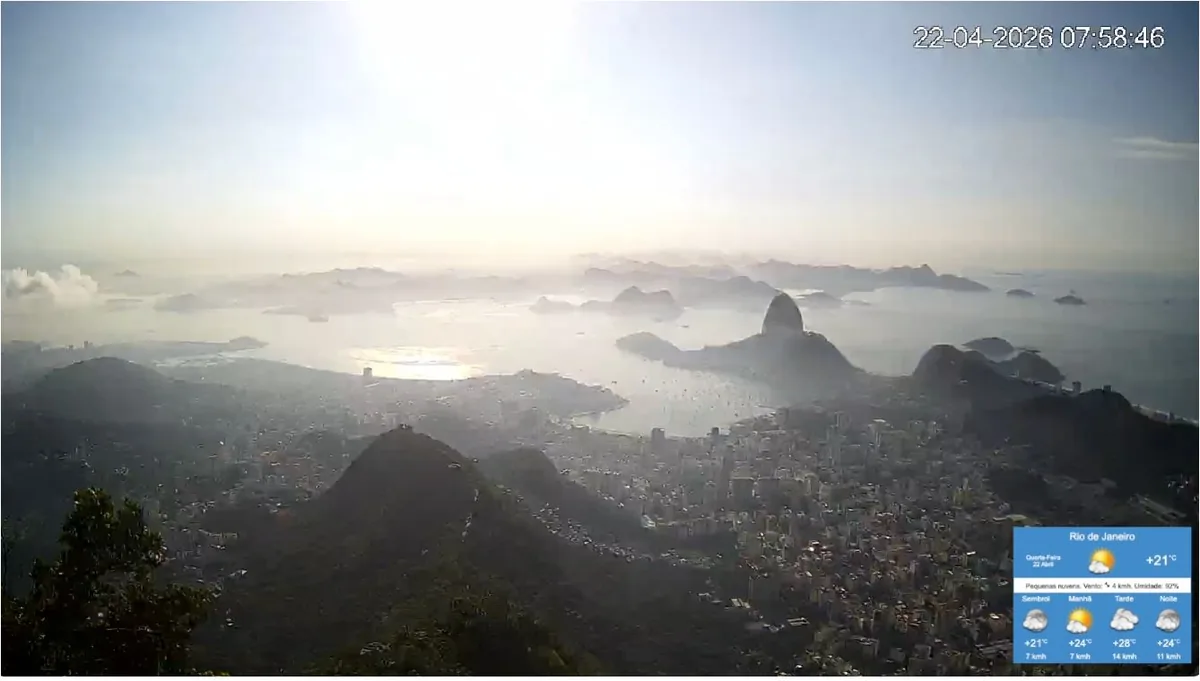
Check the 'Corcovado' weather webcam ten minutes before buying a ticket to ensure the statue isn't completely buried in 'mico' or mountain mist.
- 4
Walk to the very back of the base to find the tiny, often-missed sanctuary where the original architectural plans are sometimes displayed.
- 5
Wait for a passing cloud to move through the platform; the temperature will drop ten degrees in seconds, providing the true mountain experience.