Igreja de São Francisco de Assis — Brazil
🏙️ ModernBrazil

Igreja de São Francisco de Assis

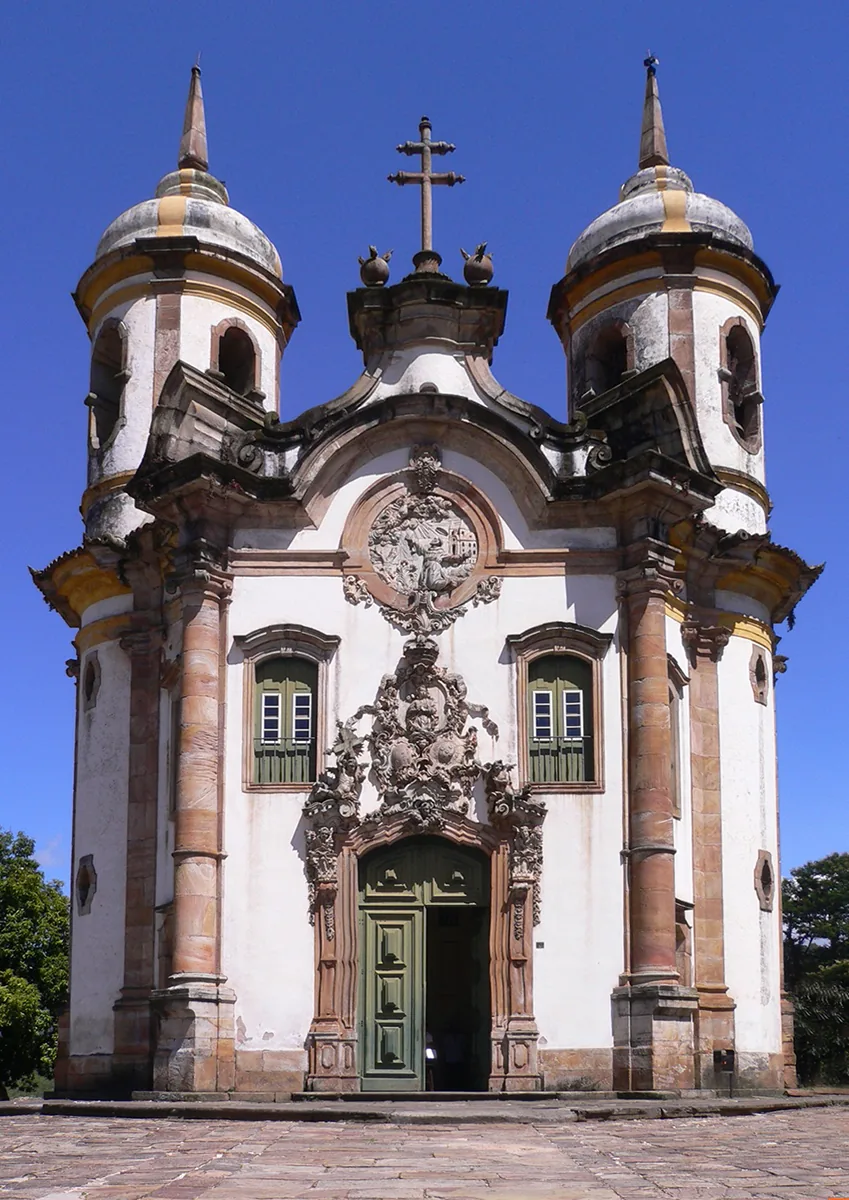
Aleijadinho 1766 masterpiece represents the height of Brazilian Rococo; featuring soapstone carvings and a ceiling painted by Mestre Ataíde depicting a mulatto Madonna; the church sits atop a sun-bleached hill of laterite-red earth; enter the nave at 3 pm; the western light illuminates the hand-carved cedar altars; turning the gold leaf into a liquid fire against the cool; white-washed stone walls.

LocationBrazilTypeattraction🌤 Visit during the dry months between June and August when the mountain mist clears early and the sunset light stays on the facade for nearly an extra hour.Search on Map

A sculptor who could no longer hold a chisel with his fingers carved these soapstone angels by binding his tools to his wrists with leather straps.

About Igreja de São Francisco de Assis

The Third Order of Saint Francis of Penance commissioned the church in 1766, during the waning years of the Minas Gerais gold rush. Aleijadinho, the son of a Portuguese architect and an enslaved African woman, was chosen to lead the design, eventually creating a structure that broke away from the rigid rectangles of the era in favor of flowing, circular towers. Between 1766 and 1794, the facade and the internal carvings were completed, representing the peak of the Brazilian Rococo. Ataíde later spent a decade, from 1801 to 1812, painting the nave’s ceiling using pigments derived from local minerals and clays. This partnership between sculptor and painter created a unified aesthetic that served as a transition from the heavy gold of the early 18th century to a more graceful, airy, and distinctly American expression of faith.

High atop the undulating hills of Ouro Preto, a church carved from soapstone and local gold stands as the final word on Brazilian Baroque. The Igreja de São Francisco de Assis does not merely sit on the landscape; its twin cylindrical towers and graceful, feminine curves seem to have been coaxed directly from the iron-rich earth of Minas Gerais. While the exterior displays a masterclass in colonial symmetry, the true soul of the building lies in the sweat and genius of Aleijadinho, the sculptor who labored through debilitating illness to finish his masterpiece. Sunlight hits the soapstone medallion over the entrance, turning the grey-green rock into a luminous silver that contrasts sharply with the terracotta rooftops of the surrounding town.

High atop the undulating hills of Ouro Preto, a church carved from soapstone and local gold stands as the final word on Brazilian Baroque.

Igreja de São Francisco de Assis in Brazil — photo 2

Igreja de São Francisco de Assis, Brazil

Gold fueled the rise of this mountain outpost in the 1700s, but it was the Third Order of Saint Francis that provided the creative spark for this particular sanctuary. Work began in 1766 under the direction of Antônio Francisco Lisboa, better known as Aleijadinho, or the Little Cripple. Despite losing the use of his hands and feet to a degenerative disease, he continued to carve by having chisels strapped to his wrists, a testament to a creative spirit that refused to be extinguished. Every angel, every curve of the soapstone portal, and every ornate pulpit inside was touched by his singular vision. By the time the ceiling was painted by Manuel da Costa Ataíde in the early 1800s, the church had become the definitive example of an art style that was no longer just Portuguese, but purely, defiantly Mineiro.

Entering the nave feels like stepping into a warm, wooden cathedral of light where the scent of old cedar and beeswax hangs heavy in the air. Looking up, you are met with Ataíde’s magnificent trompe l'oeil ceiling, a blue-hued vision of the Virgin Mary surrounded by angels that appear to be floating in the open sky. The acoustics here are soft, dampened by the intricate carvings that cover nearly every square inch of the sanctuary. You notice that the angels have distinct, multi-ethnic features, a radical choice by the artists that reflected the diverse, often oppressed population of the mining district. During the quiet hours of the afternoon, the mountain wind whistles through the heavy doors, carrying the faint chime of bells from the other twelve churches scattered across the neighboring peaks.

Walking the steep, uneven cobblestones of Ouro Preto is the only way to earn the view of São Francisco. The church sits adjacent to the Largo do Coimbra, home to a bustling soapstone market where the sound of chisels hitting stone creates a permanent percussive backdrop. Most travelers arrive in town via the winding bus route from Belo Horizonte, a three-hour journey that prepares you for the dramatic topography of the region. Reaching the church plaza requires a final climb up a narrow alleyway where the white-washed walls of colonial houses lean inward, eventually opening up to reveal the church’s spectacular silhouette against the backdrop of the Pico do Itacolomi.

Walking the steep, uneven cobblestones of Ouro Preto is the only way to earn the view of São Francisco.

The Experience

The mountain air in Ouro Preto is thin and crisp, making the warmth of the sun on the church's stone plaza feel like a physical embrace. You feel the grit of the ancient cobblestones beneath your boots as you approach the portal, noticing how the soapstone feels strangely soft, almost like wax, to the touch. Most visitors spend their time looking at the altar, but the real magic is in the side pulpits, where Aleijadinho's wood carvings are so delicate they look like lace. You notice that at exactly four o'clock, the light enters the high windows and hits the blue pigments of the ceiling, making the painted sky look more real than the one outside. The chatter of the market vendors below fades into a low hum, leaving you in a space that feels suspended between the wealth of the gold mines and the humility of the Franciscan monks. It is a moment of profound stillness in a town that feels like it was built on the edge of the world.

Why It Matters

This church is the crowning achievement of the only truly original art movement to emerge from colonial Brazil. It represents the triumph of the human spirit over physical suffering and the birth of a national identity through the hands of a mixed-race genius. Culturally, it is the heart of a UNESCO-protected landscape that preserves the memory of the men and women who built the wealth of an empire while creating something eternal.

Why Visit

Skip the gold-drenched cathedrals of the coast to see what happens when art is born from struggle and local stone. You visit because São Francisco de Assis offers an intimacy that larger monuments lack; it is a handwritten letter in stone rather than a printed decree. No other place in Brazil lets you see the literal fingerprints of a master so clearly in the rock.

Insider Tips

  • 1

    Arrive early in the morning to see the soapstone change color from a dark mossy green to a bright, silver-grey as the dew evaporates.

  • 2

    Bargain for a small soapstone replica at the market stalls right outside the church; the carvers there use the same local stone as Aleijadinho did centuries ago.

  • 3

    Bring a small pair of binoculars to appreciate the individual expressions of the angels on the ceiling, as each face is unique.

  • 4

    Walk behind the main altar to see the intricate woodwork of the sacristy, a space many tourists miss because it requires a separate, small fee.

  • 5

    Look for the Pico do Itacolomi from the church steps; the mountain peak was used by colonial explorers as a natural compass to find Ouro Preto.

Free Travel Tools
Games & Discover

Featured

Conquer the World

195 nations. One dart. Build your empire.

New Game

FateLand

Three darts. The world decides your fortune, heartbreak & legacy.

FateLand
Fortune. Heartbreak. Legacy. Throw & find out.
Show on Map