Jardim Botânico — nature landmark in Brazil
🌿 NatureBrazil

Jardim Botânico

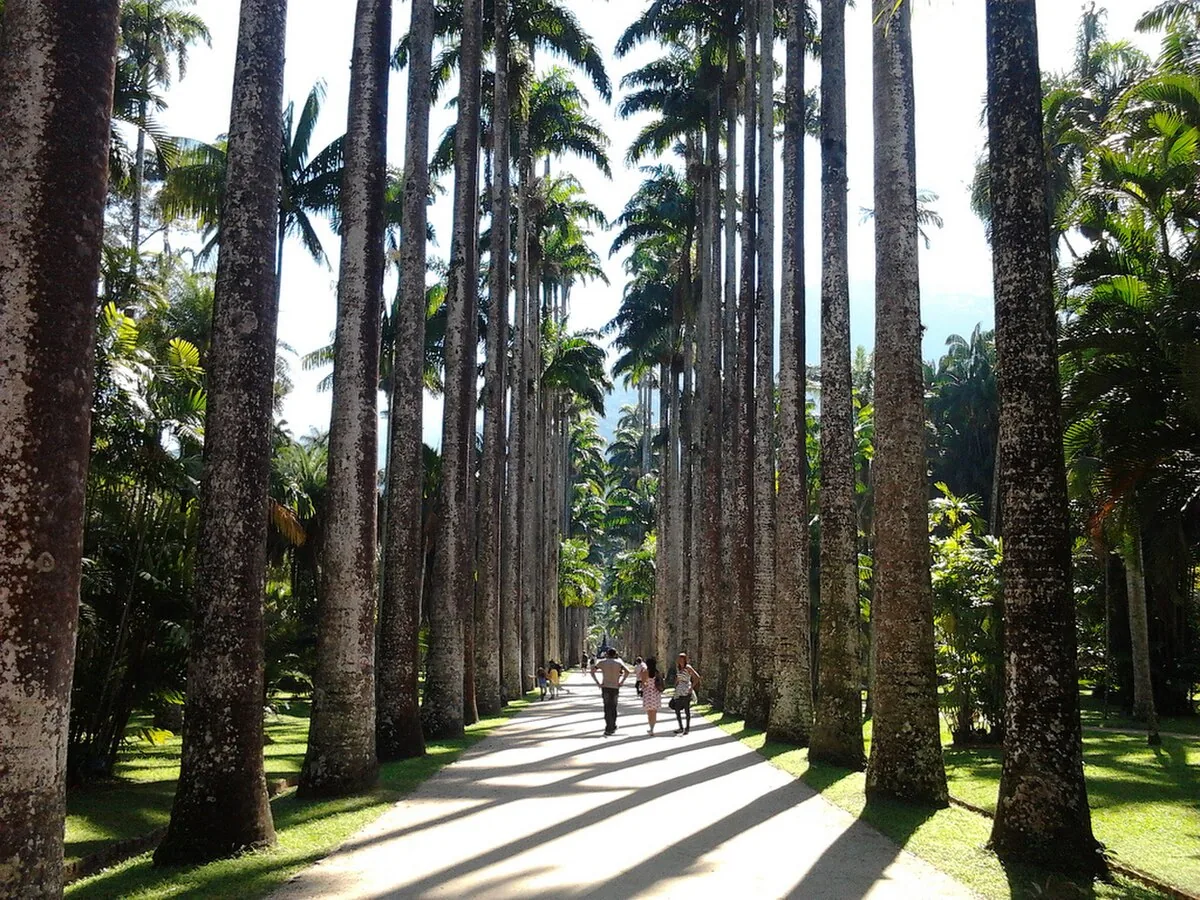
Founded in 1808 by King John VI; this 140-hectare sanctuary is defined by the Avenue of Royal Palms—134 trees stretching 720 metres into the sky; the park houses over 6;500 species of tropical flora amidst neoclassical fountains; walk the central path at 8 am; the canopy creates a cool; green tunnel where the sound of toucans is sharp and the air smells of damp earth and orchids.

Scroll to read

One single palm tree planted by a fleeing Portuguese prince in 1808 birthed the entire emerald forest of towering trunks that now guards the entrance to this royal sanctuary.

About Jardim Botânico

Dom João VI arrived in Rio with a cargo of exotic seeds and a need to prove the viability of the Brazilian colony as the new seat of the Portuguese Empire. Between 1808 and 1822, the garden functioned as a secret garden of the crown, where Asian spices were cross-bred with Amazonian flora to see what would thrive in the tropical soil. The famous Avenue of Royal Palms was planted in 1842, using seeds from the original tree that the Prince had personally cultivated. Throughout the 20th century, the garden survived the rapid urbanization of Rio, evolving into a world-class research institution that played a pivotal role in documenting the flora of the Atlantic Forest. It remains a rare surviving piece of the imperial landscape, where the grandeur of the 19th-century court meets the raw power of the South American jungle.

Jardim Botânico in Brazil
Jardim Botânico — Brazil

Shadows of giant imperial palms stretch across the gravel paths of Rio de Janeiro’s Jardim Botânico, creating a rhythmic cadence of light and dark that has defined this sanctuary since the early nineteenth century. Tucked beneath the sheer granite face of the Corcovado mountain, this 140-hectare living museum feels like a deep, collective exhale away from the city's coastal roar. The air here carries a heavy, floral humidity, smelling of damp earth and the sweet, vanilla-like musk of blossoming orchids. Over six thousand species of tropical and subtropical plants compete for sunlight under a canopy so dense it creates its own microclimate, cooling the temperature by several degrees the moment you pass through the iron gates.

Tucked beneath the sheer granite face of the Corcovado mountain, this 140-hectare living museum feels like a deep, collective exhale away from the city's coastal roar.

Jardim Botânico in Brazil — photo 2
Jardim Botânico, Brazil

Prince Regent Dom João VI established the garden in 1808 shortly after the Portuguese Royal Court fled Napoleon’s forces and settled in Brazil. Originally intended as an acclimatization garden for valuable spices like nutmeg, pepper, and cinnamon brought from the East Indies, the site quickly evolved into a center for botanical research. The Prince himself planted the first 'Palma Mater,' the ancestor of the towering colonnade of imperial palms that now greets visitors at the main entrance. For decades, only the aristocracy could walk these paths, and every palm tree of its kind in Brazil today shares a genetic lineage with that single royal seed. By the time the garden opened to the public in the late 1800s, it had transformed from a colonial laboratory into a lush symbol of the nation’s staggering biodiversity.

A walk down the Avenue of Royal Palms provides a sense of verticality that rivals the skyscrapers of downtown, with smooth, grey trunks shooting forty meters into the sky like organic pillars. You notice the soundscape shifts from the distant hum of traffic to the sharp, melodic whistles of toucans and the rustle of capuchin monkeys moving through the jackfruit trees. Light filters through the enormous ribbed leaves of the Victoria Amazonica water lilies, which float in the central pond like green, high-walled floating docks. Inside the glass-and-iron orchidarium, the atmosphere becomes intimate and still, showcasing thousands of delicate blooms that range from vibrant magentas to ghostly whites.

In the quieter corners near the sensory garden, the smell of crushed herbs and medicinal plants provides a grounding contrast to the theatrical scale of the forest. You feel the grit of the ancient paths beneath your feet as you wander toward the ruins of the old gunpowder factory, a stark reminder of the garden's utilitarian origins. As the afternoon sun dips behind the mountain, the greenery takes on a deep, saturated hue, and the cooling breeze from the Atlantic forest sweeps through the glades. It is a moment of profound sensory clarity where the city feels like a distant memory.

In the quieter corners near the sensory garden, the smell of crushed herbs and medicinal plants provides a grounding contrast to the theatrical scale of the forest.

Reaching the garden involves a journey into the southern zone of Rio, easily accessible by the Metro na Superfície bus from Botafogo station. The entrance on Rua Jardim Botânico is unassuming, but the transition into the grounds is immediate and jarring. Most visitors arrive in the heat of midday, yet the most rewarding approach is to reach the gates at opening time when the dew still clings to the bromeliads and the wildlife is at its most active. Biking from the nearby Rodrigo de Freitas Lagoon offers a scenic route that connects the city’s water, mountains, and forest in a single morning circuit.

The Experience

The temperature drops the moment you step under the canopy, a relief so physical it feels like a cool cloth pressed to your forehead. You feel the vibration of the jungle around you, from the heavy thud of a falling fruit to the electric buzz of cicadas that intensifies with the heat. You notice how the light becomes a dappled, green-tinted haze, making the Victorian fountains look like artifacts from a sunken civilization. Most people miss the Japanese garden tucked away in the rear, where the silence is absolute and the manicured bonsai offer a sharp contrast to the wild tangles of the neighboring woods. Standing by the lily pads, you see the reflection of Christ the Redeemer perched on the mountain above, a reminder of the city's presence, yet the smell of damp fern and earth makes you feel thousands of miles away. It is a place that rewards the slow walker and the deep breather.

Why It Matters

Jardim Botânico serves as the botanical heart of Brazil, preserving a genetic library of the Atlantic Forest that is increasingly under threat elsewhere. It is a living intersection of European Enlightenment ideals and tropical reality, where colonial history is literally rooted in the earth. Culturally, it remains a sanctuary for Rio’s residents, providing a necessary mental and physical escape from the frantic pace of Carioca life.

Why Visit

Visit because this is the only place in the world where you can stand in the shadow of imperial history while a wild toucan flies over your head. It offers a sophisticated, quiet beauty that the chaotic beaches cannot provide, allowing you to experience the Amazonian spirit without leaving the city limits. It is a masterclass in the theater of nature.

✦ Insider Tips

  • 1

    Head to the 'Caminho do Meio' to see the historical stone portal salvaged from the original Fine Arts building that once stood in the city center.

  • 2

    Wear a natural insect repellent as the shade and water ponds make this a paradise for local mosquitoes that ignore standard synthetic sprays.

  • 3

    Look up into the tall trees near the fountain of the Muses to spot the small marmosets that often gather to watch tourists.

  • 4

    Visit the garden's library if you have an interest in rare 19th-century botanical illustrations; it is one of the most significant collections in South America.

  • 5

    Eat breakfast at the garden's cafe, La Bicyclette, where the smell of fresh croissants competes with the scent of the nearby eucalyptus grove.

Free Travel Tools
Games & Discover

Featured

Conquer the World

195 nations. One dart. Build your empire.

New Game

FateLand

Three darts. The world decides your fortune, heartbreak & legacy.

FateLand
Fortune. Heartbreak. Legacy. Throw & find out.
Show on Map