“Seventy-four meters of hollow space separate this floating glass box from the pavement, a daring architectural feat that turned a museum into the city's most democratic roof.”
About Museu de Arte de São Paulo
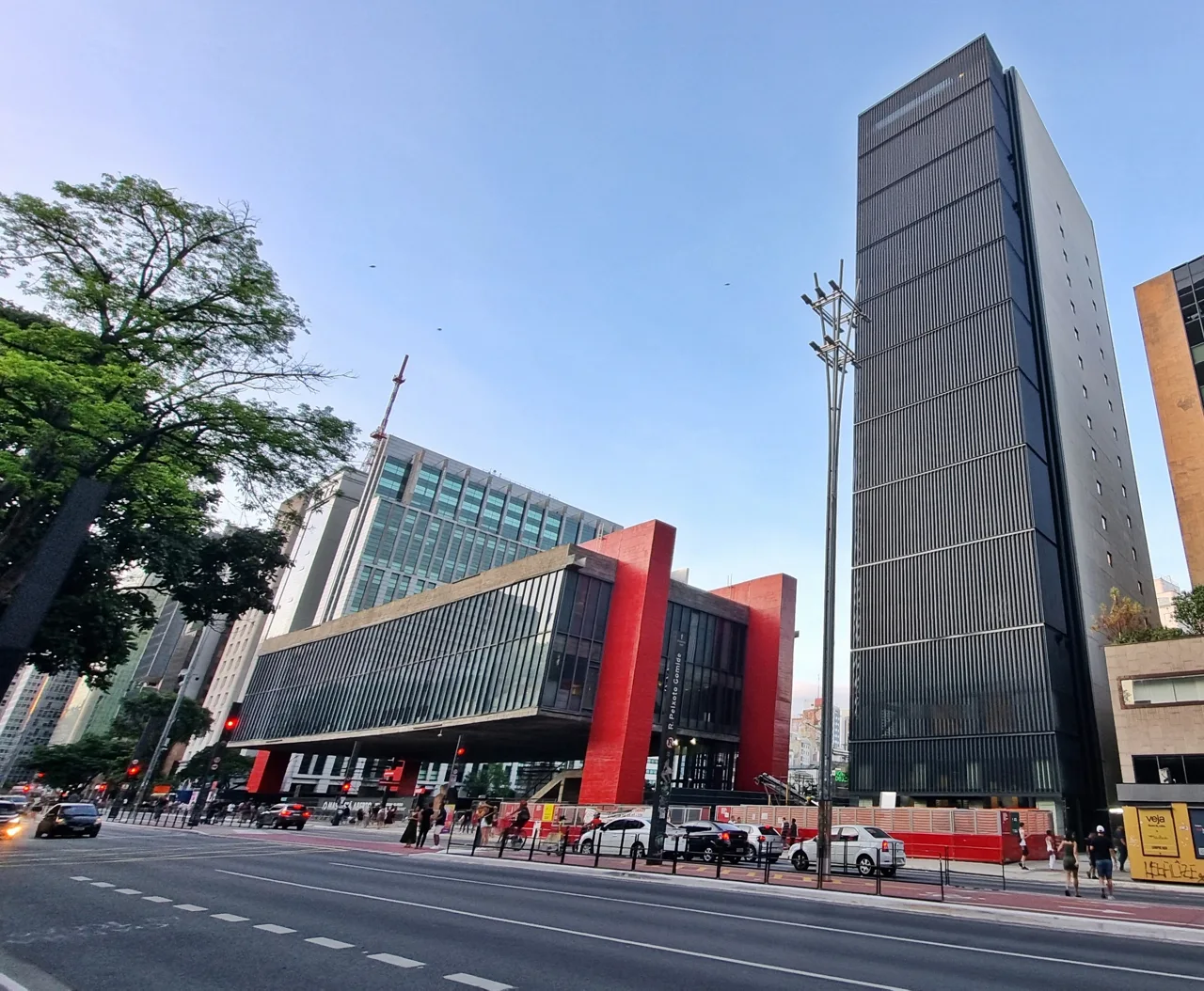
Assis Chateaubriand founded the museum in 1947, but it wasn't until 1968 that Lina Bo Bardi’s brutalist masterpiece opened its doors on Avenida Paulista. The site had a strict height restriction to protect the view of the Cantareira Mountains, forcing Bo Bardi to suspend the building from two giant concrete beams. Queen Elizabeth II famously attended the inauguration, marking a moment of international recognition for Brazil's burgeoning cultural scene. Throughout the late 20th century, MASP became a symbol of resistance and public assembly, with its open plaza hosting everything from craft fairs to revolutionary rallies, proving that architecture could be both a fortress for fine art and a playground for the people.
In brief
Suspended above the concrete roar of Avenida Paulista by four massive poppy-red pillars, the Museu de Arte de São Paulo (MASP) looks less like a traditional gallery and more like a radical floating ship of glass. This brutalist titan leaves a vast, seventy-four-meter gap between the building and the ground, a void mandated by the city to preserve the view of the downtown skyline. Beneath its belly, the shadow provides a cooling sanctuary for street performers, political protesters, and antique dealers, creating a vibrant public living room in central South America’s largest metropolis. To see MASP is to understand the soul of São Paulo: a city that builds upward and outward with a relentless, defiant modernity.
This brutalist titan leaves a vast, seventy-four-meter gap between the building and the ground, a void mandated by the city to preserve the view of the downtown skyline.
Lina Bo Bardi, the Italian-born visionary
Lina Bo Bardi, the Italian-born visionary, spent twelve years bringing this structure to life after being commissioned by media mogul Assis Chateaubriand. Chateaubriand had spent the post-war years aggressively acquiring European masterpieces at a time when the continent was in ruins, but he needed a home for them that didn't feel like a stuffy mausoleum. Bo Bardi’s design, completed in 1968, shattered the elitist conventions of the art world by stripping away walls and pedestals. She famously insisted on the glass easels that allow paintings to float in space, a move that initially scandalized traditionalists but eventually defined the museum's identity. The building's iconic red paint was only added in 1990 to protect the raw concrete from the elements, accidentally turning the structure into a pop-art landmark.
The air inside the main gallery
The air inside the main gallery feels impossibly light, characterized by the soft clicking of heels on polished floors and the hum of a city that never stops moving just beyond the glass. What emerges is immediately that the art has no back; walking through the forest of crystal easels, seeing the wooden frames and the aged labels of Rembrandts and Picassos. This transparency removes the reverent distance usually found in the Louvre or the Met, making it feel as if you are walking through the artist's own workshop. The late afternoon light filters through the glass walls, casting the shadows of Goya and Van Gogh onto the floor in a shifting, golden dance.
Arrival is easiest via
Arrival is easiest via the Trianon-Masp station on the Green Line of the Metro, which deposits you directly in front of the building’s red legs. Walking from the Jardins neighborhood provides a sensory buildup, as the lush greenery of Trianon Park across the street contrasts sharply with the museum's glass and steel. Most people head straight for the entrance, but lingering in the 'vão livre' (the open plaza underneath) is essential. Here, the smell of fresh popcorn and the sound of distant sirens create a gritty, authentic overture to the refined silence waiting for you upstairs.
Arrival is easiest via the Trianon-Masp station on the Green Line of the Metro, which deposits you directly in front of the building’s red legs.
The Experience
The Paulista traffic becomes a muted, rhythmic pulse once you pass through the heavy doors. A strange sense of intimacy when you walk behind a painting and see the decades of dust and handwritten inventory notes on the back of a canvas. Almost all visitors miss the way the light reflects off the red pillars onto the glass facade during a rainstorm, turning the entire building into a shimmering ruby. You notice the lack of a set path; because the paintings are on glass easels in an open hall, you can weave through the centuries at your own pace, stumbling upon a Cezanne while looking at a contemporary Brazilian sculpture. It is a liberating way to consume culture, stripped of the 'do not touch' museum atmosphere and replaced with a feeling of shared, airy space.
Why It Matters
MASP matters because it democratized the museum experience in a country still grappling with social hierarchy. By placing world-class European art alongside African and indigenous works on equal footing, and by removing the literal walls between the viewer and the object, it challenged the very idea of what a gallery should be. It remains the most important collection of Western art in the Southern Hemisphere.
Why Visit
Visit MASP to see the art world without its clothes on. While other museums hide their masterpieces behind thick walls and curated paths, this place lets you walk between the frames in a forest of glass. It is a pitch-perfect marriage of radical architecture and a collection that rivals the best in Europe, all while hovering over the most electric street in Brazil.
✦ Insider Tips
- 1
Visit on a Tuesday when admission is free, but go at 10:00 AM sharp to beat the local school groups.
- 2
Walk to the very edge of the glass walls on the top floor for a panoramic view of the 9 de Julho Avenue valley far below.
- 3
Check the back of the paintings; the glass easels allow you to see the original shipping labels and stickers from galleries in 1940s Europe.
- 4
Head to the basement restaurant for a high-end buffet that is a favorite among the city's architects and intellectuals.
- 5
Look for the smaller, rotating photography exhibits in the lower levels which often showcase raw, untold stories of São Paulo’s street life.