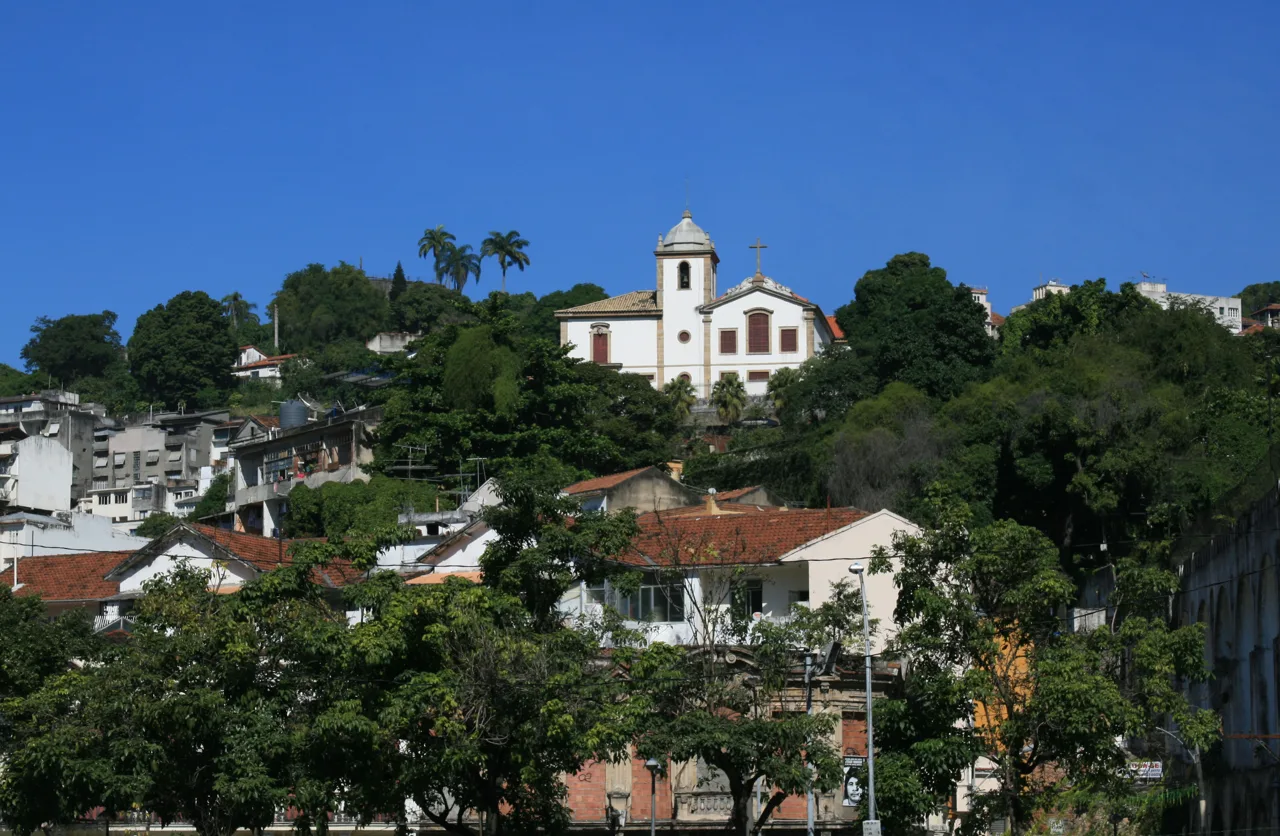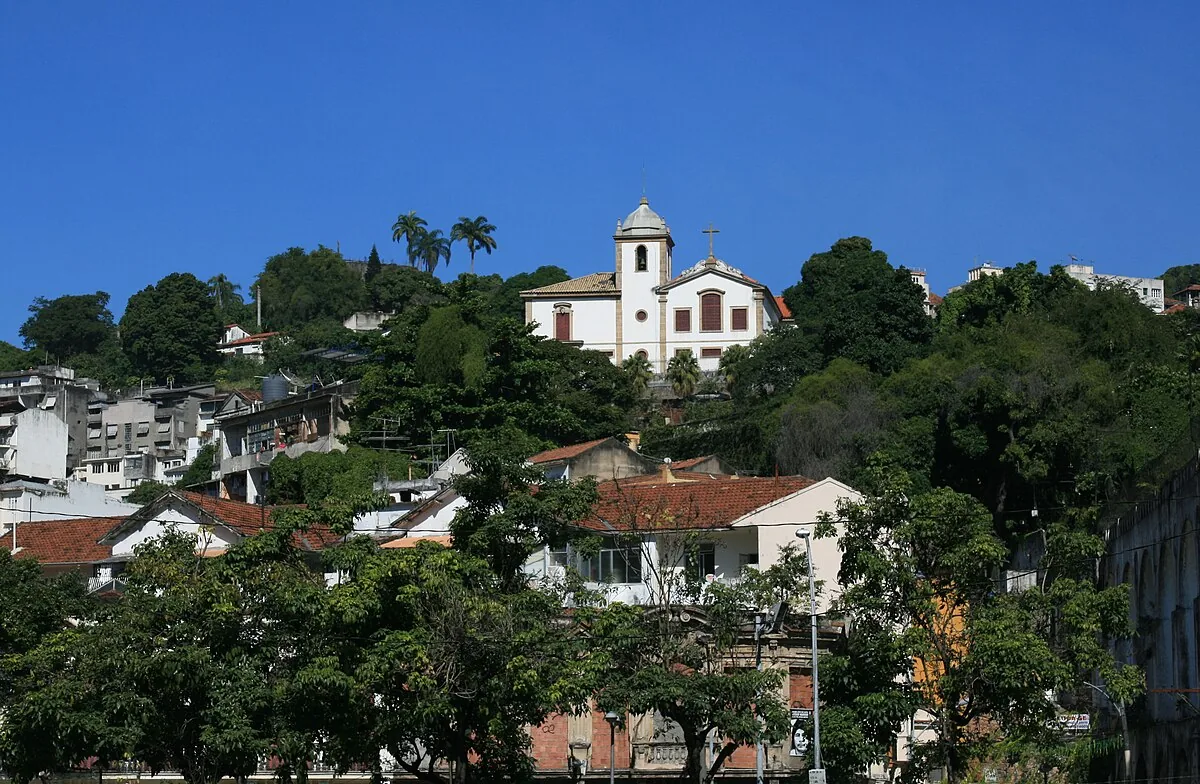
A single yellow tram, the last of its kind in the country, creaks across an 18th-century aqueduct to carry you into a neighborhood where time is measured in decades rather than minutes.
About Santa Teresa
Wealthy coffee merchants first settled this ridge in the late 1800s to escape the humidity and disease of the city center, building the extravagant mansions that give the area its nickname, the 'Carioca Montmartre.' The neighborhood’s identity was forever linked to the electric tram system installed in 1896, which remains the oldest in South America. After a period of decline in the 1960s, Santa Teresa was reclaimed by a creative class that transformed its derelict estates into cultural centers and guesthouses. This preservation effort was famously spearheaded by figures like Laurinda Santos Lobo, whose mansion now serves as the Parque das Ruínas. Today, the district is protected by strict zoning laws that prevent high-rise development, ensuring that the silhouettes of its tiled roofs and imperial palms remain a permanent fixture of the Rio skyline.
High above the frantic pulse of Rio de Janeiro’s Lapa district, the air cools and the sounds of the city begin to dissolve into the clatter of a yellow tram. Santa Teresa clings to the side of a steep hill like an old-world European village that accidentally sprouted tropical vines and vibrant graffiti. The neighborhood is a labyrinth of winding, cobblestoned lanes where crumbling 19th-century mansions sit behind wrought-iron gates, their gardens overflowing with jasmine and bougainvillea. Life here moves at a different cadence than the sun-drenched beaches of Ipanema. It is a place of ateliers, quiet squares, and bars where the conversation is often louder than the music, offering a panoramic perspective of the Guanabara Bay that feels earned by the climb.
Growth began in the 1750s around the Carmelite Convent of Santa Teresa, but the area truly transformed during the 19th century when the city’s elite fled the yellow fever outbreaks in the lowlands. Seeking the mountain’s fresher breezes, coffee barons and wealthy industrialists built the eclectic palaces that still define the skyline. The arrival of the 'bondinho' or electric tram in 1896 cemented its status as an aristocratic enclave. However, as the wealthy moved toward the burgeoning beachfronts in the mid-20th century, the neighborhood entered a period of graceful decay. This faded elegance eventually attracted a wave of artists, musicians, and intellectuals who saw the potential in the neglected ballrooms and high-ceilinged studios. Today, the district serves as a bridge between Rio’s imperial past and its bohemian present, preserved partly by its geography and partly by a community that fiercely protects its unique architectural heritage.
The scent of woodsmoke and strong coffee often drifts through the streets in the early morning as the neighborhood wakes up. You feel the vibration of the tram tracks beneath your feet before the yellow bondinho actually appears around a sharp curve, its bell ringing a warning to stray cats and slow-moving pedestrians. Looking through the gaps between the buildings, you notice how the light hits the stained glass of the Parque das Ruínas, turning the brickwork into a warm, glowing amber. The texture of the neighborhood is felt in the uneven stones underfoot and the rough, sun-baked plaster of the house walls.
Late afternoon brings a specific energy to the Largo do Guimarães, where locals gather at Bar do Mineiro for cold beer and feijoada. You notice the contrast between the sophisticated art galleries and the gritty, colorful street murals that depict Rio’s complex social history. Most travelers overlook the small, tucked-away staircases that connect the tiered streets, but climbing them reveals private courtyards filled with fruit trees and hidden viewpoints. The moment that truly defines Santa Teresa occurs at dusk, when the lights of the city below begin to flicker to life while the hilltop remains bathed in a soft, violet twilight. It feels like a sanctuary where the chaos of the metropolis is visible but cannot touch you.
Reaching this hilltop retreat is an exercise in vertical navigation. The most iconic method is boarding the yellow tram at the Carioca station downtown, crossing the high arches of the Arcos da Lapa to enter the neighborhood. Alternatively, a steep taxi ride from Gloria or Flamengo will deposit you at the heart of the district, though the narrow streets often cause bottlenecks that require patience. Walking up from Lapa via the Selarón Steps is a rite of passage for the fit, turning the journey into a vibrant ascent through thousands of hand-painted tiles. Regardless of how you arrive, the transition from the humid, crowded center to the airy height of the hill is an essential Rio experience.
The Experience
The sound of the neighborhood is a mix of the tram's screech on the rails and the distant samba beats rising from the favelas on the neighboring hills. You feel the temperature drop significantly as the road climbs, and the humidity of the coast is replaced by a crisp, forest-scented breeze from the nearby Tijuca National Park. You notice the intricate detail of the 'azulejos' on the walls of the houses, many of which have been worn smooth by over a century of tropical rain. The thing most visitors miss is the quietude of the side streets like Rua Aprazível, where the only crowd is a group of marmoset monkeys playing in the overhead wires. Standing at the lookout of the Parque das Ruínas, you see the cathedral and the skyscrapers of the financial district looking like toys in the distance. It is a moment of total detachment where you are both in Rio and entirely above it, caught in a bohemian dream that refuses to wake up.
Why It Matters
Santa Teresa is the architectural soul of Rio, representing a continuous thread of history from the colonial era to the modern day. It matters because it provides a counter-narrative to the city's beach-obsessed identity, highlighting a heritage of intellectualism, craftsmanship, and community-led preservation. Humanly, it is a testament to the power of a neighborhood to reinvent itself through art and culture without losing its historical skin.
Why Visit
Visit for the rare chance to see Rio from the inside out. While Christ the Redeemer offers the famous view, Santa Teresa offers a lived-in perspective where you can drink cachaça in a former palace and walk streets that feel like a film set. It is the only place in the city where the architecture is as dramatic as the mountains.
✦ Photo Gallery
Best Season
🌤 Go in July or August during the 'Arte de Portas Abertas' festival, when local artists open their private studios to the public and the winter light is sharp and clear.
Quick Facts
Location
Brazil
Type
attraction
Coordinates
-22.9175°, -43.1881°
Learn More
Wikipedia article available
Insider Tips
- 1
Board the tram at the very first stop in Centro to secure a seat on the right-hand side for the best views as you cross the Lapa arches.
- 2
Avoid carrying valuables openly on the Selarón Steps during the transition to the upper neighborhood, as the quiet alleys can be unpredictable for solo walkers.
- 3
Look for the 'garrafas pet' art installations often hanging in the trees; they are part of a local environmental art project unique to the hill.
- 4
Visit the Museu Chácara do Céu during the week to have its world-class collection of Modernist art and its manicured gardens almost entirely to yourself.
- 5
Eat at Aprazível at sunset, but specifically ask for a table in the 'treehouse' section to dine literally among the branches of the forest.