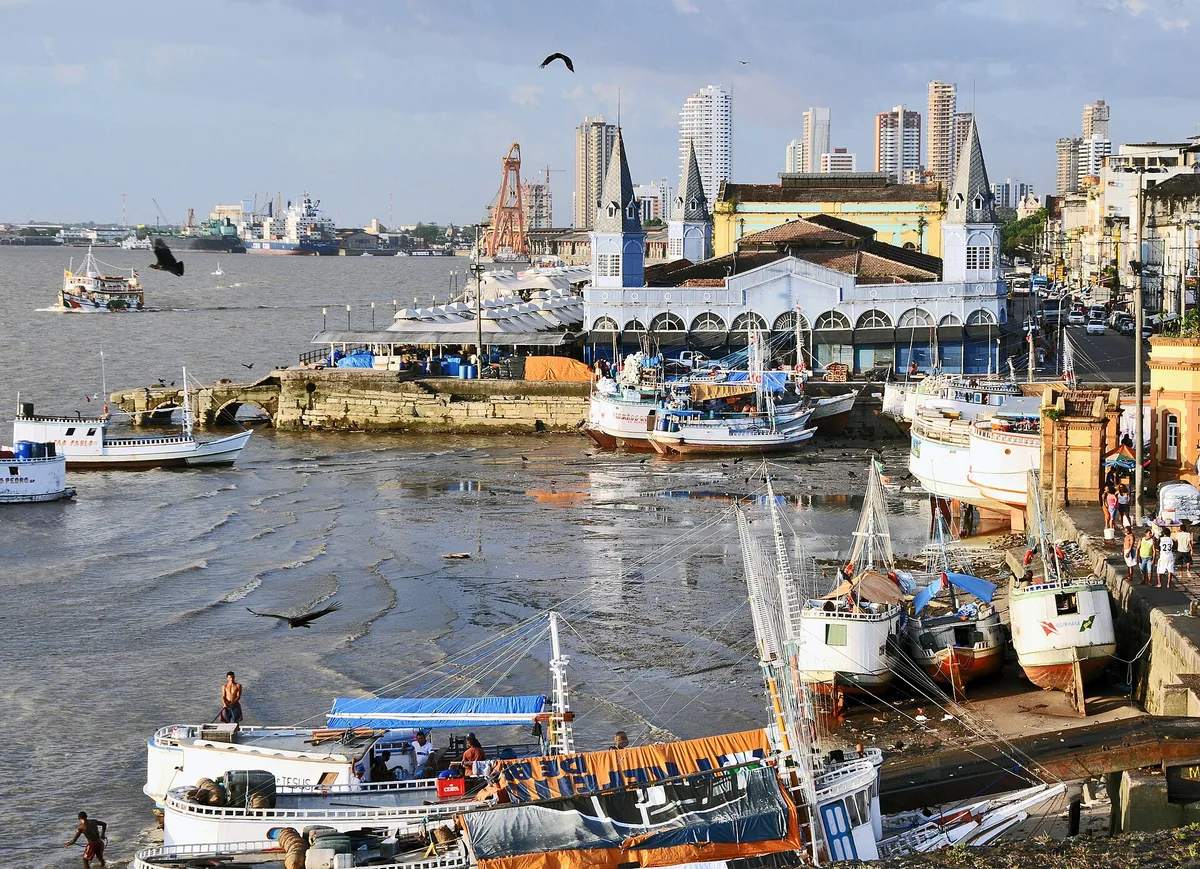
Vessels carved from single trees dock alongside an iron cathedral shipped from England, unloading six-foot fish and forest potions into the humid heart of the Amazon’s oldest tax house.
About Ver-o-Peso Market
Belém's waterfront became a formal customs post in 1627, serving as the gateway through which the riches of the northern jungle reached the Portuguese crown. The current aesthetic was shaped by the Belle Époque era, specifically the 1901 installation of the Mercado de Ferro, an ornate structure cast in Glasgow and Newcastle. It was designed to resemble a gothic palace, but its purpose remained grounded in the grit of trade. In the 1920s, the Bolonha market was added to house the butchers, followed by the expansion of the open-air docks. Recognized as a national heritage site in 1977, the complex has undergone several restorations, yet it has never lost its original function as a tax and trade hub. It stands today as the largest open-air market in Latin America, evidence of the enduring trade routes of the Trans-Amazonian waterways.
What Ver-o-Peso Market is
Rain or shine, the blue zinc spires of the iron market rise over the Guajará Bay like a Victorian ghost ship anchored in the mouth of the Amazon. Ver-o-Peso remains the undisputed energetic center of Belém, a place where the colossal scale of the rainforest is funneled into a few square blocks of frantic, kaleidoscopic trade. Here, the river’s bounty meets the city’s hunger. You step into a world defined by the silver flash of massive pirarucu fish and the deep, earthy purple of fresh açaí being pulped in humming machines. This is not a manicured tourist attraction. The setting is thick with humidity, the scent of a thousand different barks, and the briny exhale of the rising tide.
this riverside post, 1627
Portuguese colonists established this riverside post in 1627 as a fiscal checkpoint called the 'Casa de Haver-o-Peso,' literally the place to 'check the weight' of all goods arriving from the Amazonian interior for taxation. As Belém exploded during the rubber boom of the late 19th century, the humble tax house evolved into an architectural statement. The iconic iron structure you see today was prefabricated in England and shipped across the Atlantic, erected in 1901 to bring a touch of European industrial order to the wild riverbank. Throughout the 20th century, the market expanded into a sprawling open-air labyrinth. It survived the collapse of the rubber trade and the pressures of modernization, remaining a sovereign territory where indigenous knowledge of plants and river cycles dictates the economy.
Visiting Ver-o-Peso Market
Dawn provides the most visceral encounter, as the fishing boats arrive under a bruised, violet sky to unload their prehistoric-looking cargo onto the wet stones. First, the sheer physical effort of the porters, balancing heavy baskets of silver-scaled fish on their shoulders while navigating the slippery paths. Moving from the fish market into the 'Erveiras' section, the atmosphere shifts from briny to botanical. Row upon row of glass bottles contain infusions of forest roots, oils, and perfumes designed to cure everything from a broken heart to a lack of luck. You get a heat of the morning sun begin to bake the damp pavement, releasing the sharp aroma of fermenting cacao and dried shrimp. Lunchtime draws you toward the small stalls where the sound of bubbling oil competes with the cries of fruit vendors. It becomes clear how locals eat their açaí, not as a sweet dessert, but as a thick, savory side dish accompanied by fried fish and farinha. The surface of the market is felt in the rough grain of the manioc flour and the sticky residue of tropical fruit juices on the wooden counters. Visitors often overlook the small chapel tucked near the entrance, but stepping inside provides a momentary, silent refuge from the sensory roar outside. What stays with you is usually the sight of the white herons gathering on the roofs at midday, waiting for the market to breathe out its scraps.
Accessing the market requires heading
Accessing the market requires heading to the historic waterfront of Belém, where the Cidade Velha meets the docks. Those visiting arrive via a short taxi or ride-share from the more modern Nazaré district, though walking from the nearby Forte do Castelo allows for a gradual immersion into the colonial architecture of the area. The streets surrounding the market are perpetually congested with colorful trucks and handcarts, so arriving on foot for the final block is often faster than remaining in a vehicle. If you are coming from the river islands, the public boats dock directly at the market's edge, depositing you into the thick of the action alongside crates of bananas and charcoal.
The Experience
The soundscape is a relentless surge of shouting traders, the rhythmic thud of cleavers, and the splashing of river water against the dock. The first thing you register is that the light beneath the iron tents is filtered and blue, making the piles of yellow peppers and red chilies look unnaturally bright. The sense is the humidity cling to your skin like a damp cloth, while the smell of the 'cheiro-cheiroso', handmade perfumes mixed by the market women, drifts through the spice stalls. Most visitors miss the small, specialized tools used to crack open Brazil nuts, but if you look closely, you'll see the practiced hands of vendors moving with terrifying speed. A remnant of the pulse of the city here, a raw and honest energy that is entirely indifferent to your presence. The experience peaks when you find a seat at a cramped counter for a bowl of tacacá, feeling the numbing tingle of jambu leaves on your tongue while the river breeze finally breaks the afternoon heat.
Why It Matters
Ver-o-Peso is the biological and cultural pulse of the Amazon, serving as a living museum of the forest’s medicinal and culinary biodiversity. It matters because it bridges the gap between the modern urban world and the ancient river cultures, preserving traditional knowledge that is elsewhere being lost. Humanly, it is the social equalizer of Belém, where the poorest fisherman and the city's elite both come for the same essential forest remedies.
Why Visit
Visit Ver-o-Peso because it is the only place on earth where the Amazon rainforest feels truly tangible and unmediated. While the jungle can be distant and impenetrable, the market brings its secrets to your fingertips. You go because you want to see the ingredients that define the most exciting cuisine in Brazil, served on a plate with the red dust and river water still clinging to its edges.
✦ Photo Gallery
Best Season
🌤 Aim for October during the Círio de Nazaré festival when the market becomes the emotional epicenter of a two-million-person pilgrimage and the stalls are overflowing with seasonal delicacies.
Quick Facts
Best time to visit
Aim for October during the Círio de Nazaré festival when the market becomes the emotional epicenter of a two-million-person pilgrimage and the stalls are overflowing with seasonal delicacies.
Getting there
In Belém, Brazil; reach Belém first, then continue to the site.
Location
Belém, Brazil
Type
attraction
Insider Tips
- 1
Arrive no later than 5:30 AM to witness the 'fair of the boats' when the freshest catch is auctioned off directly from the river vessels.
- 2
Keep your belongings in a front-facing bag and avoid wearing visible jewelry, as the dense crowds and chaotic layout make it a prime spot for opportunistic pickpockets.
- 3
Look for the 'garrafas de sorte' in the herb section; these small bottles filled with seeds and oils are believed by locals to protect your home from the evil eye.
- 4
Order a 'peixe com açaí' at a mezzanine stall, but be sure to clarify you want the savory version with farinha to eat it like a true parauara.
- 5
Take a moment to talk to the 'Erveiras' or medicine women; many represent the third or fourth generation of their family to possess the secrets of Amazonian healing.