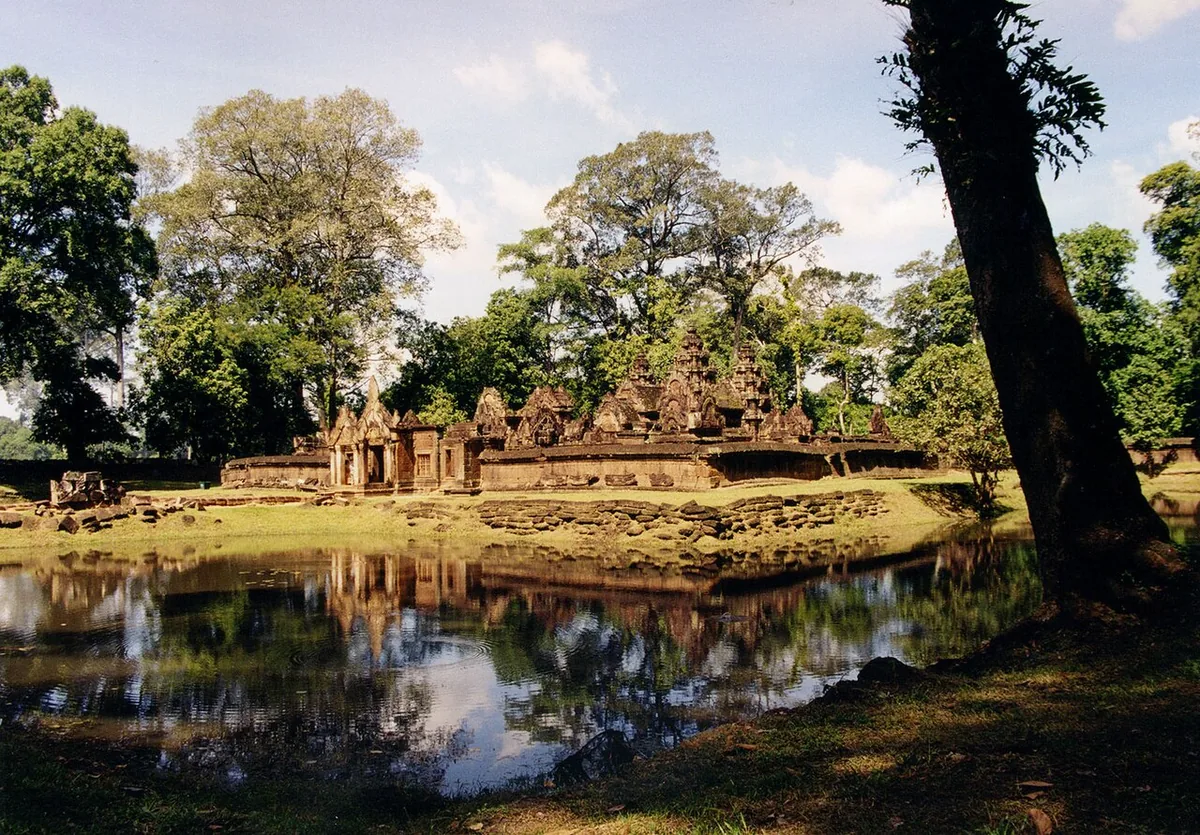
“You enter Angkor Thom across a causeway where 54 gods and 54 demons haul a giant serpent - the Churning of the Sea of Milk rendered in stone at the city gate.”
About Angkor Thom
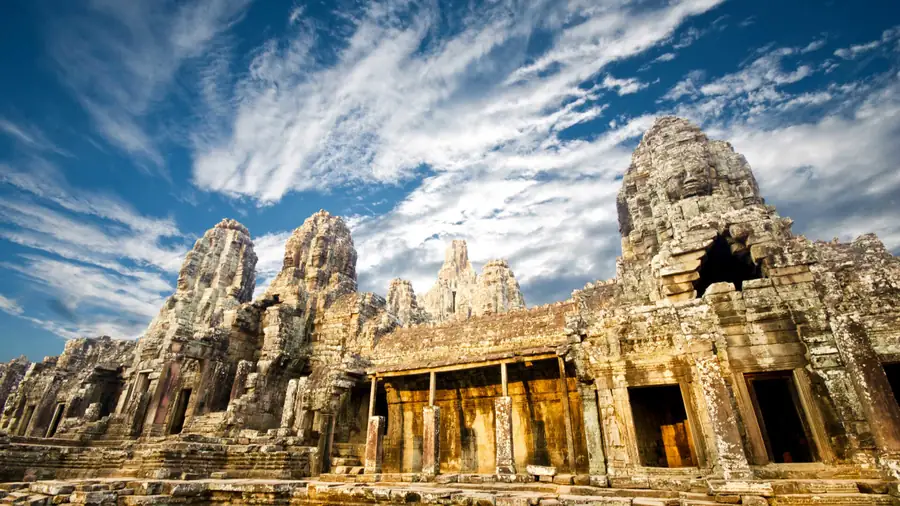
After the sack of the previous capital, Jayavarman VII founded Angkor Thom in the late twelfth century as a fortified royal city centred on his Buddhist state temple, the Bayon. At its height it may have housed several hundred thousand people, making it one of the largest cities in the pre-industrial world. The walls, gates and central monuments survive within the wider Angkor park.
What Angkor Thom actually is
Angkor Thom, the 'Great City', was the last and largest capital of the Khmer Empire, a walled and moated square some three kilometres on each side built by Jayavarman VII around 1200. Entering through monumental gates topped with serene faces, approached over causeways lined with rows of gods and demons gripping a giant serpent, a sculptural retelling of the Churning of the Sea of Milk.
Angkor Thom, the 'Great City', was the last and largest capital of the Khmer Empire, a walled and moated square some three kilometres on each side built by Jayavarman VII around 1200.
A City, Not a Temple
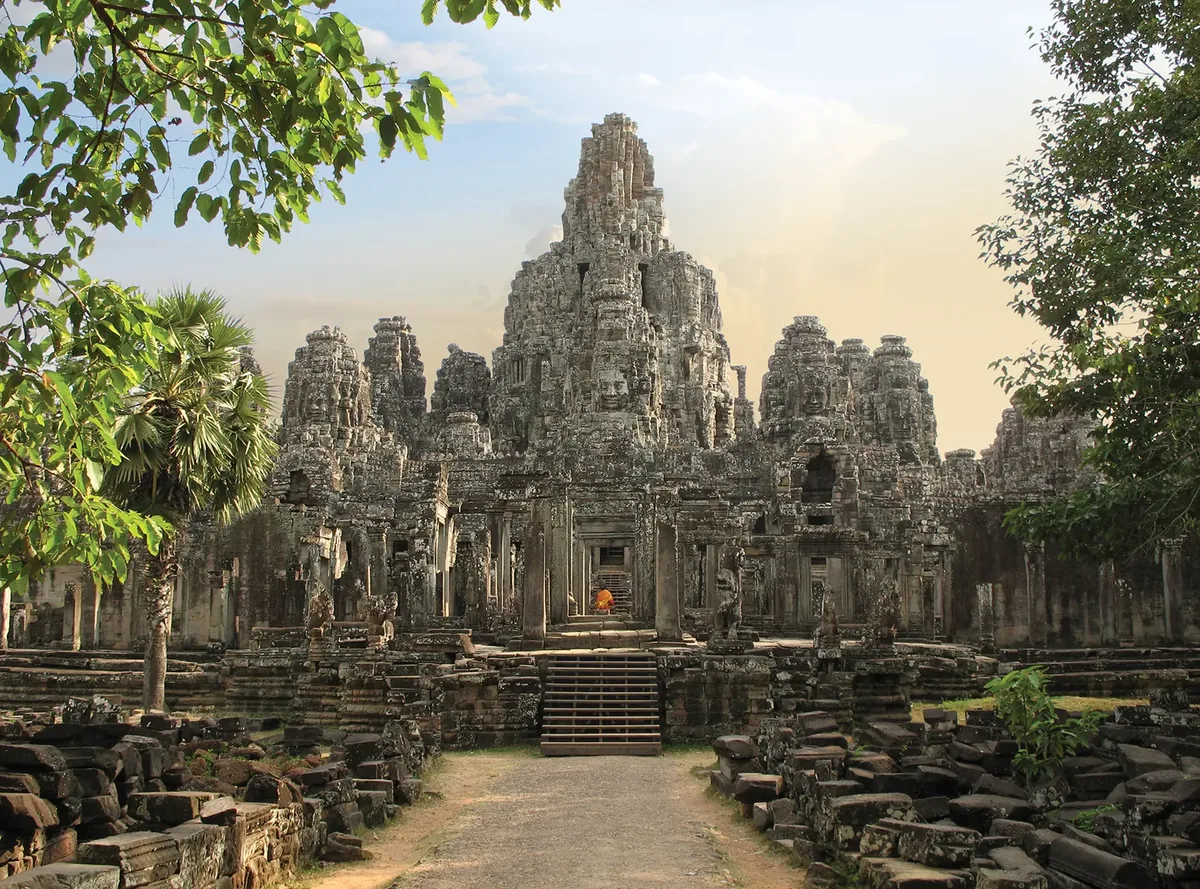
Inside lie the Bayon, the Baphuon, the royal terraces of the Elephants and the Leper King, and the remains of a once-teeming city of perhaps several hundred thousand people. It is explored as a whole rather than as a single building.
The Experience
The South Gate makes the strongest first impression, its tower of faces rising above the divine tug-of-war of the causeway statues. Within the walls you move between the Bayon, the pyramid of Baphuon and the long carved terraces where kings once reviewed processions. It rewards a half-day rather than a quick pass.
Why It Matters
Angkor Thom is the last great capital of the Khmer Empire and a masterpiece of imperial city planning, enclosing some of Angkor's most important monuments behind its faced gates and god-and-demon causeways.
Why Visit
It is a whole royal city rather than a single temple, with the dramatic faced gates and the Bayon at its core. Enter by the South Gate for the best causeway statues, and give yourself a half-day to take in the terraces and Baphuon as well.
✦ Insider Tips
- 1
Enter via the South Gate for the best-preserved row of god and demon statues on the causeway.
- 2
Treat it as a half-day; the Bayon, Baphuon and royal terraces are all within the walls.
- 3
Climb the Baphuon and walk the Terrace of the Elephants for the wider city layout.
- 4
It adjoins Angkor Wat, so plan both into a multi-day Angkor pass.