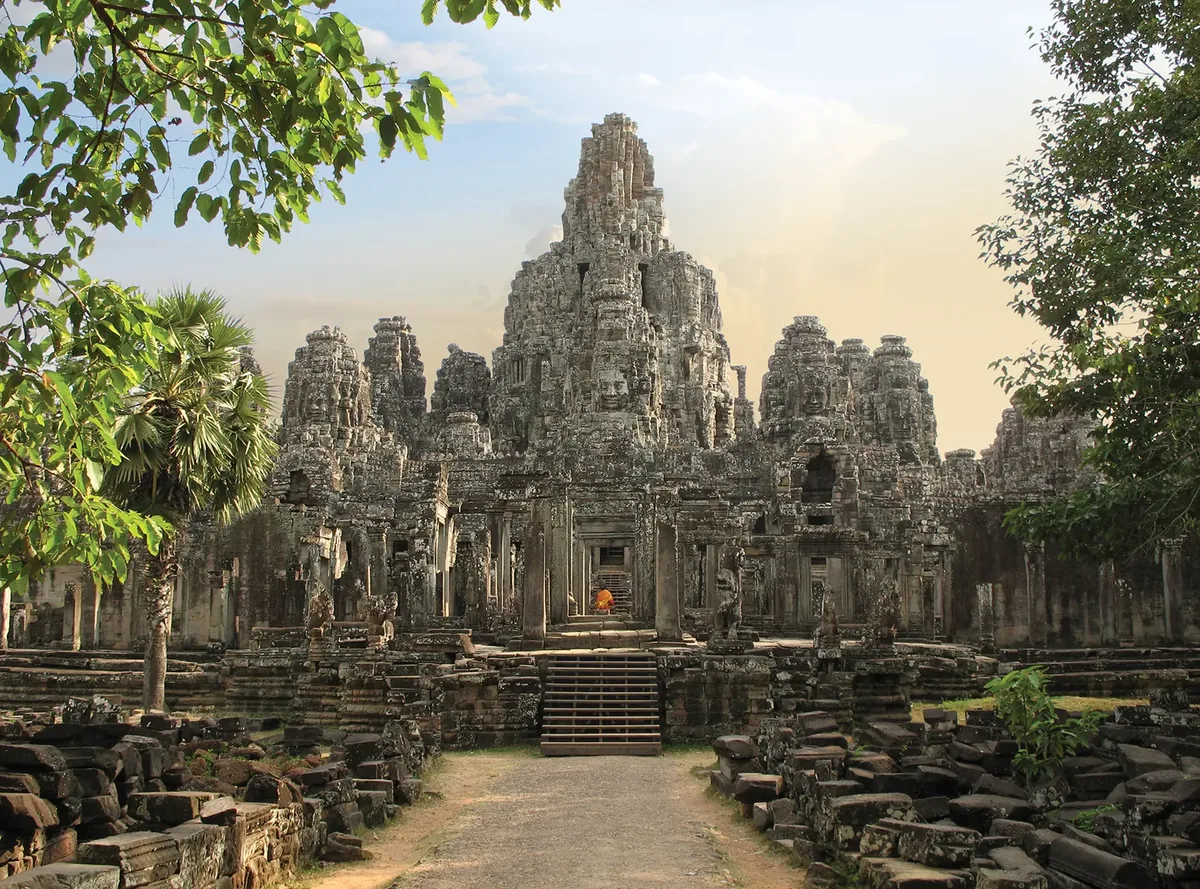
“Angkor Wat is the largest religious monument in the world, and the only building so important to a nation that it sits at the centre of its flag.”
About Angkor Wat
Suryavarman II built Angkor Wat in the first half of the twelfth century as a state temple and likely his mausoleum, dedicated to Vishnu. As the Khmer Empire turned to Buddhism, the temple was gradually reconsecrated and never fully abandoned, unlike much of Angkor. It has stood as a symbol of Cambodia through empire, colonisation and the Khmer Rouge years, and remains a working place of worship.
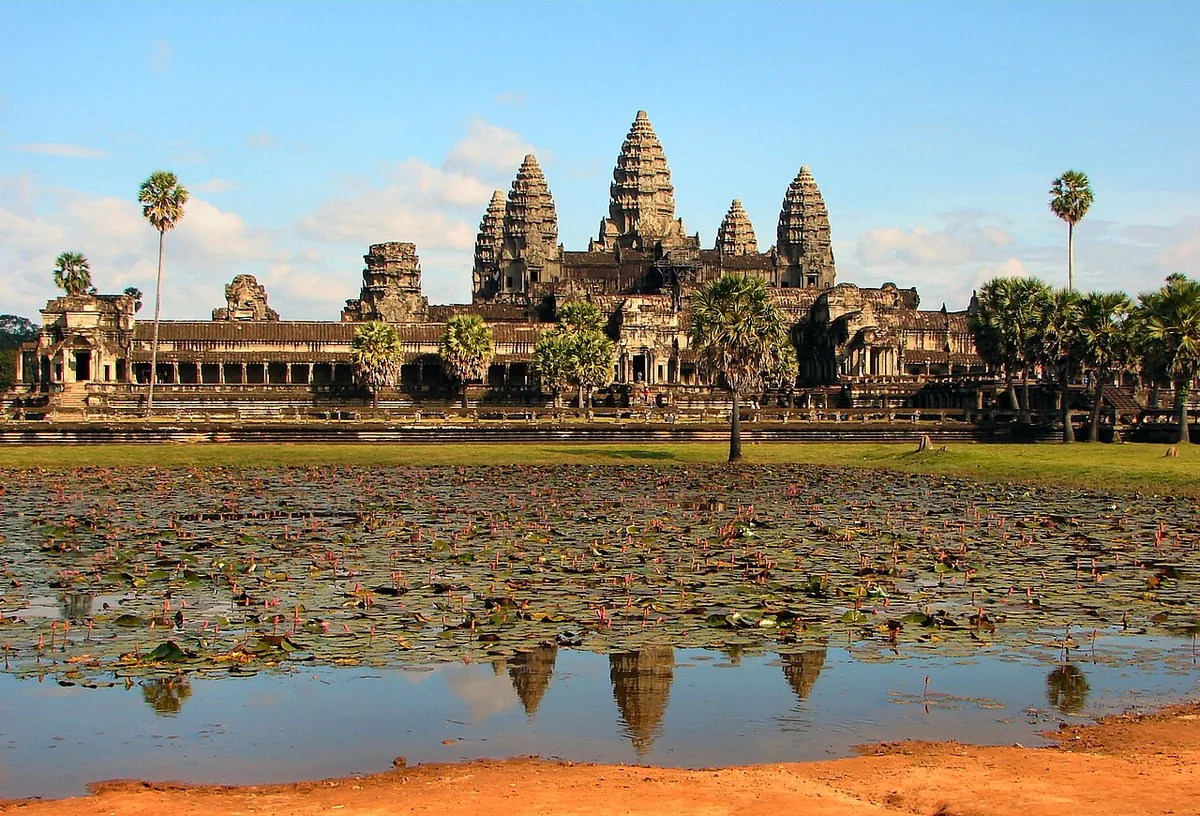
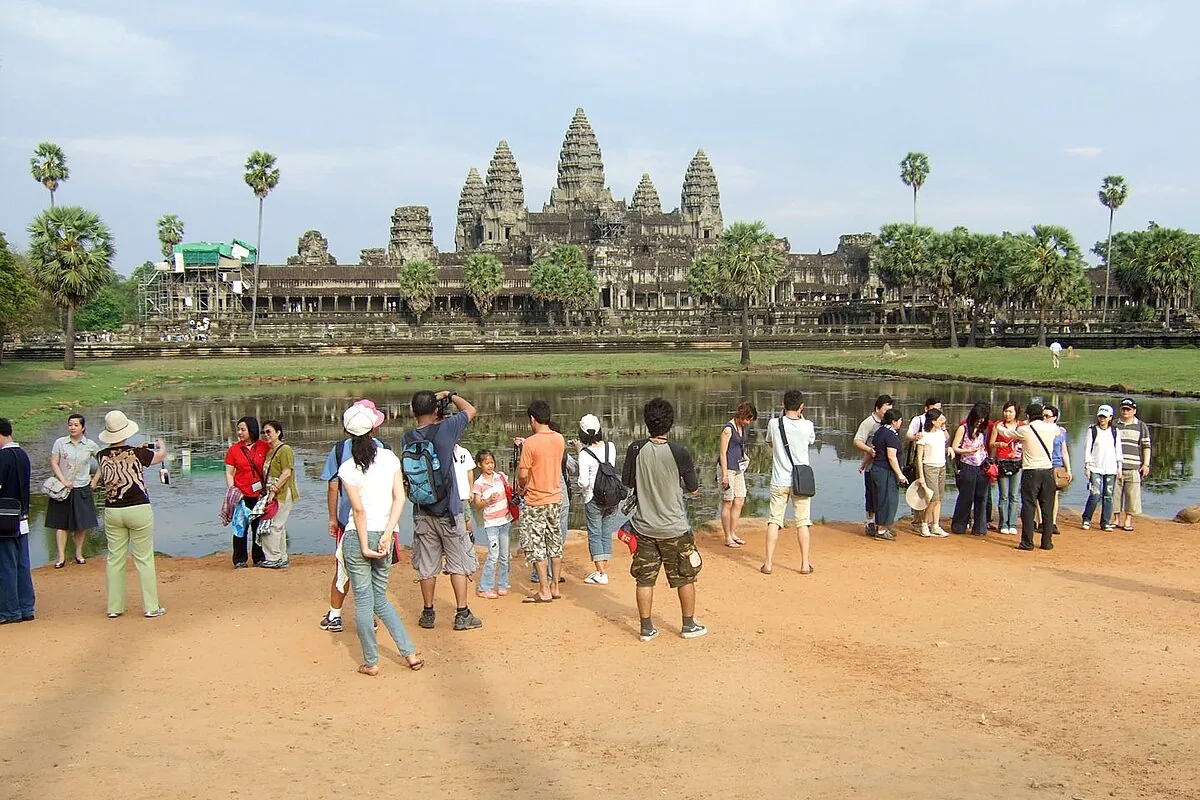
Angkor Wat is the largest religious monument on Earth, a vast temple-mountain built in the early twelfth century by the Khmer king Suryavarman II as a shrine to the Hindu god Vishnu. Ringed by a moat almost two hundred metres wide, its five lotus-bud towers are so central to national identity that they appear on the Cambodian flag, the only building on any country's flag.
Angkor Wat is the largest religious monument on Earth, a vast temple-mountain built in the early twelfth century by the Khmer king Suryavarman II as a shrine to the Hindu god Vishnu.
Stone and Story
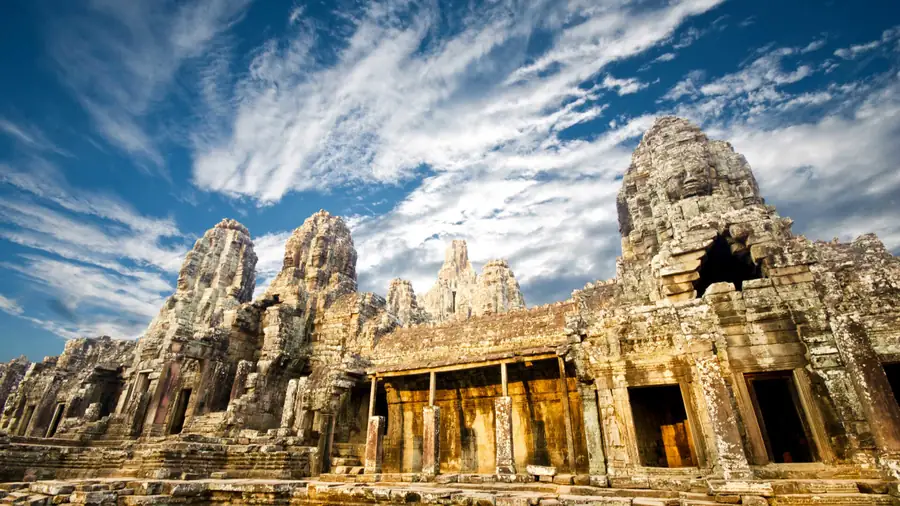
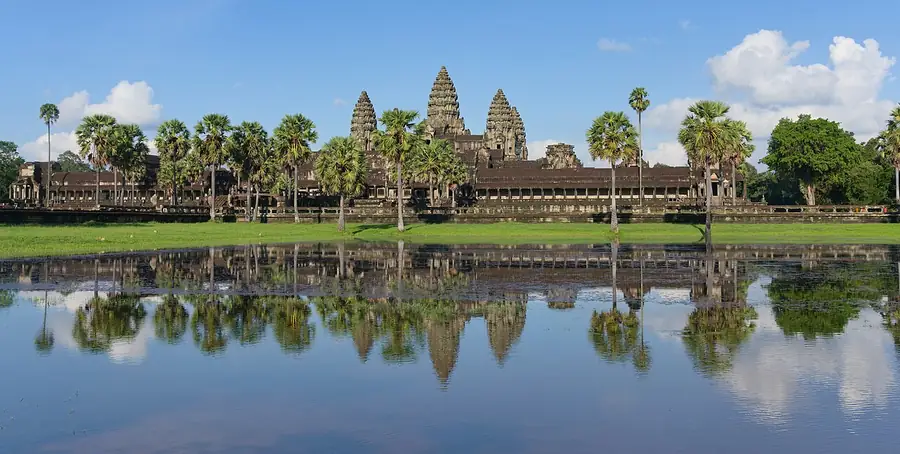
The temple later became Buddhist, and its galleries carry nearly a kilometre of bas-reliefs, including the famous Churning of the Sea of Milk. At dawn, crowds gather across the moat to watch the towers blacken against a reddening sky and reflect in the ponds below.
The Experience
Most visitors come for sunrise, crossing the long causeway in the dark to find a spot by the reflecting pools as the towers emerge against the colour. By day you walk the galleries tracing the bas-reliefs and climb the steep stairs to the upper level. The scale only registers in person, and the carving rewards slow looking far more than a quick photo.
Why It Matters
Angkor Wat is the supreme achievement of Khmer architecture and the emblem of Cambodia itself, a UNESCO World Heritage Site and the heart of the Angkor Archaeological Park. Its blend of Hindu cosmology and later Buddhist use makes it a layered monument unmatched in the region.
Angkor Wat is the supreme achievement of Khmer architecture and the emblem of Cambodia itself, a UNESCO World Heritage Site and the heart of the Angkor Archaeological Park.
Why Visit
It is the defining sight of Southeast Asia and far larger and more detailed than photographs convey. Buy a multi-day Angkor pass, arrive before dawn for the reflection, and return in late afternoon when the tour buses thin and the light warms the stone.
✦ Insider Tips
- 1
Buy a multi-day Angkor pass rather than a single day; the wider park needs at least two or three.
- 2
Arrive before dawn and head to the left reflecting pond for the classic sunrise reflection.
- 3
Dress respectfully with shoulders and knees covered, as the upper level is an active shrine.
- 4
Return in late afternoon when crowds thin and the western light warms the bas-reliefs.