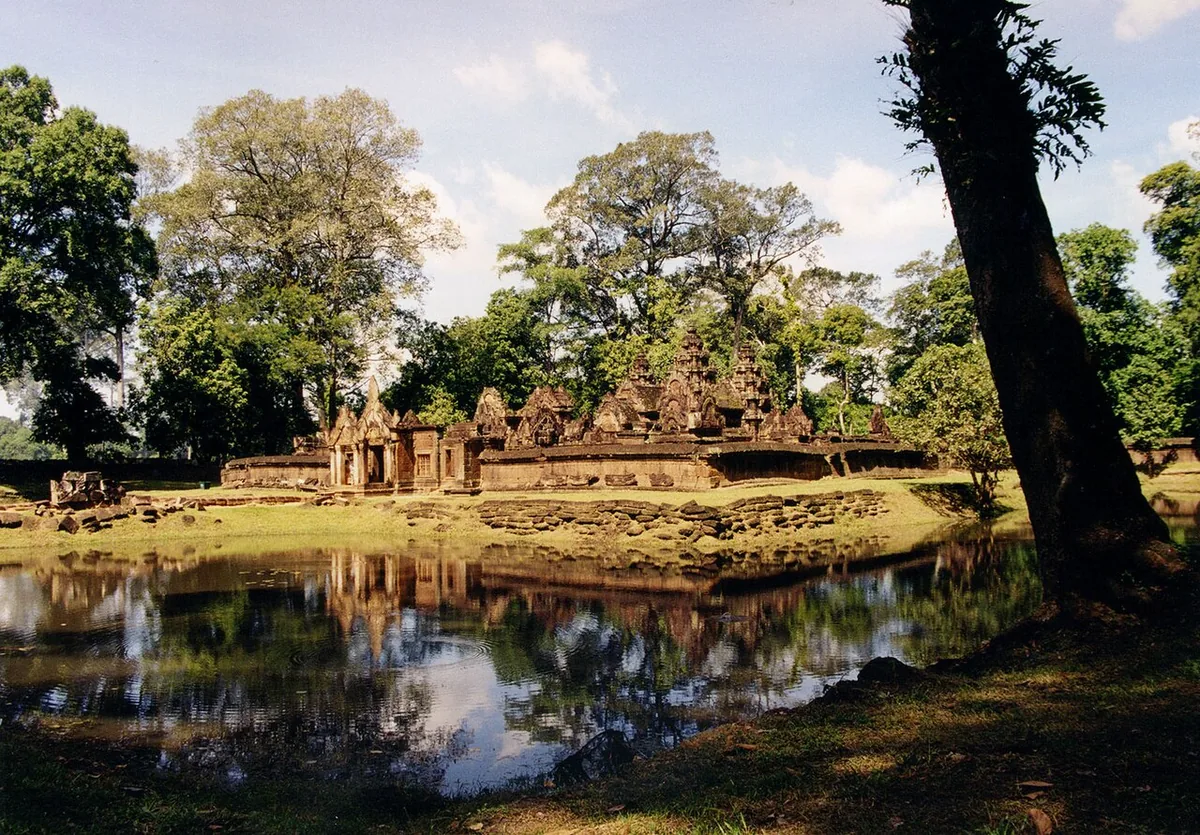
“Wat Phnom gave Phnom Penh its name: legend says Lady Penh founded the hilltop temple in 1372 to house sacred Buddhas she pulled from the river, and the city grew around it.”
About Wat Phnom
By tradition, a woman named Penh recovered Buddha statues from the Mekong in 1372 and built a shrine on an artificial hill, or phnom, to enshrine them, giving rise to the name Phnom Penh. The temple has been rebuilt several times over the centuries, and the hill became the symbolic centre of the capital when it was established as the royal seat.
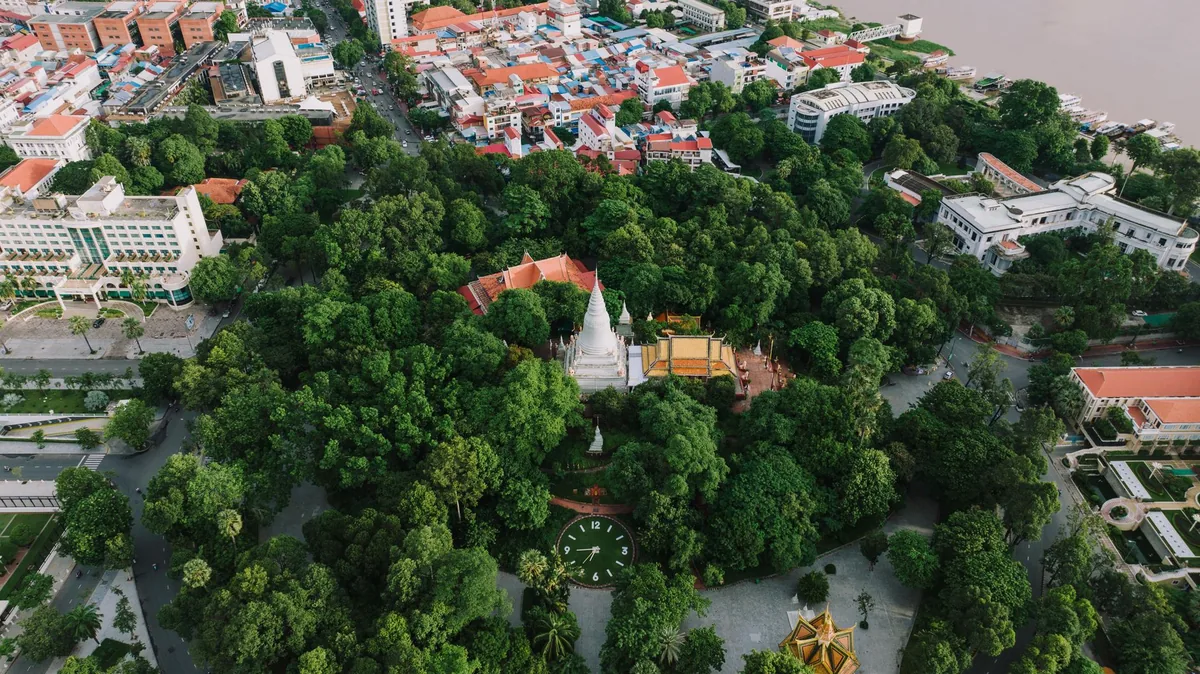
Wat Phnom stands on the only hill in Phnom Penh, a small wooded mound topped by a Buddhist temple, and it gave the capital its very name: Phnom Penh means 'Penh's Hill'. By legend a wealthy woman named Penh found sacred Buddha images in the river in 1372 and built a shrine on the hill to house them, and a settlement grew up around it.
Wat Phnom stands on the only hill in Phnom Penh, a small wooded mound topped by a Buddhist temple, and it gave the capital its very name: Phnom Penh means 'Penh's Hill'.
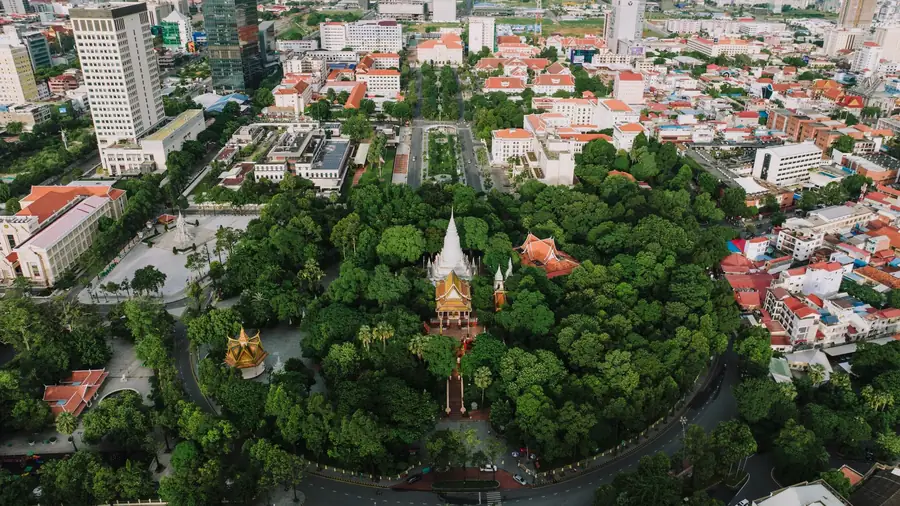
City Landmark
A grand staircase guarded by serpents climbs to the temple, busy with worshippers making offerings, especially at the new year. The leafy hill is a green island in the traffic of the capital, ringed by colonial-era buildings.
The Experience
A climb takes you up a naga-flanked staircase to the temple at the top, where incense smoke drifts and locals pray for luck and success, particularly around Khmer New Year. The wooded hill offers a brief escape from the city's traffic, and the surrounding streets preserve grand colonial architecture. It is a short but meaningful stop in the capital.
Why It Matters
Wat Phnom is the founding landmark of Phnom Penh and the source of its name, a central place of worship and the symbolic heart of the capital atop its only hill.
Wat Phnom is the founding landmark of Phnom Penh and the source of its name, a central place of worship and the symbolic heart of the capital atop its only hill.
Why Visit
It is the origin story of the capital in a single, easily visited spot, and a green pause in a busy city. Climb the serpent staircase, watch the offerings at the shrine, and combine it with a walk past the surrounding colonial buildings.
✦ Insider Tips
- 1
Climb the naga-guarded staircase and watch worshippers making offerings for good fortune.
- 2
It is liveliest around Khmer New Year, when crowds come to pray at the shrine.
- 3
Combine it with a stroll past the colonial-era buildings ringing the hill.
- 4
It is a short visit, easy to pair with the Royal Palace and riverfront.