Helsinki's white neoclassical cathedral was designed by a German architect commissioned by Russian rulers to build a capital worthy of the Grand Duchy of Finland, and the Senate Square ensemble it anchors is one of the finest neoclassical urban compositions in northern Europe.
About Helsinki Cathedral
When Helsinki replaced Turku as Finland's capital in 1812 under Russian rule, architect Carl Ludwig Engel was commissioned to design the Senate Square ensemble. The cathedral, originally Saint Nicholas's Church, was completed in 1852, twenty-two years after Engel's death, by successors following his plans.
Helsinki Cathedral
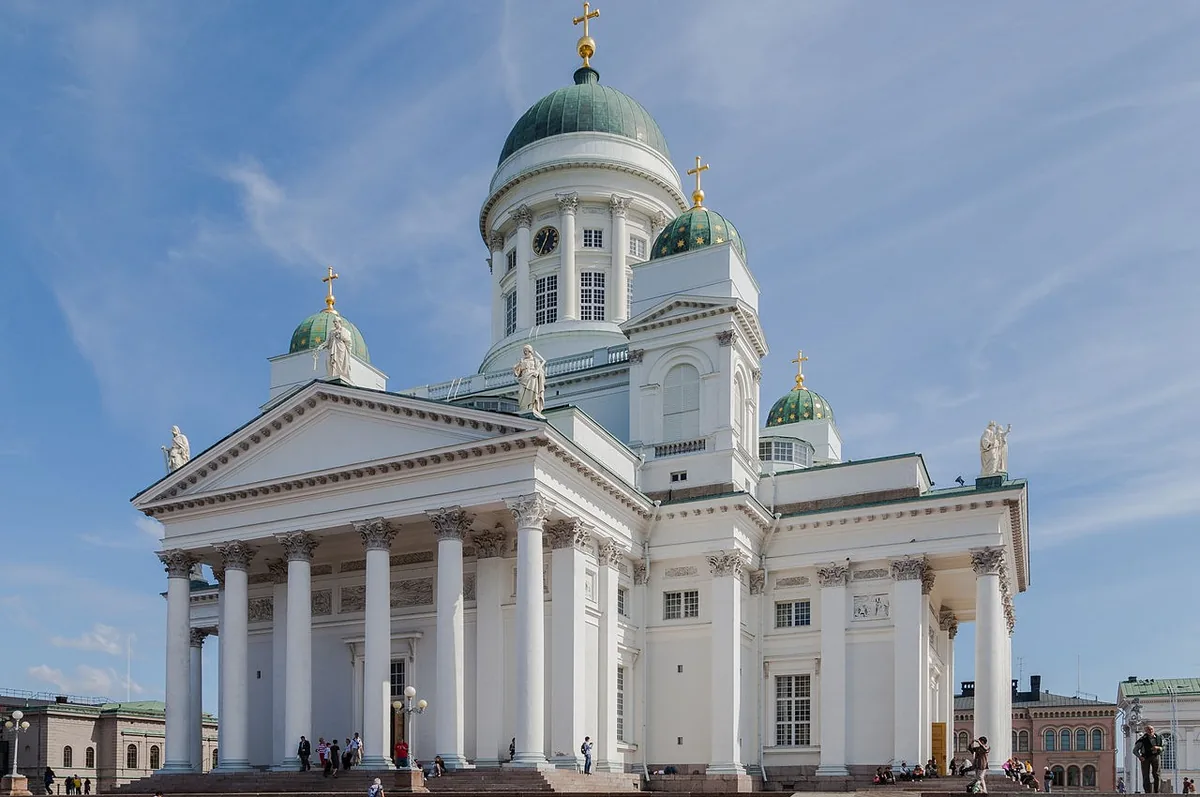
Helsinki Cathedral stands at the top of a broad flight of granite steps above Senate Square in Helsinki's city center, a white neoclassical structure with a large green copper dome flanked by four smaller domes and zinc statues of the Twelve Apostles along the roof parapet. Designed by Carl Ludwig Engel and completed in 1852, it is the dominant element of what is considered one of the finest neoclassical urban squares in northern Europe, a composition of cathedral, government buildings, and university facades arranged with formal precision around the square below.
Helsinki Cathedral, Finland
under Russian rule, 1812
Helsinki became the capital of the Grand Duchy of Finland under Russian rule in 1812, replacing the old Swedish-era capital Turku. The new capital required buildings appropriate to its elevated status, and the Russian administration commissioned the German-born architect Carl Ludwig Engel to design the Senate Square ensemble. Engel spent decades in Helsinki and produced the majority of the city's significant neoclassical buildings. The cathedral, originally called Saint Nicholas's Church, reflecting the Russian patronage, was his most ambitious work, built over a period of twenty-two years after his death by his successors following his plans.
The exterior is best seen from the square below, where the full composition of the staircase and facade reads clearly. The interior is unusually spare for a Lutheran cathedral, white walls, minimal decoration, light from tall windows, reflecting the Lutheran aversion to visual complexity. The crypt beneath the church, which was a warehouse in the nineteenth century and is now a restaurant and events space, extends beneath the stairs and the square. The Senate Square itself, with the Government Palace, the Main Building of the University, and the State Council building arranged around it, is the most formally coherent urban space in Helsinki. Helsinki Cathedral is in the city center, a ten-minute walk from the Central Railway Station. Tram lines 2 and 3 stop nearby at the Senaatintori stop. The square and the cathedral's exterior are accessible at any time; interior opening hours vary seasonally.
The Experience
View the full Senate Square composition from the square level, climb the broad granite staircase to the cathedral entrance, walk the spare white interior typical of Finnish Lutheran aesthetics, and visit the crypt below for the events space carved from the nineteenth-century warehouse.
Why It Matters
The defining architectural landmark of Helsinki and the centerpiece of one of northern Europe's most formally coherent neoclassical urban squares.
Why Visit
Senate Square is the clearest expression of Helsinki's identity as a purpose-built neoclassical capital. The cathedral, the government buildings, and the university facades together produce an urban composition that rewards time spent simply sitting on the steps and reading the ensemble.
Insider Tips
- 1
The view from the square looking up at the cathedral is the primary composition; allow time to take it in from different distances.
- 2
The crypt restaurant is a reasonable lunch stop and accessible through the stairs, the vaulted ceiling is interesting independently of the food.
- 3
Senate Square in summer evenings is a gathering point for Helsinki residents, sit on the steps and watch the city.
- 4
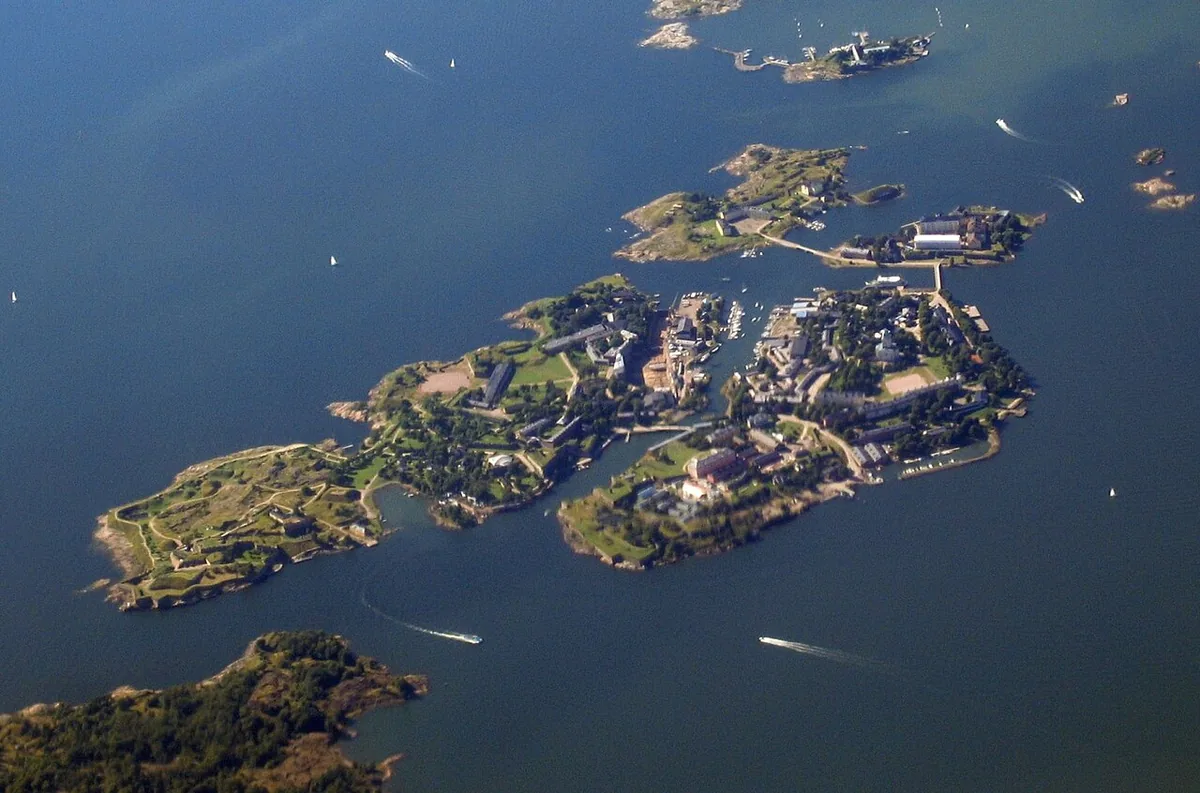
The nearby Market Square (Kauppatori) and ferry terminal are five minutes' walk for ferry connections to Suomenlinna.