“The largest wooden old town in the Nordic countries has been continuously inhabited since the fifteenth century, people still live in the six hundred seventeenth and eighteenth-century buildings that give Rauma its UNESCO recognition.”
About Old Rauma
Rauma's prosperity came from Baltic trade and a distinctive lace-making tradition that employed much of the female population and sent Rauma lace across Europe. The wooden town was rebuilt after fires in a coherent vernacular style; the absence of industrialization preserved it through the nineteenth century.
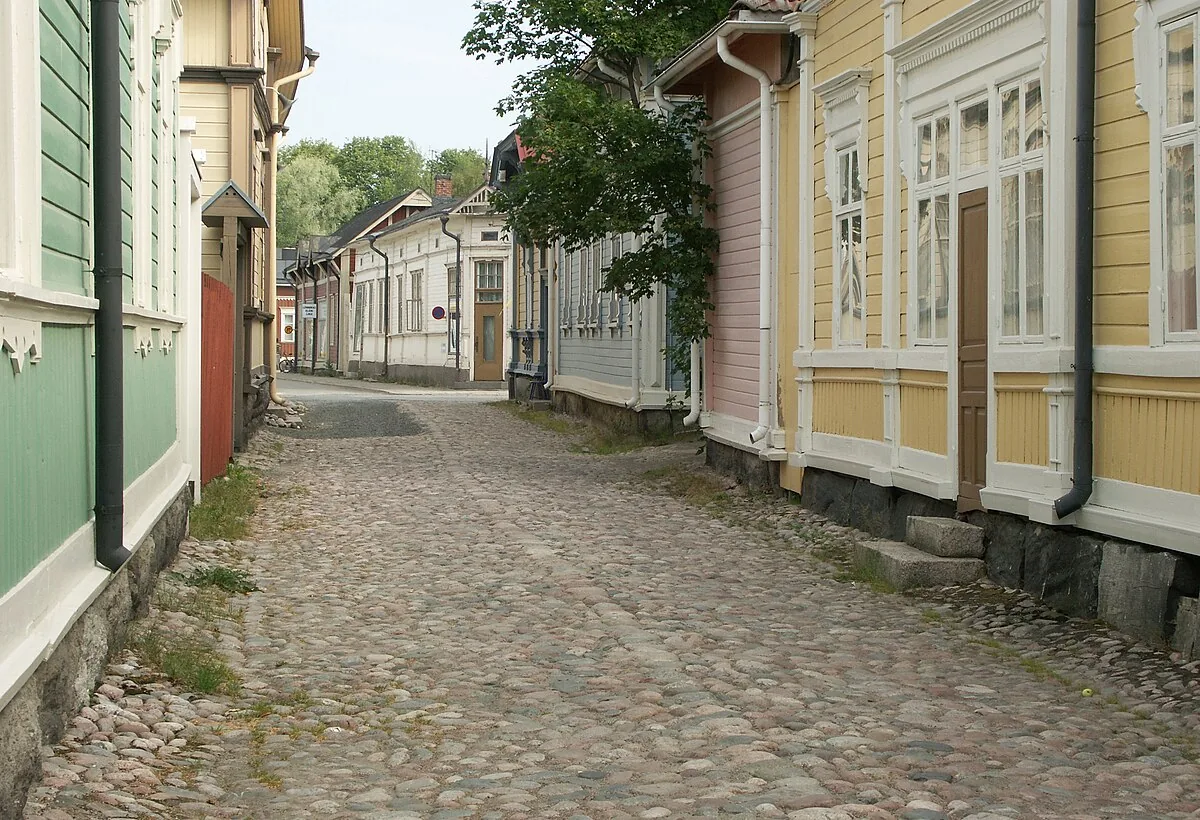
What Old Rauma actually is
Old Rauma is the largest wooden old town in the Nordic countries and a UNESCO World Heritage Site, approximately six hundred wooden buildings dating from the seventeenth and eighteenth centuries packed into a streetscape that has retained its pre-industrial urban character almost completely. The town of Rauma, on Finland's southwestern coast, was a significant port and lace-making center, and the wealth from those activities produced the merchant houses and guild buildings that make up the historic core.
Rauma was founded in the early fifteenth century and grew into a prosperous port town during the seventeenth century, trading fish, tar, and timber across the Baltic. The town developed a distinctive lace-making tradition, Rauma lace, that became famous across Europe and produced a significant cottage industry employing much of the female population. The wooden buildings that survive today were largely built after fires in the late seventeenth and early eighteenth centuries, with the town reconstructed in a consistent vernacular style that makes Old Rauma unusually coherent compared to other Scandinavian wooden towns. The lack of industrialization in the nineteenth century meant there was no commercial pressure to replace the wooden fabric with stone or brick.
The streets of Old Rauma are used rather than preserved, people live and work in the buildings, shops and cafes occupy the ground floors, and the town has a lived quality that distinguishes it from museum environments. The Church of the Holy Cross, a medieval Franciscan convent church at the center of the old town, is the oldest structure in Rauma. The Rauma Museum covers the lace-making tradition with demonstrations. The annual Lace Week in late July brings lace makers from across the world and transforms the town's social atmosphere. The old town dialect, Rauman murre, is distinct enough from standard Finnish to be occasionally incomprehensible to other Finns.
Rauma is on Finland's west coast , approximately 90 kilometres north of Turku. Bus connections from Turku take about ninety minutes. A car makes combining Rauma with the Kvarken Archipelago and Pori more efficient.
Rauma is on Finland's west coast , approximately 90 kilometres north of Turku.
The Experience
Walk the inhabited wooden streets past working shops and cafes, visit the medieval Church of the Holy Cross, watch lace-making demonstrations at the Rauma Museum, and attend Lace Week in late July when practitioners from across the world gather in the old town.
Why It Matters
The largest wooden urban environment in the Nordic countries and a UNESCO World Heritage Site, still functionally inhabited, with a living lace-making tradition.
Why Visit
Old Rauma feels like a town rather than a monument. The combination of genuine habitation, a surviving craft tradition, and one of the most intact wooden streetscapes in northern Europe makes it one of Finland's most complete heritage experiences.
✦ Insider Tips
- 1
Lace Week in late July is the most culturally rich time to visit; accommodation books up quickly so plan ahead.
- 2
The Church of the Holy Cross interior is one of Finland's finest medieval church interiors, don't skip it for the streets alone.
- 3
The old town's cafes serve Rauman pulla, a local cardamom bun variation, a worthwhile regional distinction.
- 4
Old Rauma's residents speak a distinctive local dialect; a few phrases in Rauman murre are appreciated by locals.