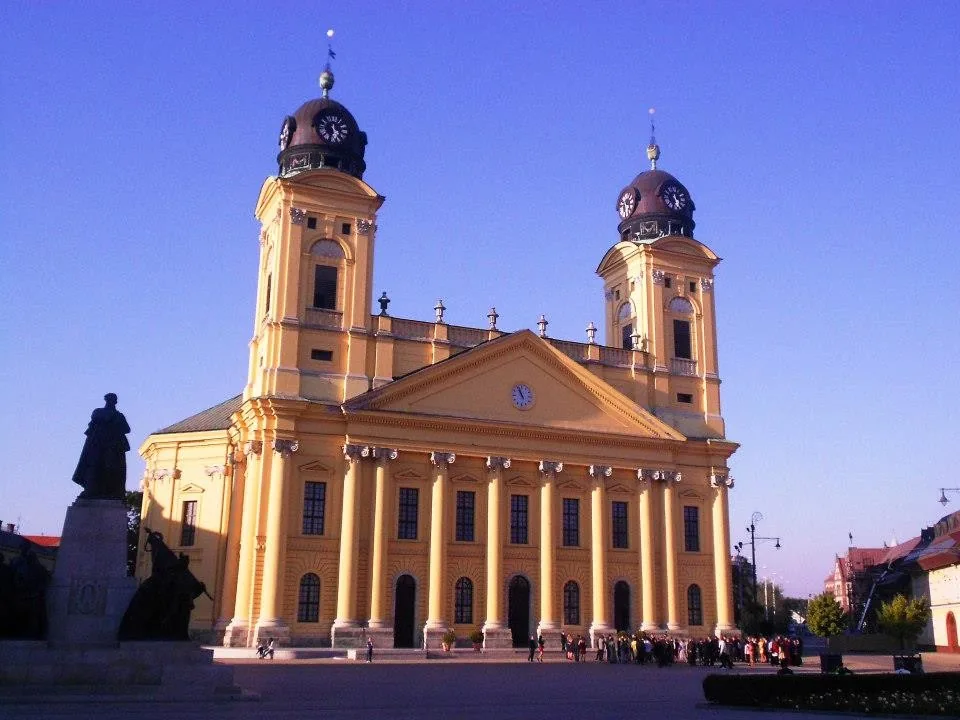
Great Reformed Church of Debrecen — modern landmark in Hungary
🏙️ ModernHungary · 47.5319° N

Great Reformed Church of Debrecen

The symbolic heart of Hungarian Protestantism is a 19th-century Neoclassical giant where Lajos Kossuth declared independence in 1849; the white-washed interior is stark and devoid of icons; emphasising the massive 5;000-pipe organ; sit in the oak pews at midday; the light through the tall; clear windows is blindingly bright; reflecting off the white walls with a clinical; austere clarity.

A revolutionary leader once stood at this pulpit to abolish an empire, yet the room itself is so quiet and white it feels like standing inside a cloud.

About Great Reformed Church of Debrecen

The site was originally home to the Gothic St. Andrew Church, which perished in the Great Fire of 1564, just as the Reformation was taking root in the city. Debrecen’s stubborn commitment to Calvinism earned it a unique status, and the city council spent decades planning a sanctuary that could reflect their newfound theological clarity. Between 1805 and 1824, the current structure rose from the ashes of another fire, designed with a Neoclassical restraint that eschewed icons in favor of pure geometry. In April 1849, the church transitioned from a house of prayer to a theater of war and politics. Lajos Kossuth used the sanctuary to read the Declaration of Independence, a moment that remains the high-water mark of Hungarian national identity. Despite the subsequent defeat of the revolution and the scars of two world wars, the building has been kept in a state of constant, loving repair, ensuring that the 'Kossuth chair' and the massive organ remain functional symbols of a city that refuses to be forgotten.

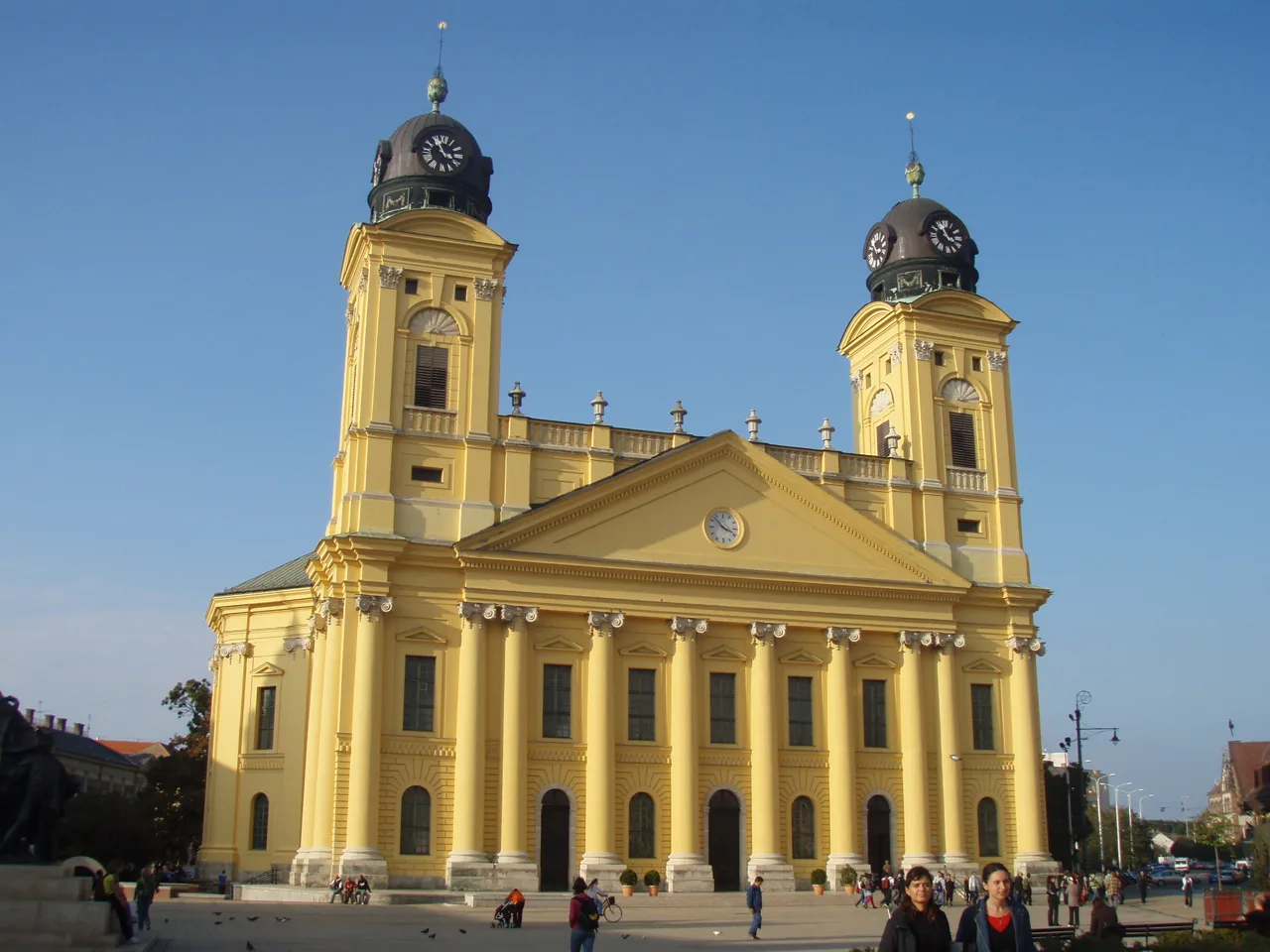
Dominating the main square of Hungary’s second city, this twin-towered Neoclassical giant serves as the definitive symbol of a community once known as the Calvinist Rome. The Great Reformed Church of Debrecen sheds the gilded artifice of the Baroque era for a vast, blindingly white interior that emphasizes the power of the spoken word over visual spectacle. Its pale yellow facade glows with a soft warmth against the often-gray skies of the Great Plain, standing on ground that has been hallowed by worshipers for nearly a millennium. The air around the plaza often vibrates with the deep resonance of the Rákóczi bell, while inside, the atmosphere is one of profound, airy stillness that encourages a different kind of reflection than the dark cathedrals of the west.

Debrecen’s spiritual heart has beaten on this exact spot since the medieval St. Andrew’s Church stood here in the 1300s. After a series of fires ravaged the previous structures, architects Mihály Péchy and later József Thaler began the current Neoclassical masterpiece in 1805, finishing it after nearly twenty years of labor. History forced its way into these hallowed halls in 1849 when Lajos Kossuth stood before the congregation to declare Hungary’s independence from the Habsburg Empire, briefly turning the sanctuary into the nation's political center. The church survived the heavy bombings of 1944, though its roof was largely destroyed, leading to a meticulous restoration that preserved its austere dignity. The presence of the original Rákóczi bell, cast from cannons used in the 17th-century wars of independence, serves as a heavy, metallic reminder of the city's defiant spirit.

Crossing the threshold, you notice the absence of incense and flickering candles, replaced by a flood of natural light reflecting off pristine white walls and honey-colored oak pews. The sheer volume of the space creates a light, upward pull for the eyes toward the massive pipe organ that dominates the western wall. You feel the grit and history of the wooden stairs as you ascend the towers, where the Rákóczi bell hangs in a cool, shadowy chamber that smells faintly of old iron and limestone. From the panoramic walkway connecting the two towers, you notice the red-tiled roofs of Debrecen spreading out like a carpet toward the distant horizon of the Hortobágy puszta. You hear the muffled clatter of the city’s yellow trams far below, a sound that feels entirely disconnected from the solemnity of the attic where the historic timber roof structures are on display. Most people overlook the small chair used by Lajos Kossuth, yet standing beside it brings the revolutionary fervor of 1849 into sharp, human focus.

Direct InterCity trains run hourly from Budapest’s Nyugati station, cutting across the vast Hungarian Great Plain in roughly two hours. The church is impossible to miss upon arriving at the Debrecen train station, as it sits at the far end of the main boulevard, Piac utca, reachable by a ten-minute ride on the Number 1 tram. If you are driving from the capital, the M3 and M35 motorways provide a smooth, fast connection that drops you right at the edge of the city’s pedestrianized heart. The square in front of the church is largely car-free, making the final approach a quiet walk past the fountains and flower beds that mirror the church’s grand scale.

The Experience

You feel the immense scale of the nave as soon as you step inside, a space so wide and bright it feels like an outdoor plaza brought under a roof. The silence here isn't the heavy, damp quiet of a crypt, but a crisp, airy stillness that makes the sound of a closing book echo like a gavel. You notice the intricate carvings in the dark wood of the pulpit, the only real flourish in an otherwise ascetic world of white plaster. Walking across the tower gallery, the wind whistles through the stone balustrades, and you notice the scent of rain or sun-warmed asphalt rising from the square below. Most visitors miss the detailed exhibit in the attic, but seeing the massive original beams that hold the roof together reveals the hidden engineering that supports such architectural ambition. It is a place that feels both monumental and intensely personal, especially when the organ begins to play and the entire floor vibrates with the low notes.

Why It Matters

The Great Reformed Church is the most important Protestant landmark in Central Europe, acting as a spiritual lighthouse for the Hungarian Reformed faith. It matters because it is the physical embodiment of Debrecen’s role as the 'Calvinist Rome,' a center of learning and resistance that shaped the nation’s intellectual and political path. It remains the site of Hungary's most significant democratic declaration, merging religious devotion with the birth of a modern republic.

Why Visit

Visit for the rare opportunity to see how architecture can be stripped of every ornament and yet remain profoundly moving. While Budapest’s churches are often cluttered with history, Debrecen offers a clean, architectural palate cleanser that celebrates light and logic. You come for the history of a revolution, but you stay for the singular view of the Great Plain from the tower bridge.

✦ Photo Gallery

Best Season

🌤 October is the most atmospheric time to visit, as the low sun of the Great Plain hits the yellow facade during the Reformation Day celebrations, casting long, dramatic shadows across the square.

Quick Facts

Location

Hungary

Type

attraction

Coordinates

47.5319°, 21.6239°

Learn More

Wikipedia article available

Insider Tips

  • 1

    Ascend the tower precisely at the top of the hour to hear the bells ring from just a few feet away, a sensory experience that is literally bone-shaking.

  • 2

    Look for the modest wooden chair near the pulpit where Lajos Kossuth sat; it remains the most significant political relic in the city.

  • 3

    Enter the church through the memorial garden at the rear to see the statue of the galley slaves, a somber tribute to the city's religious martyrs.

  • 4

    Time your visit for a midday organ recital when the acoustics of the vast, uncarpeted nave are at their most crystalline.

  • 5

    Walk the 'bridge' between the two towers for a perspective of the city grid that explains why Debrecen was such a defensible frontier outpost.

All of Hungary
Free Travel Tools
Games & Discover

Featured

Conquer the World

195 nations. One dart. Build your empire.

New Game

FateLand

Three darts. The world decides your fortune, heartbreak & legacy.

FateLand
Fortune. Heartbreak. Legacy. Throw & find out.
Show on Map