A thousand years of dust and tradition rise behind the hooves of indigo-clad horsemen who move through a landscape so flat that the earth's curvature feels like a personal revelation.
About Hortobágy National Park
Nomadic tribes recognized the value of these salt-crusted marshes long before the first permanent stones were laid. By the 1800s, the area had become the wild west of Eastern Europe, a place of outlaws and legendary shepherds who could navigate the featureless plains by the stars alone. The construction of the Nine-Hole Bridge in 1833 marked a turning point, replacing a vulnerable wooden structure with a resilient stone giant that could withstand the seasonal floods of the Hortobágy River. Protection came late but with conviction in 1973, when the state recognized that the drainage projects of the nineteenth century had nearly destroyed the steppe's unique ecosystem. Today, the park is a sanctuary for the grey cattle and the spiral-horned Racka sheep, species that would have vanished without this protected expanse. It remains a cultural landscape where the interaction between grazing animals and the soil is the only thing preventing the steppe from turning into a forest.
What Hortobágy National Park actually is
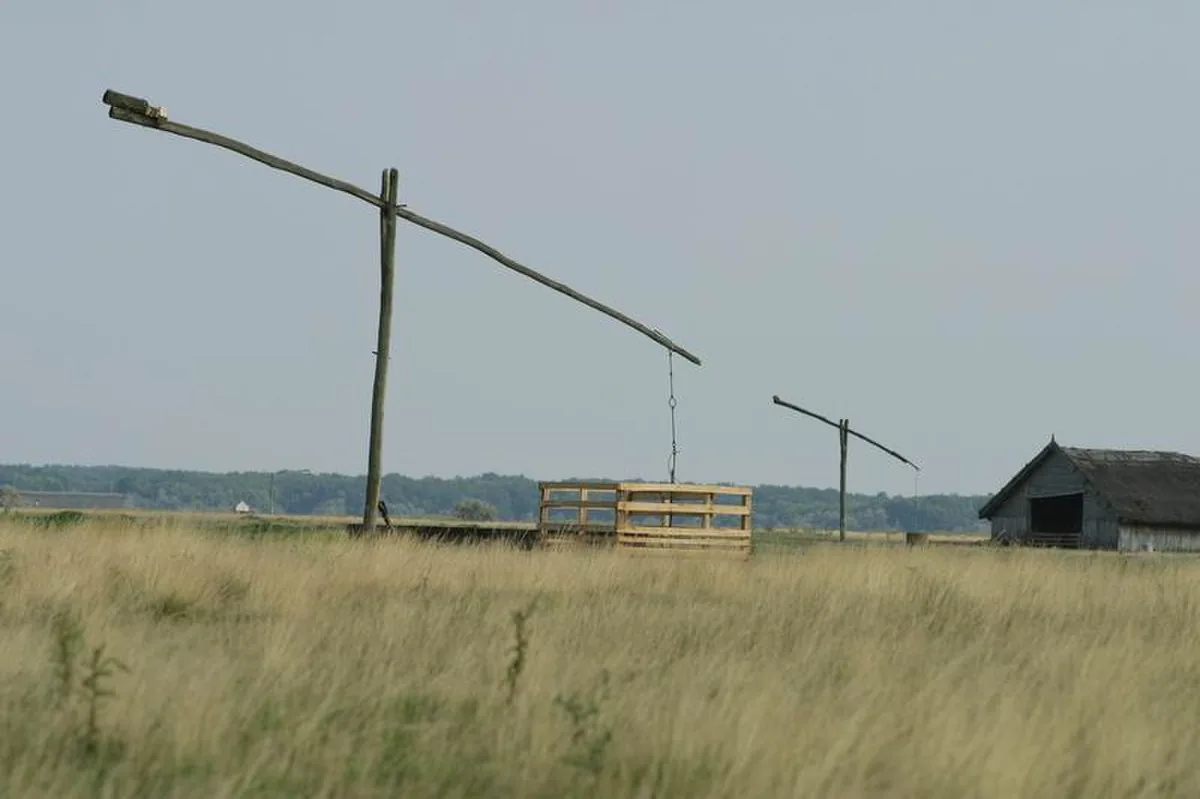
Horizon lines in the Hortobágy don't just suggest distance; they promise infinity. This vast alkaline steppe, known locally as the Puszta, stretches across eastern Hungary as a remnant of an ancient sea, now a dry ocean of grass where the sky occupies four-fifths of your vision. Bronze-skinned horsemen in pleated indigo robes gallop across the salt-dusted plains, while There is a scent of wild sage and the dry heat of a Hungarian summer. It feels like a land forgotten by the clock, where the only silhouettes breaking the flatness are the iconic T-shaped sweep wells reaching toward the clouds like skeletal fingers.
Humans have negotiated with this harsh
Humans have negotiated with this harsh landscape for millennia, yet the Hortobágy remains stubbornly wild. During the medieval period, the region was a vital transit route for cattle drives heading toward the markets of Vienna and Nuremberg. The Nine-Hole Bridge, completed in 1833, works as a sandstone shaped by this era, built to ensure the safe passage of salt and livestock through the swampy meadows of the river valley. In 1973, it became the country's first national park, protecting not just the unique alkaline flora but a way of life that had remained unchanged since the Magyars first arrived. The Puszta has seen its share of sorrow too, having was a site of forced labor camps in the mid-twentieth century, a somber layer of history that adds a quiet weight to the whistling wind.
A visit here is defined by the absence of urban noise. From somewhere comes the rhythmic thud of Nonius horses' hooves and the haunting, flute-like call of the Great Bustard hiding in the tall fescue. The light at mid-afternoon possesses a strange, shimmering quality that often produces the Délibáb, a heat mirage that makes distant groves of acacia trees appear to float above the ground. You might find yourself at an old 'csárda' or roadside inn, tasting a gulyás cooked in a heavy iron cauldron over an open fire, the smoke mixing with the cool evening air. The Nine-Hole Bridge feels massive standing beneath it, its shadows offering a brief respite from the relentless sun. As night falls, the park transforms into an International Dark Sky Park, where the Milky Way appears so dense and bright it feels almost tactile.
Trains from Budapest to Debrecen provide the most
Trains from Budapest to Debrecen provide the most reliable access, followed by a local connection or bus to the village of Hortobágy. Driving takes about two and a half hours from the capital, moving through increasingly flat agricultural lands until the fences disappear and the open steppe begins. Most of the inner wilderness remains accessible only through guided wagon tours or by permit, as the park authorities strictly protect the delicate nesting grounds and the grazing lands of the Racka sheep with their corkscrew horns.
The Experience
You stand on the wooden planks of a traditional horse-drawn wagon, the wind whipping the scent of dry grass against your face. The horizon seems to retreat as you approach it, a shimmering trick of the light that makes the T-shaped sweep wells look like giant birds of prey frozen in mid-flight. A specific silence here, broken only by the lowing of long-horned cattle and the cracking of a whip that sounds like a pistol shot in the still air. First, the deep, vibrant blue of the horsemen’s 'gatya' trousers, a color achieved through traditional indigo dyeing that stands out sharply against the golden-brown grass. It is a place where you feel small, not because of mountains or skyscrapers, but because of the terrifying, beautiful scale of the open sky.
Why It Matters
Hortobágy is the soul of the Hungarian agricultural identity, a living link to the pastoral roots of the Magyars. It represents the largest semi-natural grassland in Europe, a landscape where human culture and ecology have reached a rare, albeit fragile, equilibrium. The preservation of the Puszta horseman tradition is not a performance for tourists but a continuation of a skill set developed over centuries of survival on the steppe.
Why Visit
Go to the Hortobágy because it is the only place left in Europe where you can experience a horizon completely unmarred by modern structures. It offers a sensory reset that cities cannot provide, trading the flicker of screens for the shimmer of a desert-like mirage and the roar of traffic for the ancient sound of the Puszta wind. It is the ultimate antidote to the crowded, vertical world.
✦ Photo Gallery
4 photos of Hortobágy National Park · click to enlarge
Best Season
🌤 October is spectacular for the crane migration, when tens of thousands of birds descend upon the marshes in a cacophony of sound and movement that lasts until the first frosts.
Quick Facts
Best time to visit
October is spectacular for the crane migration, when tens of thousands of birds descend upon the marshes in a cacophony of sound and movement that lasts until the first frosts.
Getting there
In Hortobágy, Hungary; reach Hortobágy first, then continue to the site.
What's nearby
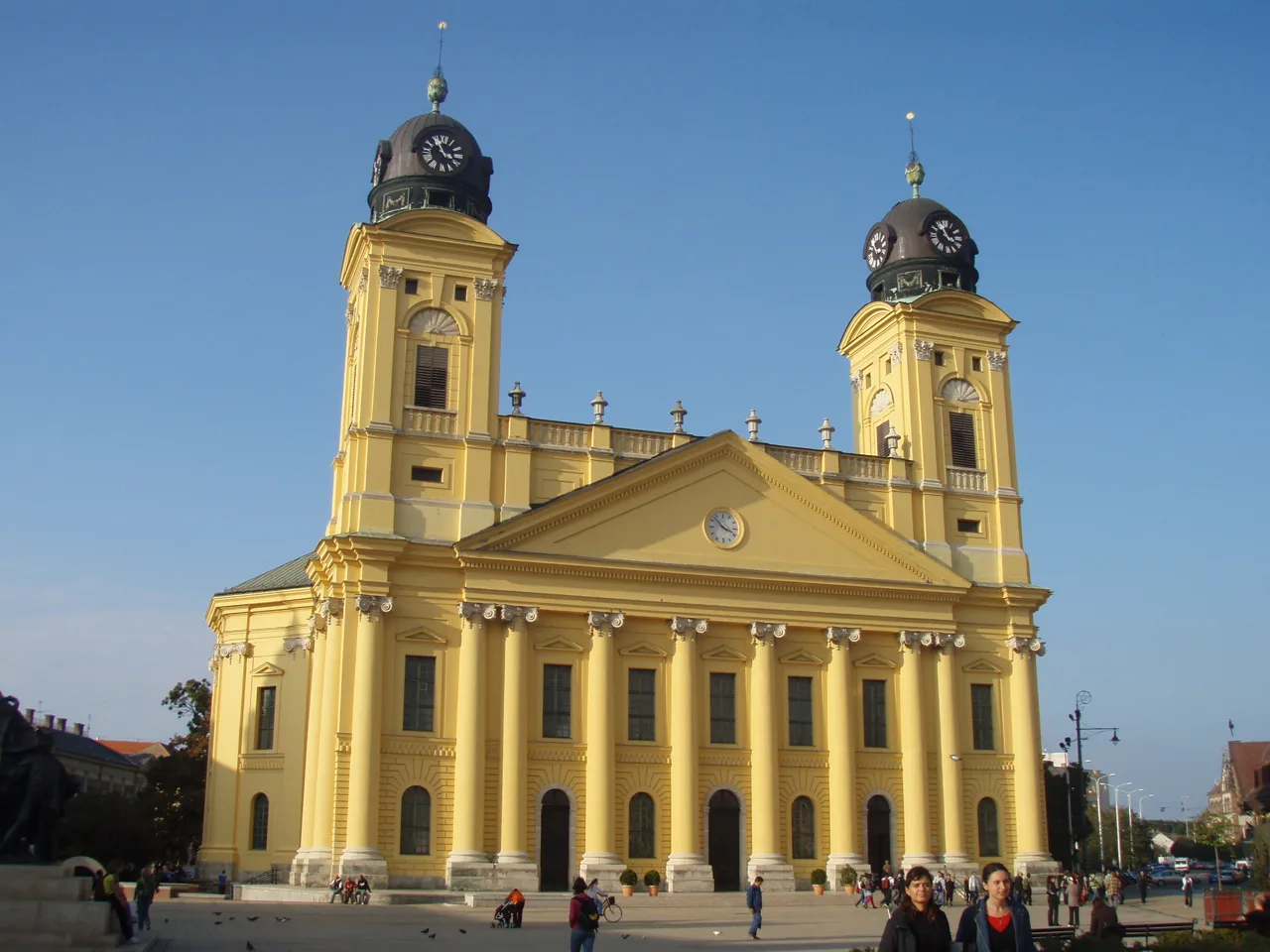
Great Reformed Church of Debrecen, Tokaj Wine Region and Baradla Cave are also in the area.
Location
Hortobágy, Hungary
Type
attraction
Coordinates
47.6000°, 21.1000°
Insider Tips
- 1
Book a guided 'stargazing walk' through the National Park office to experience some of the lowest light pollution in Europe.
- 2
Purchase a hand-carved shepherd’s crook or a traditional leather whip from the local artisans in the village; these are genuine tools, not mass-produced souvenirs.
- 3
Try the 'slambuc', a heavy, smoky pasta and potato dish traditionally cooked by shepherds over an open flame in a copper kettle.
- 4
Visit the Bird Hospital in Hortobágy village to see the rehabilitation of injured steppe eagles and storks before they are released back into the wild.