Steam rises from the dark water even in the depths of a snow-covered winter, where swimmers drift among tropical lilies in a lake that literally breathes through a volcanic vent.
About Lake Hévíz
While the lake formed ten thousand years ago, human interaction with its steaming depths spans from prehistoric tribes to Roman soldiers who utilized the peat-rich mud for healing. In the late 1700s, the noble Festetics family transformed the wild marsh into a sophisticated spa, importing exotic flora and building the iconic stilt-houses that give the lake its architectural character. Throughout the 1800s, scientists began to map the subterranean cave system that feeds the lake, discovering a massive thermal chamber where waters of vastly different temperatures collide. This geological pump ensures that the lake never stagnates and never freezes. In the 1900s, the medicinal traditions were codified into the 'Hévíz Traditional Therapy,' a regimen of mud baths and weight baths that remains a core element of Hungarian healthcare. The site has survived fires and political upheavals, remaining a constant, steaming heart for the region's people.
What Lake Hévíz actually is
Deep in the Pannonian basin, a geological miracle simmers with a heat that feels more like an embrace than a temperature. Lake Hévíz holds the distinction of being the largest swimmable biologically active thermal lake on the planet, a turquoise cauldron where the water entirely replaces itself every few days. From a distance, the lake appears as a steaming woodland pond, punctuated by the dark wooden pavilions that rise from its center on sturdy stilts. Thick forests of swamp cypress encircle the shore, their feathery leaves turning a deep copper in the autumn, providing a windbreak for the delicate lavender-colored water lilies that drift across the surface. Nearby, A heavy, earthy scent of peat and minerals, a signature aroma that signals the beginning of a profound sensory shift.
“Deep in the Pannonian basin, a geological miracle simmers with a heat that feels more like an embrace than a temperature.”
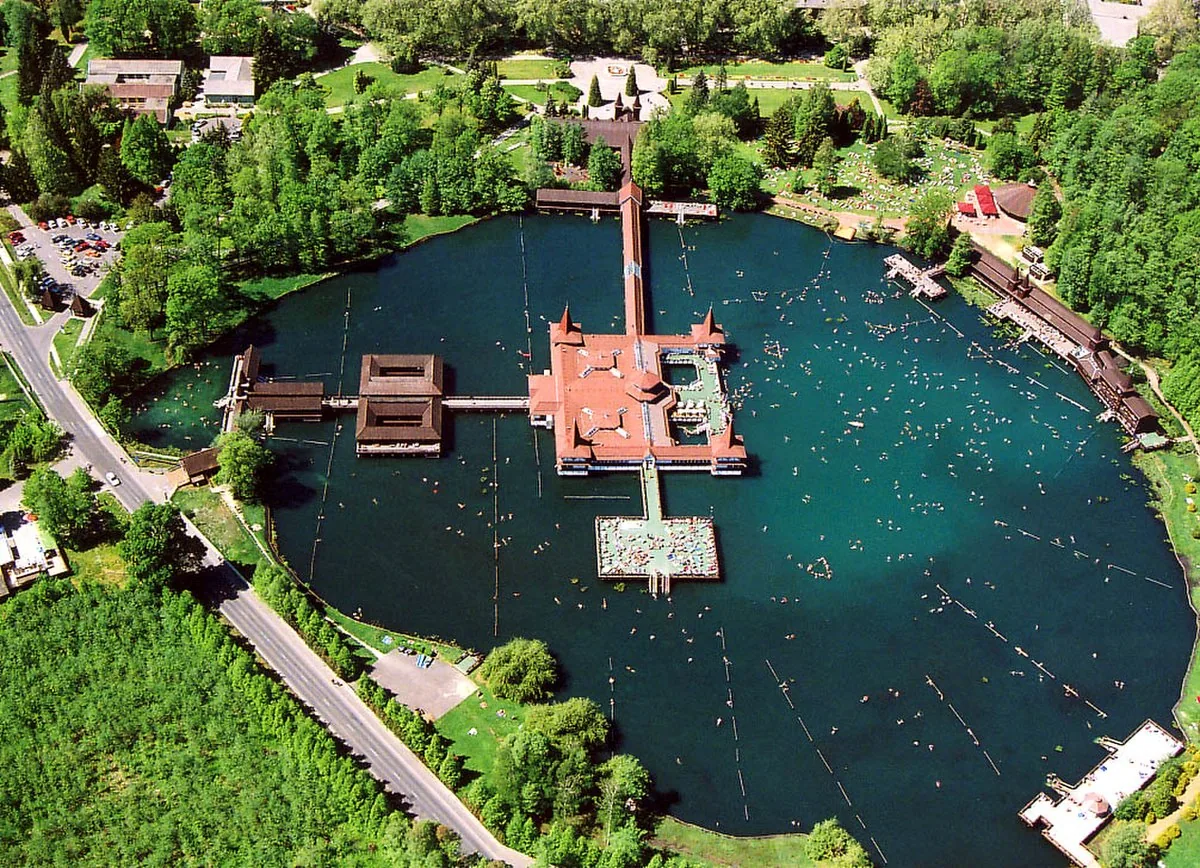
Lake Hévíz, Hungary
Roman legions were the first to document the restorative power of these waters, leaving behind coins and altars as tributes to the spirits of the spring. The modern era of Hévíz began in 1795 when Count György Festetics recognized the potential of the steaming marshland and began constructing the first wooden bathing houses. For over two centuries, the lake has been a sanctuary for those seeking relief from the ailments of the joints and spine, though its mechanism is purely volcanic. A cavern thirty-eight meters below the surface releases a pressurized jet of hot and cold water that blends into a perfect bath. During the nineteenth century, it became a fashionable retreat for the Austro-Hungarian elite, who arrived in horse-drawn carriages to soak beneath the lilies. Even the dark years of the twentieth century couldn't dampen the spring’s flow, and today the site is a world-class center for balneotherapy that remains deeply rooted in local tradition.
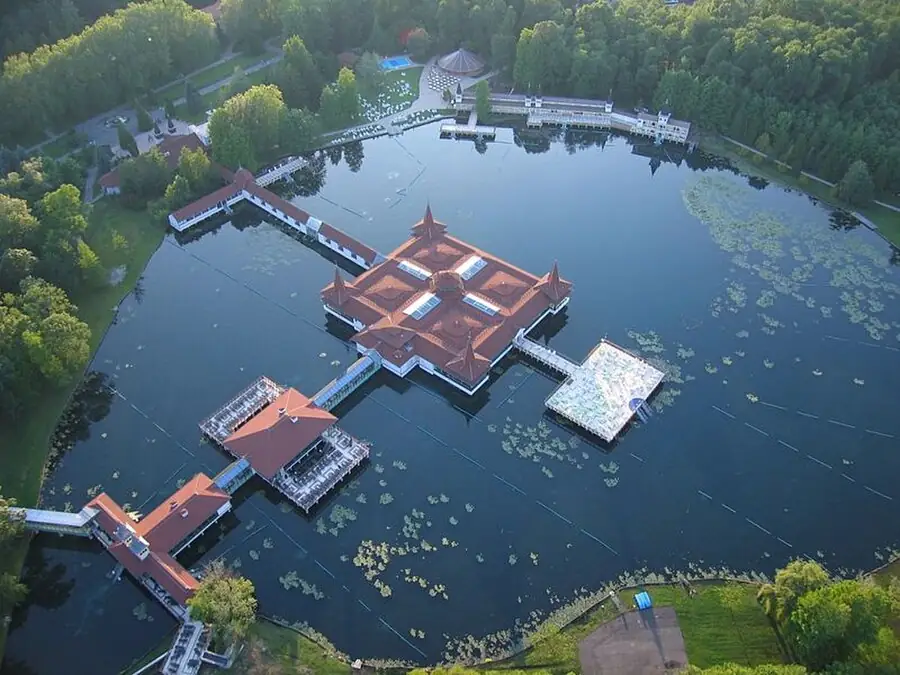
Lake Hévíz, Hungary
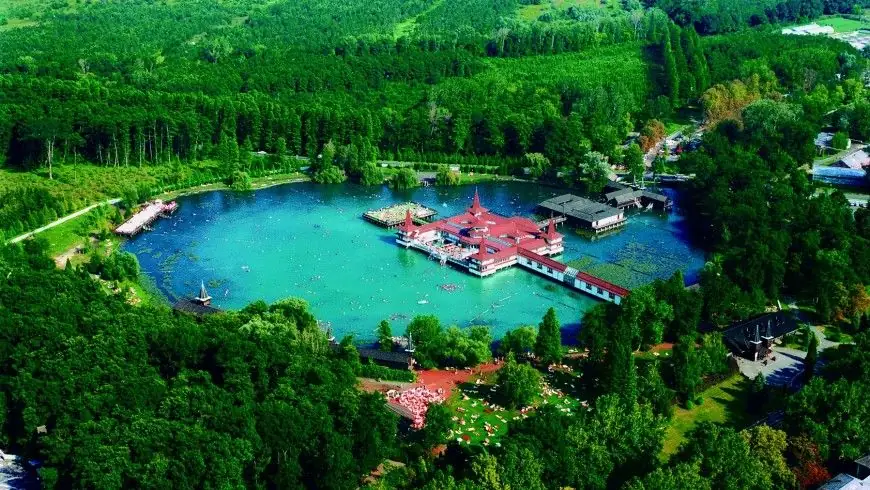
Lake Hévíz, Hungary
Buses run frequently from Budapest’s Népliget
Buses run frequently from Budapest’s Népliget station, carrying travelers across the rolling Transdanubian hills in about two and a half hours. If you prefer the rails, the train to Keszthely offers a photogenic journey along the southern shore of Lake Balaton, followed by a short ten-minute bus or taxi ride to the Hévíz gates. For those driving from the capital, the M7 motorway provides a fast connection, though the slower secondary roads through the vineyards of the Balaton Uplands offer a more atmospheric introduction to the region. The lake sits just a few kilometers from the western tip of Balaton, making it an easy day trip or a quiet, curative finale to a tour of Hungary’s grand lakeside estates.
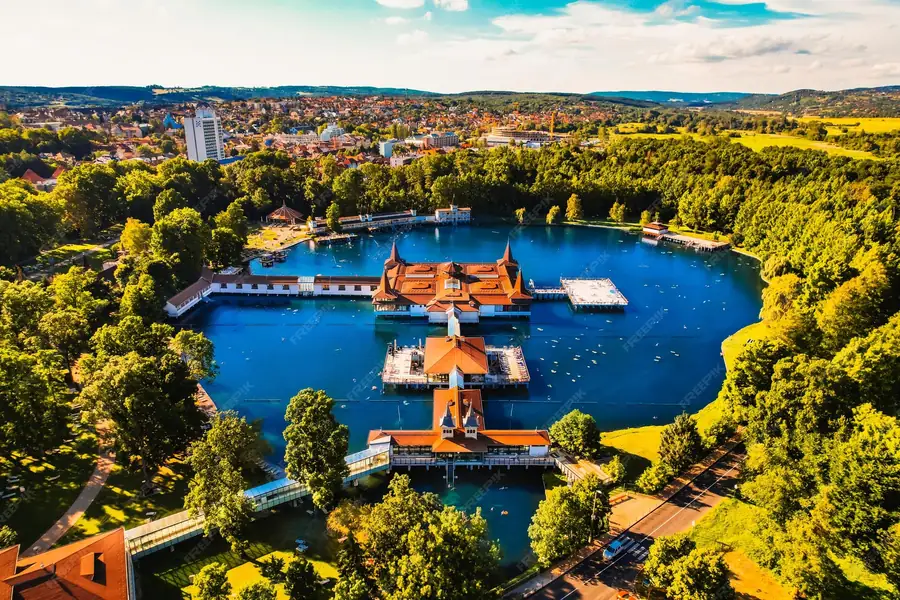
Lake Hévíz, Hungary
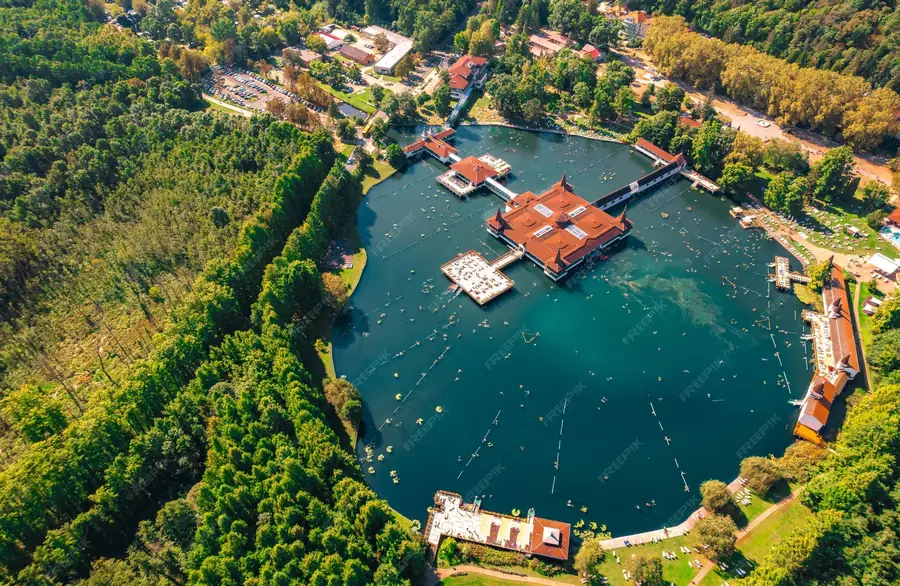
Lake Hévíz, Hungary
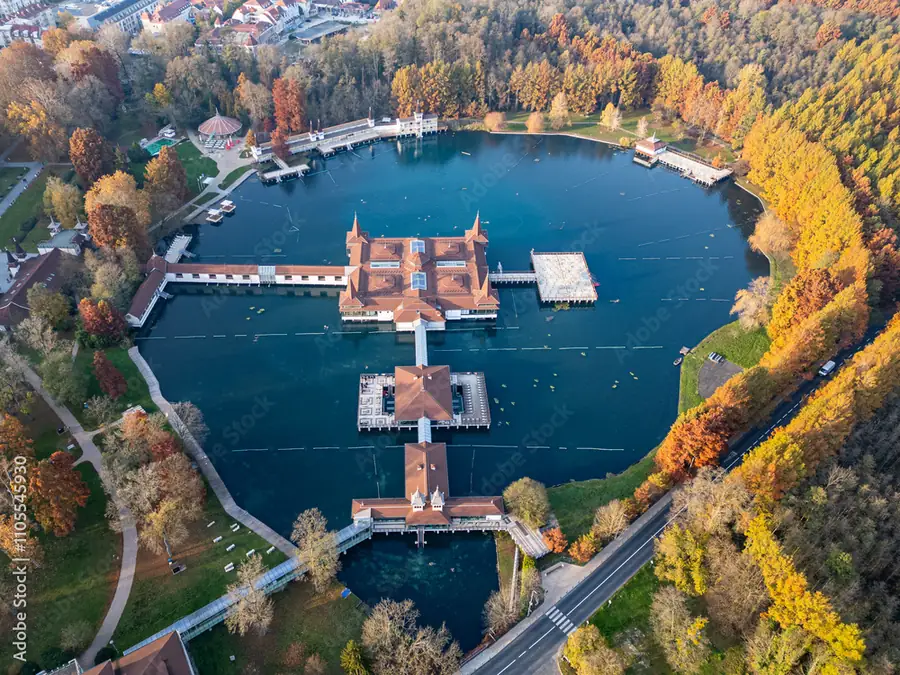
Lake Hévíz, Hungary
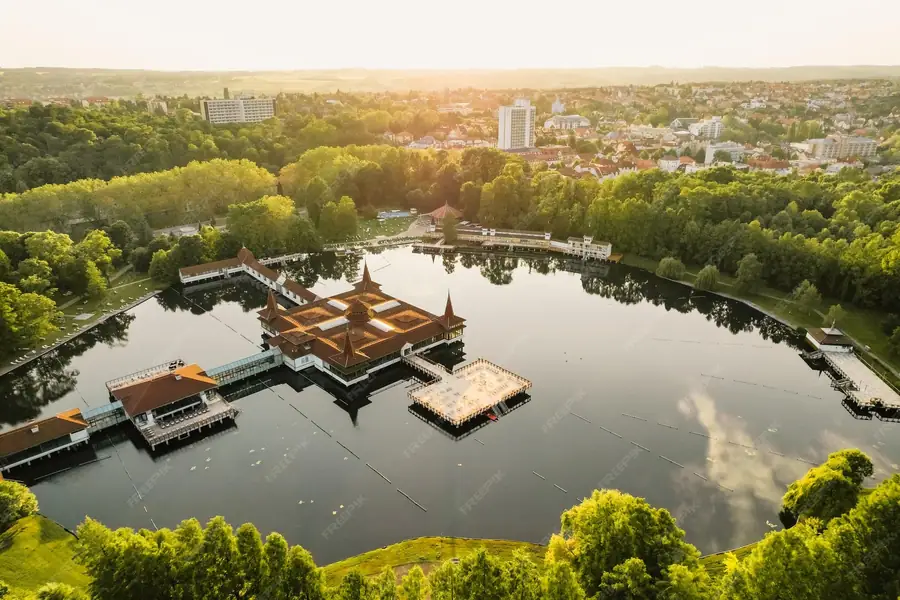
Lake Hévíz, Hungary
Visiting Lake Hévíz
Lowering yourself into the water, a strange, tingling weightlessness that standard swimming pools cannot replicate. The floor of the lake is covered in a thick layer of dark medicinal mud, soft as velvet and rich with minerals, which you can feel shifting underfoot in the shallower parts. Nearby, the rhythmic splash of swimmers paddling between the wooden piers, their voices muffled by the rising steam that blurs the edges of the forest. Sunlight filters through the cypress canopy in shafts of gold, catching the translucent petals of the Indian red water lilies. Those who come overlook the gentle current that slowly rotates the entire body of water in a clockwise direction, a natural massage that follows you as you drift. The contrast between the cool mountain air on your face and the constant, reliable warmth surrounding your limbs. What sticks with you is floating in the center of the lake at dawn, where the mist is so thick as though you are bathing in a cloud.
The Experience
The opening is the peculiar texture of the water, which feels silky and remarkably buoyant due to its high mineral content and the natural gas bubbles rising from the depths. The sounds of the town fade away as you move into the deeper central sections, replaced by the soft rustle of cypress needles and the occasional call of a water bird. The medicinal mud between your toes in the wade-in areas, a dark and ancient silt that feels strangely nourishing. Looking up from the water, the sight of the historic wooden bathhouse complex, with its pointed red towers, makes you feel like you've slipped into a nineteenth-century landscape painting. The majority miss the small, colorful fish that dart among the lily stems, perfectly adapted to the year-round warmth. It is a place of deep, meditative quiet that lingers in your muscles long after you have dried off.
Why It Matters
Lake Hévíz is a biological rarity, a massive thermal ecosystem that supports unique microbes and plants found nowhere else in Europe. Historically, it represents the pinnacle of the Hungarian bathing culture, a tradition that blends scientific medicine with the ancient ritual of the spring. It is a living monument to the subterranean volcanic forces that have shaped the Pannonian landscape for millennia.
Why Visit
Forget the chlorinated crowds of urban spas; Hévíz offers a raw, direct connection to the planet's internal heat. You come here to float in a living forest, where the water is as fresh as a mountain stream but as warm as a bathtub. It is the only place in the world where you can swim in a literal volcanic cauldron while surrounded by the quiet elegance of a European park.
Insider Tips
- 1
Rent a swimming ring even if you are a strong swimmer; the water is quite deep and the mineral content makes active treading surprisingly tiring over an hour.
- 2
Remove all silver jewelry before entering the water, as the sulfur content will turn it black almost instantly.
- 3
Walk the shaded forest trail that circles the lake after your soak to let your body gradually reacclimatize to the air temperature.
- 4
Look for the 'Doctor's House' in the town nearby to see the original nineteenth-century architecture that housed the lake’s first medical pioneers.
- 5
Visit the local farmers' market on the outskirts of the town on a Thursday morning to find artisanal honey and lavender soaps made from plants grown in the lake's unique microclimate.