“Entire villages were taken apart with surgical precision and moved hundreds of miles just to prove that a house made of mud and straw can outlast the empire that built it.”
About Skanzen Open Air Museum
Ethnographers began their frantic collection in the late 1960s, realizing that the 'centuries-old' way of life was disappearing in a single generation of socialist modernization. The first regional unit opened in 1974, but the project is far from finished, with new clusters still being added to represent every corner of the historic Hungarian landscape. Each building was chosen not just for its beauty, but for its story, like the 19th-century pharmacy or the rural schoolhouse that still holds the faint scent of chalk. It is a monumental feat of salvage archaeology that transformed a quiet valley into a sanctuary for the nation's discarded heritage.
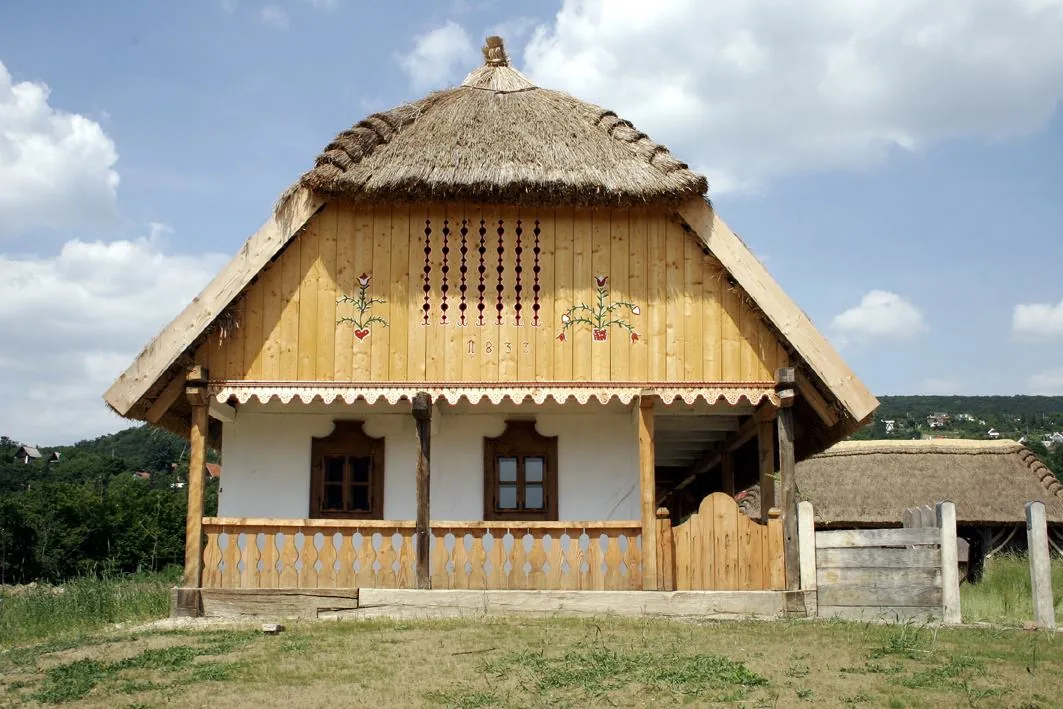
What Skanzen Open Air Museum actually is
Rolling across sixty hectares of the Pillis foothills, this living archive breathes life into the vanished rural architecture of the Carpathian Basin. Far from a static gallery of dusty glass cases, the Skanzen at Szentendre functions as a time-warped village where the creak of a watermill and fresh sourdough are as integral as the timber frames. Hundreds of authentic buildings were dismantled, piece by numbered piece, and transported from the farthest reaches of Hungary to be reassembled here. Passing through the different regional clusters feels like navigating a sprawling, topographic map made of whitewashed mud-brick and golden thatch. The environment often smells of woodsmoke and sun-warmed lavender, shifting moving from the water-clogged meadows of the Upper-Tisza region to the rugged, stone-heavy dwellings of the Bakony Mountains.
Rolling across sixty hectares of the Pillis foothills, this living archive breathes life into the vanished rural architecture of the Carpathian Basin.
the museum movement, 1967
Founding members of the museum movement in 1967 were racing against the rapid industrialization that threatened to erase the architectural memory of the Hungarian peasantry. They sought to document a world before plastic and electricity, focusing on the vernacular genius of the 18th to mid-20th centuries. Architects and ethnographers spent years in remote borderlands, identifying the most representative barns, belfries, and wine cellars. One of the most haunting structures is the tiny wooden church from Mánd, which arrived in 1970 with its painted floral ceilings intact. These buildings are survivors of floods, wars, and the creeping urban sprawl that smoothed over regional distinctions. By meticulously transplanting these homes, the curators preserved the specific social hierarchies and domestic rituals of an era where a decorated chest or a specific pitch of a roofline told the world exactly who you were.
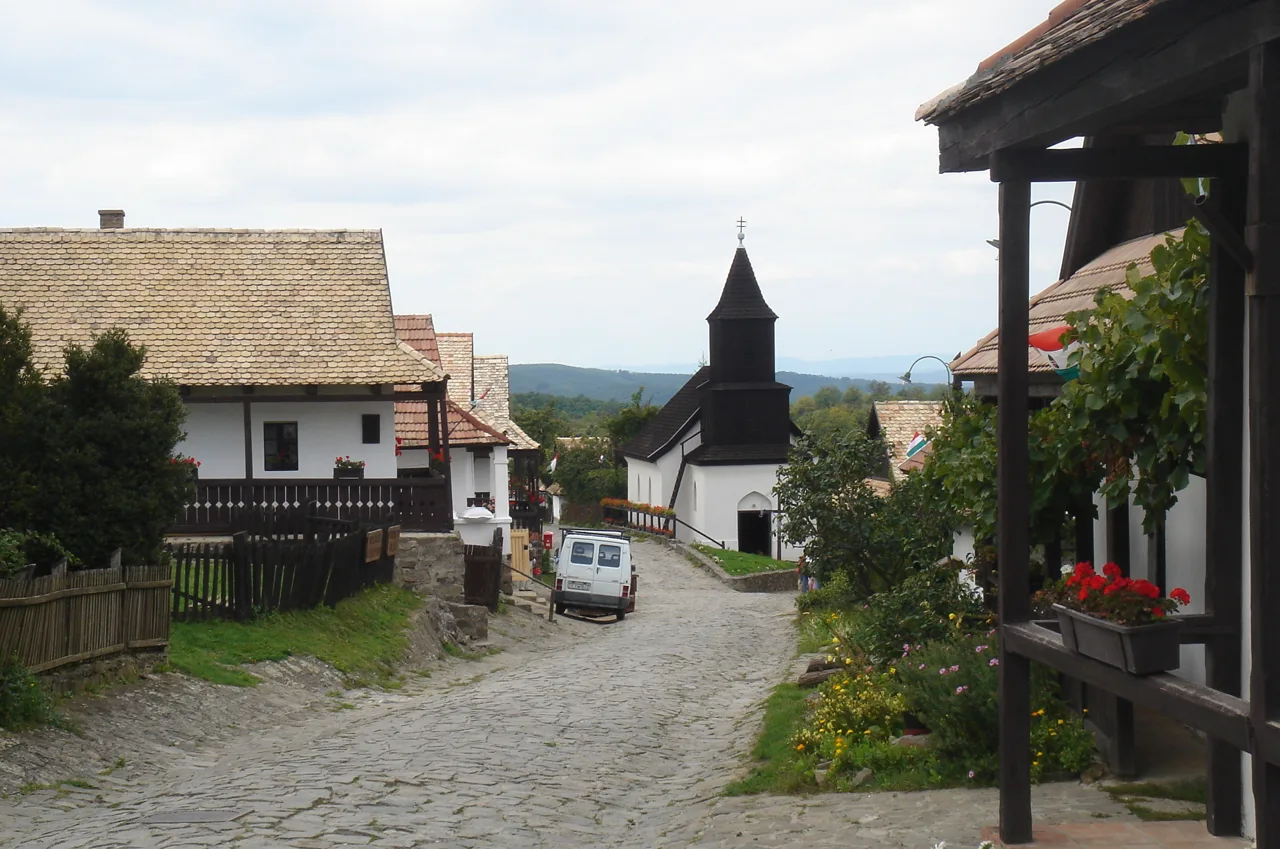
The texture of the world changing underfoot as you transition from the dusty paths of the Great Plain to the shaded, cobbled alleys of a North Hungarian village. The hum of a working blacksmith’s hammer rings through the air, providing a rhythmic backdrop to the soft lowing of Hungarian Grey cattle in the pastures. Inside the cottages, the light is dim and cool, filtered through small windows that smell faintly of geraniums and old lime wash. The weight of the past in the heavy, low-slung beams of the smoke-kitchens, where soot still clings to the stones like a dark velvet. The museum train, a charmingly clattering vintage railcar, offers a cross-sectional view of the landscape, but the real magic happens when you sit on a porch in the Upland region and watch the shadows stretch across the hills. People generally overlook the tiny vegetable gardens, yet these plots hold the specific heirloom herbs and vegetables that once sustained a family through a harsh winter.
Suburban H5 trains depart from Batthyány
Suburban H5 trains depart from Batthyány tér in Budapest, arriving in the riverside town of Szentendre in about forty minutes. From the station, a local bus timed to the train’s arrival whisk travelers directly to the museum gates. Driving from the capital takes about half an hour, following the Danube northward through a landscape that gradually loses its urban edge. Bicycling from Szentendre’s town center along the marked trails is a favored local route, providing a slow-motion introduction to the rolling scenery before the first thatched roofs appear on the horizon.
Suburban H5 trains depart from Batthyány tér in Budapest, arriving in the riverside town of Szentendre in about forty minutes.
The Experience
What you hear is the vintage motor-rail clattering across the fields is the heartbeat of the park, pulling you through centuries in a matter of minutes. The sudden drop in temperature when entering a 'pinceház' wine cellar, a cool, subterranean silence that contrasts with the bright, windy meadows outside. Straight off, the meticulous detail in the embroidery of a Sunday dress hanging in a bedroom, a splash of color in an otherwise earthy world of wood and stone. The piece that stays with you is usually the simplest: the taste of a warm 'langalló' flatbread pulled from a communal oven, reminding you that these houses were once homes, not just exhibits.
Why It Matters
Skanzen is the largest open-air museum in Hungary and serves as the primary guardian of the nation's folk architecture and intangible heritage. It matters because it provides a tactile, three-dimensional history of the ordinary person, focusing on the ingenuity of survival and the beauty of functional design. It is the only place where the divergent cultures of the Hungarian regions can be understood as a single, coherent narrative of resilience.
Why Visit
Ignore the skeptics who call it a 'theme park'; this is a time machine for the senses. You visit the Skanzen because it offers a panoramic view of an entire country’s soul in a single afternoon, something no city museum can achieve with mere photos and text. It is the only place where you can walk from the border of Ukraine to the edge of Austria in an hour, feeling the history through the soles of your shoes.
✦ Insider Tips
- 1
Look for the 'Living Heritage' sites where artisans demonstrate rare skills like blue-dyeing or lace-making using 18th-century techniques.
- 2
Walk to the very back of the park to the North Hungarian Village to find the quietest spots and the most dramatic views of the Pillis Mountains.
- 3
Try the freshly baked bread from the bakery in the Great Plain region; they use traditional wood-fired ovens that produce a crust you cannot find in the city.
- 4
Check the festival calendar for 'Whitsun' or 'St. Martin’s Day' to see the museum populated by hundreds of locals in traditional dress performing ancient rituals.