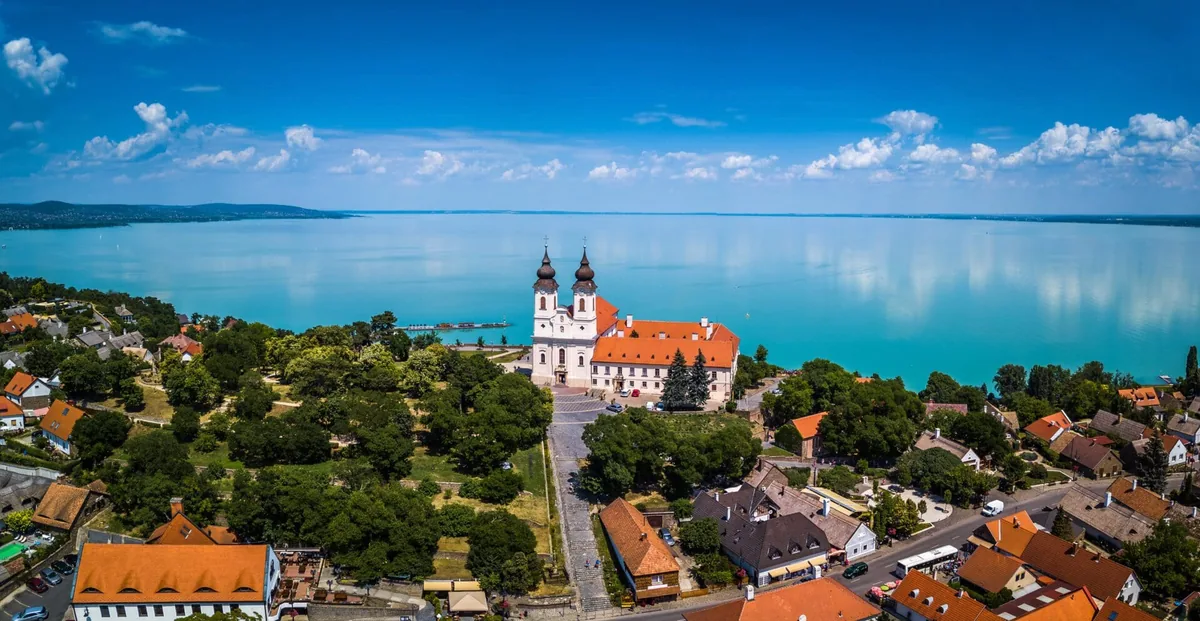
A royal tomb from the eleventh century sits undisturbed in a cellar here, while outside, the landscape is defined by the chimneys of dead geysers and the scent of French lavender.
About Tihany Peninsula
The peninsula’s narrative began in fire, shaped by volcanic eruptions that created the basalt cliffs and the unique inland lakes that sit higher than the Balaton itself. King Andrew I solidified its human history in 1055, founding the Benedictine Abbey and ensuring his own eternal rest in the Romanesque crypt. This charter is the birth certificate of the Hungarian language. Centuries later, the monks faced the Ottoman tide, turning their place of peace into a fortified bastion. The peace that followed in the 18th century brought the Baroque reconstruction we see today. In the 1920s, a bitter-sweet chapter saw the last Habsburg King, Charles IV, held captive in the abbey before his final exile. This layer of royal drama blends with the 1950s introduction of industrial lavender cultivation, which transformed the volcanic soil into a fragrant purple sea that saved the local economy during the dark years of the Cold War.
Jutting into the milky turquoise waters of Lake
Jutting into the milky turquoise waters of Lake Balaton, this volcanic finger of land feels less like Central Europe and more like a daydream of the Mediterranean. This space carries a heavy, floral sweetness from the vast purple lavender fields that carpet the interior, mixed with the cool, saline breeze rising from the shoreline. Tihany divides the lake at its narrowest point, creating a dramatic landscape of basalt cliffs, crater lakes, and reed-fringed marshes. White-washed cottages with thick thatched roofs line the cobblestone streets of the village, huddled beneath the twin spires of a Benedictine Abbey that has stood guard over the water for nearly a thousand years. While the rest of Balaton hums with the energy of summer resorts, Tihany maintains a quiet, aristocratic grace anchored in its deep geological and monastic roots.
History
King Andrew I chose this heights in 1055 to establish a Benedictine monastery, leaving behind a foundation charter that remains a linguistic treasure as the oldest surviving document containing Hungarian words. The Romanesque crypt beneath the present-day church still houses the king’s simple stone sarcophagus, the only royal tomb in Hungary that remains in its original location. During the sixteenth century, the abbey transformed into a border fortress, its monks trading prayer beads for swords to repel the Ottoman expansion. The current Baroque structure rose in the 1700s, reflecting a period of renewed prosperity that saw the introduction of the lavender plants that now define the peninsula’s identity. Volcanic activity millions of years ago left behind more than eighty geyser cones, unique formations that the local people once believed were the chimneys of subterranean spirits.
Walking the promenade at Echo Hill,
The way the light catches the ripples of the lake, turning the water a deep, opaque green that seems almost tropical. The famous Tihany echo might be fainter today due to modern buildings, but the silence of the Inner Lake, Belső-tó, offers a different kind of auditory clarity. The rhythmic croak of frogs and the distant lowing of grey cattle grazing in the crater of a long-extinct volcano. The texture of the place is found in the coarse basalt stones of the hermit caves, where Basilian monks once carved lives out of the cliffside. A sense of suspended time when sitting on the abbey wall at dusk, watching the ferries shuttle like clockwork between the shores. The scent of drying lavender hangs in every doorway, a persistent reminder of the harvest that sustains the village’s quiet rhythm.
Ferries run continuously from Szántód
Ferries run continuously from Szántód on the southern shore, providing a ten-minute crossing that offers the best panoramic view of the abbey’s silhouette. If arriving from Budapest, a two-hour train ride to Balatonfüred followed by a local bus or a bicycle rental along the scenic coastal path is the most rewarding approach. Driving onto the peninsula allows access to the more remote hiking trails around the Outer Lake, though the village center remains largely a pedestrian world of narrow alleys and steep climbs. Avoid the midday peak during summer weekends; the peninsula is best discovered in the early morning light when the lavender is still heavy with dew.
The Experience
First, the temperature drop as you descend into the 1,000-year-old crypt, where the air is still and smells of damp limestone. Outside on the clifftops, the wind brings the scent of the 'Lóczy' trail, a mixture of sun-baked earth and bitter almond trees. The rough basalt walls of the hermit cells, small rooms carved directly into the rock by medieval monks seeking total isolation. Just about everyone stick to the souvenir shops, but the real soul of Tihany is found at the Belső-tó, the inner lake, where you can watch the sunrise reflect off the crater walls in total solitude. From somewhere comes the chime of the abbey bells echoing across the water, a sound that has signaled the end of the day for generations of fishermen and monks alike.
Why It Matters
Tihany is the spiritual and ecological crown of Lake Balaton, acting as the country's first designated landscape protection area. It preserves the only original royal burial site in Hungary and the nation's oldest written linguistic fragments. The peninsula serves as a living museum of volcanic geology and monastic perseverance, proving that culture can flourish even on the rugged edge of a crater.
Why Visit
Go to Tihany because it provides a verticality and a historical depth that the flat, sandy beaches of the southern shore lack. It is the only place in the region where you can hike through volcanic geyser fields in the morning and listen to a world-class organ concert in a Baroque abbey by afternoon. It is the sophisticated, fragrant heart of the Hungarian sea.
✦ Photo Gallery
Best Season
🌤 Mid-June to early July is the peak of the lavender bloom, when the fields turn a vibrant purple and the village hosts its annual harvest festival.
Quick Facts
Best time to visit
Mid-June to early July is the peak of the lavender bloom, when the fields turn a vibrant purple and the village hosts its annual harvest festival.
Getting there
In Tihany, Hungary; reach Tihany first, then continue to the site.
Location
Tihany, Hungary
Type
attraction
Insider Tips
- 1
Hike to the 'Golden House' geyser cone at sunset for a view of the inner lake that feels like a prehistoric landscape.
- 2
Try the lavender-infused beer or ice cream found in the village, but skip the main square and look for the smaller producers on the side streets.
- 3
Walk the trail to the Friar's habitations (Barátlakások) to see the only remaining cave monastery in Central Europe.
- 4
Look for the 'goat claws' on the beach, which are actually fossilized prehistoric clam shells that local legends say are the hooves of a cursed herd.