Connemara (Kylemore Abbey) — Ireland
🏙️ ModernIreland

Connemara (Kylemore Abbey)

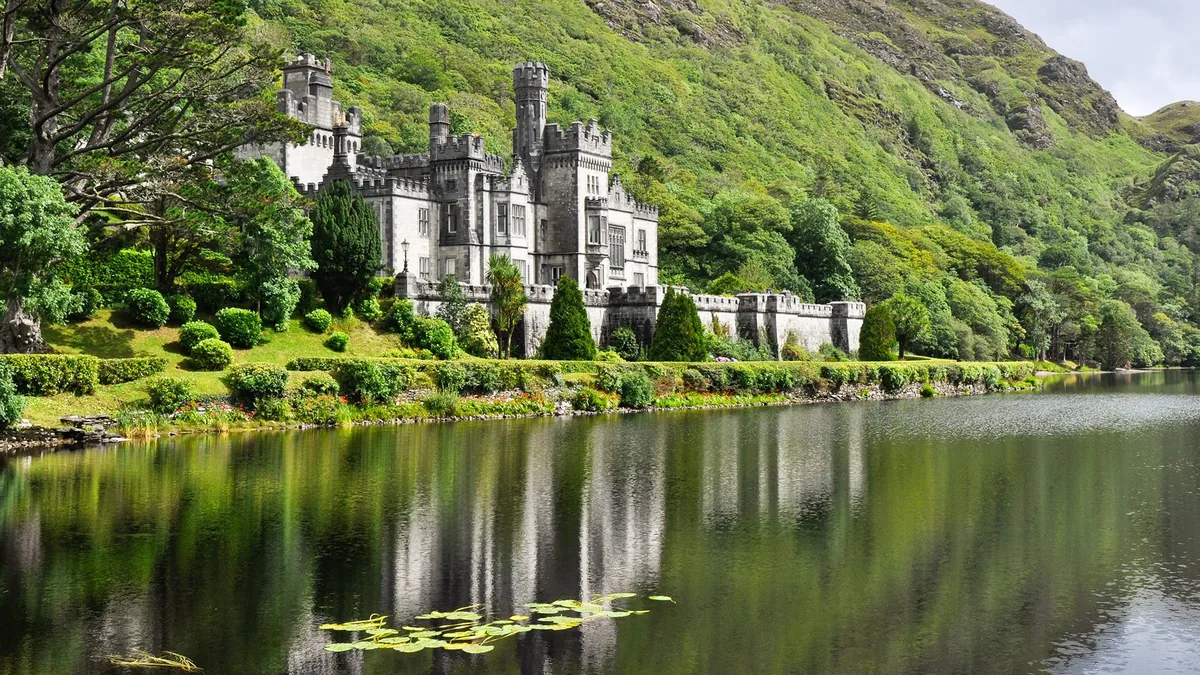
A 19th-century Neo-Gothic granite castle mirrored in the still waters of Pollacapall Lough; featuring a walled Victorian garden and a miniature cathedral; the estate is backed by the jagged Twelve Bens range; view the facade at 11 am; the light reflects off the silver-grey stone while the scent of damp peat and wild rhododendrons defines the humid; western air.

LocationIrelandTypeattraction🌤 May is the ideal time to visit, as the rhododendrons are in full bloom across the estate and the walled garden begins its summer peak.Search on Map

Built as a sprawling monument to a honeymoon romance, this castle eventually became a fortress of peace for Benedictine nuns fleeing the trenches of the First World War.

About Connemara (Kylemore Abbey)

Mitchell Henry transformed thousands of acres of bogland into a productive estate, proving that the rugged west of Ireland could be farmed with modern techniques. The abbey building itself features a façade of granite brought by sea from Dalkey and white limestone from Italy. Following the Henry era and a brief period of ownership by the Duke and Duchess of Manchester, the Benedictine community took over in 1920. They established an international boarding school that ran for decades, educating girls from around the world within these granite walls. Today, the nuns still live on the grounds, maintaining a life of prayer and work while overseeing the preservation of the historic site.

Kylemore Abbey looks like a shimmering granite mirage reflected in the glassy surface of Pollacapall Lough. Tucked into the base of Druchruach Mountain in the heart of Connemara, this neo-Gothic castle feels entirely out of place in such a wild, wind-scoured landscape. The grey stone towers and crenellations are softened by the surrounding woodland, creating a scene that belongs more in a Victorian fairy tale than a rugged Irish bog. The air here is often still, carrying the scent of damp earth and the sweet, heavy perfume of the Victorian walled garden nearby. It is a place defined by a strange, quiet elegance, a monument to both romantic devotion and religious sanctuary.

Kylemore Abbey looks like a shimmering granite mirage reflected in the glassy surface of Pollacapall Lough.

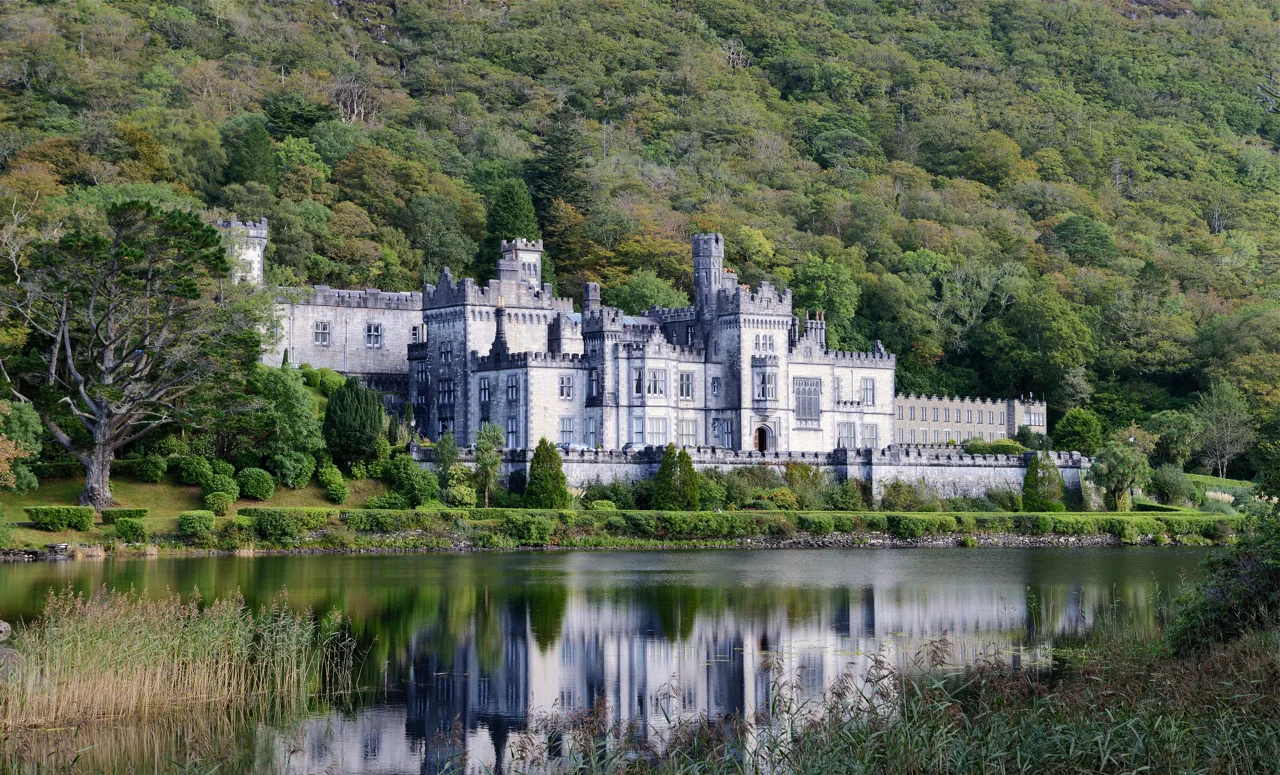
Connemara (Kylemore Abbey) in Ireland — photo 2

Connemara (Kylemore Abbey), Ireland

Mitchell Henry, a wealthy London doctor and politician, built this sprawling estate in 1867 as a love letter to his wife, Margaret. They had visited Connemara on their honeymoon and were captivated by its raw beauty. The construction was a massive undertaking, employing hundreds of local people and incorporating every modern luxury of the time. However, the dream was cut short when Margaret died of a fever during a trip to Egypt just four years after the castle was completed. Devastated, Mitchell eventually left Kylemore, and the estate passed through several hands before being purchased in 1920 by Benedictine nuns. These women were refugees fleeing the destruction of their abbey in Ypres, Belgium, during World War I, and they transformed the tragic castle into a functioning monastery and school.

As you walk along the lakefront path, the abbey’s reflection ripples with every light breeze, creating a surreal doubling of the architecture. You feel the cool, polished surfaces of the interior woodwork and see the light filtering through stained glass that commemorates the Henry family. The Gothic Church, a short walk from the main house, is a miniature cathedral made of green Connemara marble and white Caen stone. Inside, the acoustics are perfect, often catching the faint echo of a choir or the rhythmic drip of condensation. The Victorian Walled Garden, reached by a short shuttle or a woodland walk, is a riot of heritage plants and carefully manicured gravel paths that provide a sharp contrast to the wild mountain slopes just beyond the brick walls.

Connemara is a region of twisting roads and sudden weather shifts, and the drive to Kylemore is part of the allure. Located on the N59 between Clifden and Westport, the abbey is accessible by car or through organized day trips from Galway City. The route takes you past black-faced sheep and through valleys that look like they haven't changed since the Bronze Age. Arriving at the abbey feels like finding an oasis of civilization in the middle of a wilderness. Most visitors spend several hours exploring the grounds, so it is wise to arrive early to see the garden before the afternoon sun begins to dip behind the mountains.

Connemara is a region of twisting roads and sudden weather shifts, and the drive to Kylemore is part of the allure.

The Experience

The transition from the wild Connemara moorland to the abbey's manicured grounds is a sensory shock. You notice the sound of small waves lapping against the shore of the lough, a gentle background noise to the hushed atmosphere of the abbey's halls. Inside the Gothic Church, the smell of old stone and beeswax lingers in the air. The most peaceful moment is often found in the fernery of the walled garden, where the humidity is high and the light is filtered through layers of green fronds, making the rest of the world feel miles away. It is a rare combination of Victorian opulence and monastic simplicity.

Why It Matters

Kylemore Abbey is a unique architectural survivor, representing the peak of 19th-century romanticism in Ireland. Historically, it serves as a reminder of the Belgian refugees who enriched Irish culture during the Great War. It remains one of the few places in Ireland where Victorian horticultural techniques are still practiced in their original setting within the walled garden.

Why Visit

Visit Kylemore for the contradiction. It is a high-society castle dropped into a landscape of bog and mountain. The story of the Henry family is heartbreakingly human, and the subsequent transformation of the site by the Benedictine nuns adds a layer of spiritual depth you won't find at other manor houses.

Insider Tips

  • 1

    Take the shuttle to the Walled Garden first, then walk the mile-long woodland path back to the Abbey to see the lake from different angles.

  • 2

    The Benedictine nuns make their own chocolate and soap, which are significantly better quality than the generic souvenirs in the shop.

  • 3

    Visit the mausoleum where Mitchell and Margaret Henry are buried together; it is a quiet, moving corner of the woods often missed by crowds.

  • 4

    Look for the 'Giant’s Ironing Stone' near the lake, a massive boulder that features in local folklore.

  • 5

    Try the scones in the Mitchell’s Cafe; they use a traditional recipe that has been a staple of the estate for decades.

Free Travel Tools
Games & Discover

Featured

Conquer the World

195 nations. One dart. Build your empire.

New Game

FateLand

Three darts. The world decides your fortune, heartbreak & legacy.

FateLand
Fortune. Heartbreak. Legacy. Throw & find out.
Show on Map