The sound of these thousands of green stalks knocking together in the wind is officially protected by the Japanese Ministry of Environment as a national treasure of noise.
About Arashiyama Bamboo Grove
The Arashiyama area was originally the hunting grounds for the 8th-century court, but it soon became a center for religious life. The bamboo was prized not just for its beauty, but for its utility in construction and the crafting of tea ceremony utensils. During the 14th century, the great Zen master Muso Soseki established Tenryu-ji nearby, incorporating the natural landscape into his garden design. The grove survived centuries of urban expansion because the bamboo roots act as a natural net, stabilizing the earth against the frequent tremors of the region. Today, it serves as a vital green lung for Kyoto, preserved as much for its spiritual resonance as for its ecological value.
What Arashiyama Bamboo Grove actually is
Tall stalks of Sagano bamboo lean toward one another over a narrow stone path, filtering the sunlight into a hazy, emerald glow that feels entirely removed from the nearby streets of Kyoto. Arashiyama Bamboo Grove is less of a park and more of a living cathedral, where the ceiling is composed of rustling leaves and the walls are thousands of green cylinders reaching for the sky. The surroundings here is perpetually cool and carries a faint, grassy scent that sharpens after a light rain. The walk through a corridor of swaying timber. Notice how the world becomes muted as the density of the bamboo increases. The sound is the most famous feature; a hollow, rhythmic knocking of stalks against one another that the Japanese government has designated as one of the hundred soundscapes of the country.
“Tall stalks of Sagano bamboo lean toward one another over a narrow stone path, filtering the sunlight into a hazy, emerald glow that feels entirely removed from the nearby streets of Kyoto.”
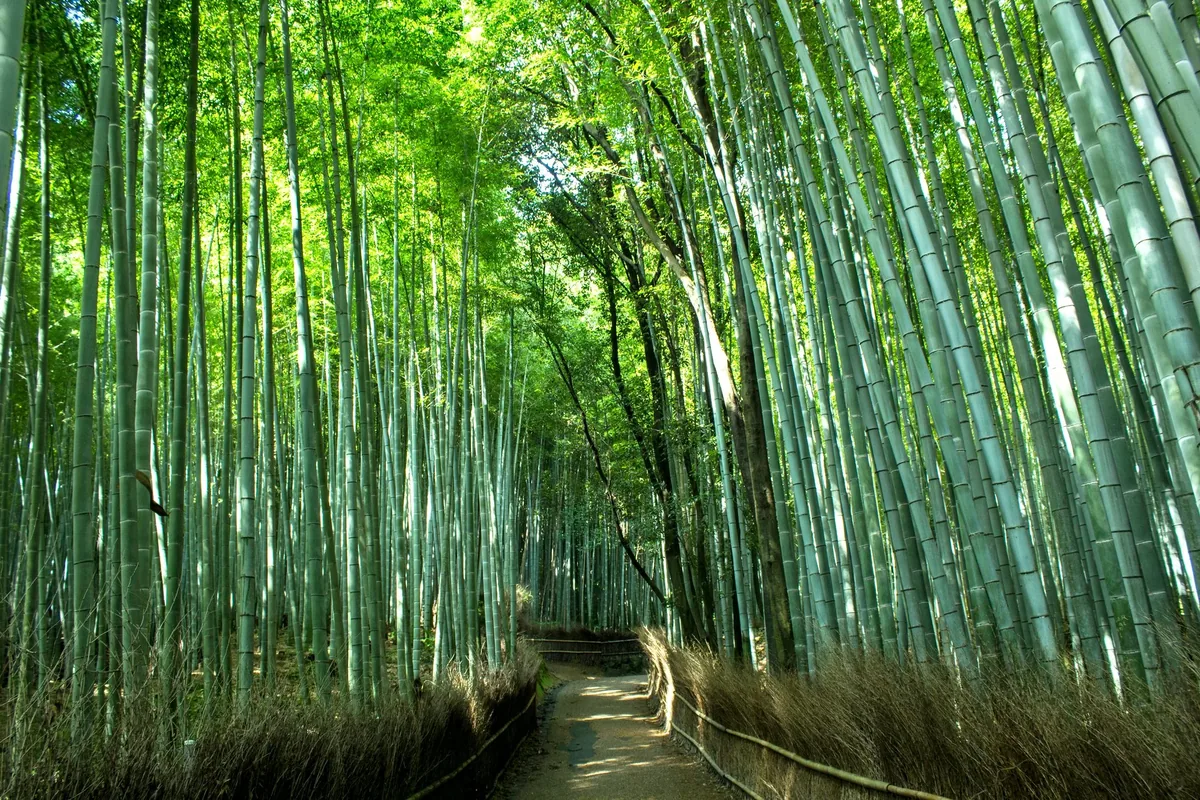
Arashiyama Bamboo Grove, Japan
Bamboo has held a sacred place in Japanese
Bamboo has held a sacred place in Japanese culture for millennia, symbolizing strength, flexibility, and purity. The grove in Arashiyama has been a favored retreat for the imperial family and nobility since the Heian period, when the elite would come to watch the changing seasons against the backdrop of the Oi River. The specific species here, Phyllostachys edulis, can grow up to thirty centimeters in a single day, making the grove a literal moving entity. Historically, the area was surrounded by sprawling villas and Zen temples, many of which still stand, using the bamboo as a natural barrier to protect the silence of their meditation halls. The path today remains a public right-of-way, connecting the Tenryu-ji Temple to the secondary shrines hidden in the hills.
Walking the central path at first light, There is a profound sense of verticality that pulls your gaze upward. You register the way the light breaks through the canopy in sharp, fleeting needles of white. The sound is a haunting mix of the wind whistling through the hollow tubes and the soft, percussive thud of the bamboo swaying into itself. Something of the temperature drop by several degrees moving deeper into the shade. The opening note is the texture of the wooden fences that line the path, made from the dried branches of the very trees they protect. The most evocative moment is standing still for sixty seconds; the visual repetition of the stalks creates a dizzying effect that makes the entire forest seem to breathe.
The grove is a ten-minute walk
The grove is a ten-minute walk from the Saga-Arashiyama Station on the JR Sagano Line or the Arashiyama Station on the Keifuku Electric Railroad. Travelers usually enter the path near the north exit of the Tenryu-ji Temple. Arriving before 7:30 AM is the only way to experience the grove's famous acoustic properties without the intrusion of human chatter and the clatter of rickshaws. To extend the experience, continue your walk beyond the main grove toward the Okochi Sanso Villa, where the gardens offer a more private and varied botanical landscape overlooking the river valley.
“The grove is a ten-minute walk from the Saga-Arashiyama Station on the JR Sagano Line or the Arashiyama Station on the Keifuku Electric Railroad.”
The Experience
The feel inside the grove is heavy with a green, liquid light that seems to stain the air. Right away, the intricate patterns on the bamboo skin, from the waxy youth of the new shoots to the scarred, yellowed texture of the elders. A trace of the subtle movement of the earth through your soles as the massive root systems shift with the swaying canopy. The smell is clean, like wet stone and crushed pepper. The element that stays with you is the transition from the sunny temple grounds into this dark, verdant tunnel; it feels like walking through a portal into a time before the city existed. It is a place that insists on a slower heart rate.
Why It Matters
Arashiyama Bamboo Grove is one of the most iconic landscapes in East Asia, representing the Japanese aesthetic of 'shakkei' or borrowed scenery. It is a cultural landmark that bridges the gap between the wild mountains and the refined city. Humanly, it is still a record of the power of a single species to create an entire, self-contained world.
Why Visit
This one matters because you need to hear the forest speak. While pictures capture the color, they can never convey the hollow, wooden music of the stalks. You come here to stand in a place where the scale is purely vertical, offering a perspective of nature that is both disciplined and wild. It is the only place in Kyoto where the wind has a physical voice.
Insider Tips
- 1
Walk the path in reverse, starting from the Okochi Sanso side, to avoid the bulk of the crowds coming from Tenryu-ji.
- 2
Bring a high-quality audio recorder or use your phone's voice memo app; the sound of the stalks is more evocative than any photo.
- 3
Don't etch your name into the bamboo; it kills the stalk and is considered a serious act of disrespect in Shinto culture.
- 4
Look for the small Nonomiya Shrine hidden in the trees; it was where imperial princesses stayed for purification in ancient times.
- 5
Visit on a weekday when it is raining; the green of the bamboo becomes incredibly vivid and the crowds vanish completely.