The water in this mountain basin is so pure and cold that it takes less than an hour for it to flow from a melting glacier into the turquoise heart of the valley floor.
About Azusa River Valley
Kamikochi literally translates to 'the place where the gods descend,' and it has been a sacred site for mountain asceticism for centuries before it became a hiking destination. The Hotaka Shrine, located at the edge of Myojin Pond, serves as a spiritual anchor for the valley, holding an annual festival where decorated boats are rowed across the mountain water. During the mid-20th century, the valley faced threats from hydroelectric development, but a passionate campaign by conservationists saved the Azusa River from being dammed. Today, it remains a strictly controlled special natural monument, where even the removal of a single stone is technically prohibited, ensuring that the 'gods' still have a pristine place to land.
What Azusa River Valley in Japan is
Glacial-fed waters of a startling, translucent turquoise rush over white granite stones in a high-altitude basin surrounded by the jagged 3,000-meter peaks of the Chubu Sangaku National Park. The Azusa River Valley, better known as Kamikochi, is the crown jewel of the Japanese Alps. The room here is thin and exceptionally clean, smelling of larch trees, cold mountain water, and the crisp scent of sub-alpine meadows. The walk along level paths that follow the river's curve. Notice how the water changes from a deep emerald in the pools to a white froth in the rapids. Sound-wise is a constant, therapeutic roar of the river, punctuated by the high-pitched calls of Japanese macaques and the distant clatter of hiking poles on stone.
“Glacial-fed waters of a startling, translucent turquoise rush over white granite stones in a high-altitude basin surrounded by the jagged 3,000-meter peaks of the Chubu Sangaku National Park.”
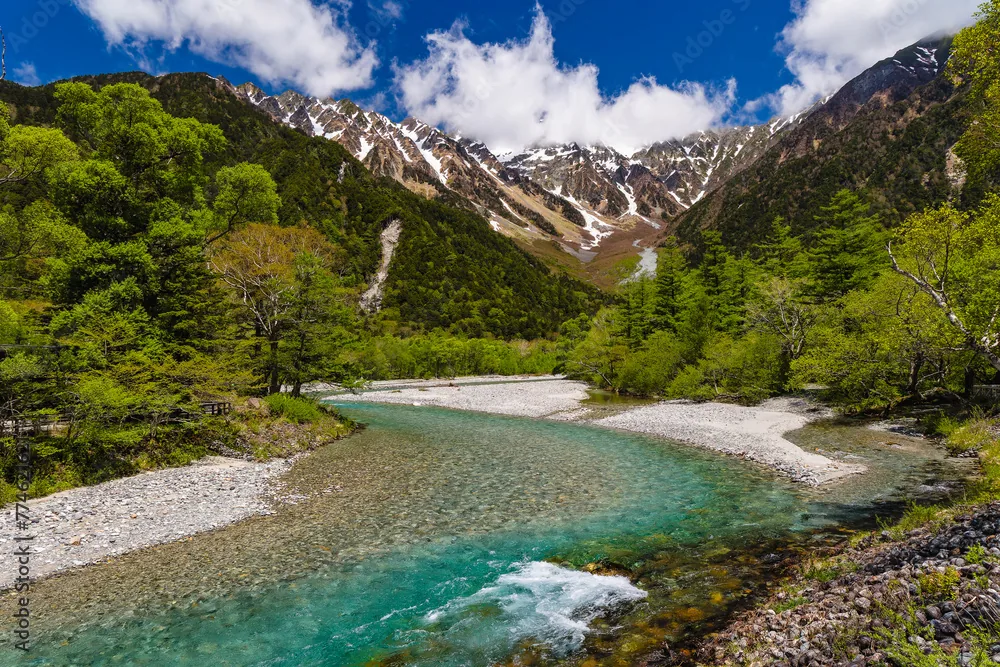
Azusa River Valley, Japan
Kamikochi was largely unknown
Kamikochi was largely unknown to the outside world until the late 19th century when the British missionary Walter Weston climbed the surrounding peaks and coined the term 'Japanese Alps.' The valley was originally a remote grazing area for cattle, but Weston's writings transformed it into a premier destination for mountaineering. The river itself was altered in 1915 when the nearby Mount Yakedake erupted, damming the Azusa and creating the haunting Taisho Pond, where bleached trunks of drowned trees still rise from the water. To preserve its fragile beauty, Kamikochi was one of the first places in Japan to ban private vehicles, a policy that has kept the valley remarkably pristine despite its popularity.
Standing on the iconic Kappabashi Bridge,
Standing on the iconic Kappabashi Bridge, the immediate, bracing cold of the mountain wind. What registers is the way the light hits the Hotaka Mountain Range, illuminating the snow patches that often remain well into July. The sound layer is an immersive layer of rushing water and the wind whistling through the branches of the birch and willow trees. The transition from the sunny, open riverbanks to the cool, dark shade of the 'Myojin' marshland, where the ground is a network of wooden boardwalks. The tiny, vibrant alpine flowers that bloom in the wetlands and the way the mist clings to the water's surface at dawn. The most memorable moment is reaching Myojin Pond, where the absolute stillness of the water creates a perfect mirror for the jagged peaks above. Kamikochi is accessible only by bus or taxi from the parking lots at Sawando or Hirayu Onsen, which are reached via the cities of Matsumoto or Takayama. The valley is closed during the winter, usually from mid-November to mid-April, when the snow makes the access roads impassable. The main trails along the river are flat and well-maintained, making the valley accessible to casual walkers as well as serious hikers. Arriving on the first bus of the morning allows you to see the mist rising from Taisho Pond before the midday sun clears the air and the larger groups of day-trippers arrive from the cities.
The Experience
The mood of the valley is one of vibrant, alpine energy. The opening note is the smell of the air, it is sharper and more oxygen-rich than in the lowlands, with a distinct mineral note from the river. A physical cold of the Azusa River if you dare to dip a finger in; the water remains just above freezing even in August. Audibly, the of the wind through the larch needles is a soft, rhythmic shush that accompanies you for miles. The most striking detail is the clarity of the water, which is so transparent that you can see every individual pebble on the riverbed three meters down. It is a place that makes you feel both incredibly small and wonderfully alive.
Why It Matters
The Azusa River Valley is the most famous mountain scenery in Japan and a vital ecological sanctuary for alpine flora and fauna. It represents the birth of modern Japanese mountaineering and environmental conservation. Culturally, it is a site of deep spiritual significance, where the jagged peaks are seen as the literal homes of the Shinto deities.
Why Visit
What makes it worth the trip: you need to see the 'other' Japan, the one made of granite and glaciers rather than neon and cedar. Kamikochi offers the most dramatic mountain views in the country with almost no physical effort required to reach them. You come here for the turquoise water and the Hotaka peaks, but you stay for the profound silence of a valley where the only traffic is the movement of the river.
Insider Tips
- 1
Get off the bus at Taisho Pond rather than the bus terminal; the walk from the pond to the center of the valley is the most beautiful part of the park.
- 2
Bring a bear bell or buy one at the visitor center; while sightings are rare, the valley is active grizzly and black bear territory.
- 3
Eat the 'apple pie' at the Gosenjaku Hotel near Kappabashi; the Shinshu region is famous for its fruit, and this is its most legendary dessert.
- 4
The Myojin Pond requires a small entrance fee because it is part of the Hotaka Shrine; don't skip it, as it's the most spiritual spot in the valley.
- 5
The last bus departs at 5:00 PM; if you miss it, you are in for a very expensive taxi ride or an unplanned night in an expensive lodge.