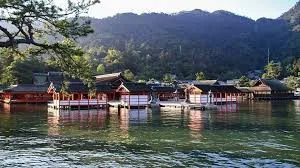
Every twenty years for the last thirteen centuries, these massive wooden shrines have been torn down and rebuilt from scratch to ensure they remain eternally new.
About Ise Jingu
Ise Jingu was originally a nomadic shrine, following the Sun Goddess until she supposedly chose this spot for its beauty and abundance. Century after century, it was the exclusive domain of the Imperial family, but during the Edo period, 'Okage-mairi', mass pilgrimages involving millions of people, turned Ise into a national phenomenon. The rebuilding process takes eight years to complete and uses over ten thousand cypress logs, many of which come from the shrine's own managed forests. This cycle represents the world's most successful example of intangible heritage preservation, where the skill of the carpenter is considered more permanent than the wood itself. It survived the abolition of state Shinto after WWII, remaining the private shrine of the Emperor and the spiritual heart of the nation.
Ise Jingu
Raw cypress wood and thatched roofs sit positioned within an ancient forest of giant cedars, representing the absolute apex of Shinto purity and Japanese identity. Ise Jingu is not a single building but a vast complex of 125 shrines, with the Geku (Outer Shrine) and Naiku (Inner Shrine) acting as the spiritual centers. Nearby, The air is thin and smells intensely of cedar, river water, and the ozone of a forest that has been protected for two thousand years. The walk across wide paths of white gravel that crunch with a rhythmic, meditative sound underfoot. It is a place of profound simplicity, where the most sacred structures are hidden behind multiple layers of wooden fences, visible only to the highest priests and the Imperial family.
“Raw cypress wood and thatched roofs sit positioned within an ancient forest of giant cedars, representing the absolute apex of Shinto purity and Japanese identity.”
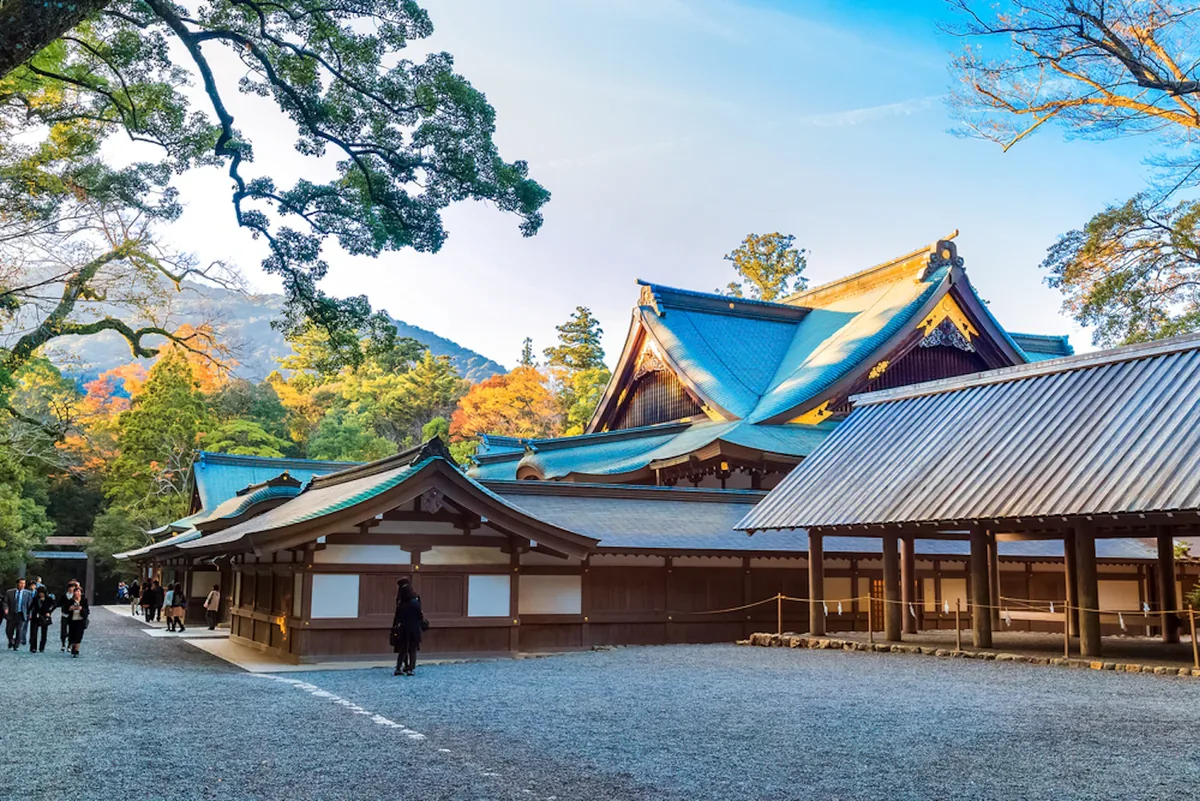
Ise Jingu, Japan
Ise Jingu is dedicated to Amaterasu Omikami
Ise Jingu is dedicated to Amaterasu Omikami, the Sun Goddess and the mythical ancestor of the Japanese Imperial line. The Naiku was established approximately two thousand years ago, and the Geku followed about five hundred years later. The most extraordinary aspect of Ise is the 'Shikinen Sengu', a ritual where the main shrines are completely demolished and rebuilt on an adjacent plot every twenty years. This process has occurred sixty-two times, ensuring that the ancient architectural techniques are passed from one generation of master carpenters to the next. The buildings you see are always less than two decades old, yet they are identical to the structures that stood in the 7th century, embodying the Shinto concept of eternal renewal through destruction.
Crossing the Uji Bridge into the Naiku, you
Crossing the Uji Bridge into the Naiku, the immediate shift from the secular world to the sacred. First, the way the light filters through the high canopy, creating long shadows across the Isuzu River where pilgrims still wash their hands in the cold, clear water. The sound is a mix of the wind in the cedars and the rhythmic, percussive crunch of the gravel paths. The cool, smooth surface of the wooden railings and notice the absence of any paint or gold; the beauty lies entirely in the grain of the cypress and the golden-yellow of the thatch. The most spiritual moment occurs at the main sanctuary, where you stand before the white silk curtain that flutters in the wind, hiding the sacred mirror that is never seen by the public. Ise is located on the Shima Peninsula in Mie Prefecture, easily reached by the Kintetsu Railway from Nagoya, Osaka, or Kyoto. The Geku is a short walk from the Iseshi Station, while the Naiku is reached by a ten-minute bus ride or a walk through the historic Oharai-machi district. Tradition dictates that you visit the Geku first before proceeding to the Naiku. Arriving at the Naiku at 5:00 AM allows you to witness the first light of the sun hitting the Uji Bridge, a moment of deep significance in a shrine dedicated to the Sun Goddess. The majority follow the visit with a meal of thick Ise Udon noodles in the nearby traditional village.
The Experience
The feel of Ise is one of immense, quiet power. The first thing you register is the smell of the forest, a mix of damp earth and the high, sweet note of cypress sap. The physical vibration of the river as you stand on the stone steps to purify yourself. The clatter of a drum from deep within the shrine complex can occasionally be heard, a low, resonant thud that signifies a ritual in progress. What draws the eye is the white gravel is meticulously raked, creating a sea of stone that reflects the sky. The most evocative moment is found in the 'Kaze-no-miya' or Wind Shrine, where the leaves seem to whisper in a constant, directed stream. It is a place that feels less like a building and more like a conversation with the elements.
Why It Matters
Ise Jingu is the most sacred site in Japan and the home of the Sacred Mirror, one of the three Imperial Regalia. It represents the purest form of Japanese architecture, known as 'Shinmei-zukuri,' which predates the arrival of Buddhism. Historically, it is the foundation of the relationship between the Japanese people, their Emperor, and the natural world.
Why Visit
Go because you need to experience a place that values process over permanence. Ise Jingu is the antidote to modern disposable culture, a place that rebuilds itself every twenty years just to stay the same. You come here to see the most important place in Japan that you are almost entirely forbidden to enter, finding beauty in the barriers and the sacred silence of the trees.
Insider Tips
- 1
Follow the 'left-side' rule when walking the bridge and paths of the Naiku; the right side is reserved for the gods.
- 2
The Isuzu River is the traditional place for purification; use the stone steps to wash your hands rather than the modern basins if you want the authentic experience.
- 3
Look for the sacred white horses kept in the stables near the entrance; they are presented to the gods on auspicious days.
- 4
Eat 'Akafuku', a pounded rice cake topped with smooth red bean paste, at the historic shop in Oharai-machi with a cup of hot tea.
- 5
Don't try to take photos of the main sanctuary beyond the white curtain; the guards are polite but firm about the 'no-camera' policy in the most sacred zones.