“These houses are built like hands pressed together in prayer, a design born from the necessity of surviving winters that bury the entire valley under ten meters of snow.”
About Ogimachi Village
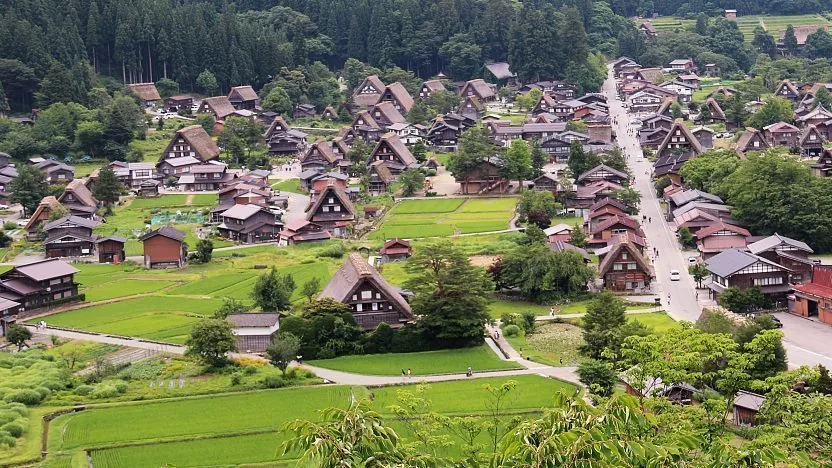
The Gassho-zukuri style emerged in the 1700s as farmers sought to maximize indoor space for silk production while shedding massive amounts of snow. The village functioned as a communal society where neighbors would gather to re-thatch a single roof in a single day, a tradition known as 'yui.' This spirit of cooperation was essential for survival in the harsh Alpine climate. Despite the arrival of electricity and the internet, the fundamental layout of Ogimachi remains as it was in the 1800s, with houses aligned north-to-south to minimize wind resistance and maximize sun exposure for the thatched roofs.
Hidden within the steep, fog-drenched valleys
Hidden within the steep, fog-drenched valleys of the Shogawa River, Ogimachi Village feels like a survivor from a lost era. This is the largest and most famous village in the Shirakawa-go region, known for its iconic 'Gassho-zukuri' farmhouses. The name means 'constructed like hands in prayer,' referring to the massive, steep-pitched thatched roofs designed to withstand some of the heaviest snowfall on the planet. These houses are not just museum pieces; they are living homes, some of which have stood for over 250 years. The village is a tight-knit community of rice paddies, small shrines, and watermills, all framed by mountains that turn a deep, brooding blue as the sun dips below the ridge. The architecture is a direct response to the brutality of the environment.
Hidden within the steep, fog-drenched valleys of the Shogawa River, Ogimachi Village feels like a survivor from a lost era.
For centuries, this region was isolated
For centuries, this region was isolated from the rest of Japan by its treacherous mountain terrain. This isolation allowed a unique social and architectural system to flourish. The villagers turned to silkworm cultivation to survive, using the large, multi-storied attic spaces of their thatched homes to raise the worms. The roofs are held together not by nails, but by intricate rope lashings, allowing the structure to flex under the weight of several meters of snow. In the mid-20th century, many of these villages were lost to dam construction and modernization, but the residents of Ogimachi fought to preserve their heritage. Their efforts culminated in 1995 when the village was designated a UNESCO World Heritage site, saving a way of life that had remained virtually unchanged since the Edo period.
Crossing the suspension bridge into the village, you
Crossing the suspension bridge into the village, The temperature drop and the sound of rushing water beneath you. It smells of woodsmoke and damp straw, a scent that defines the Shirakawa-go experience. What draws the eye is the texture of the roofs, thick layers of miscanthus grass that feel surprisingly solid and heavy. Something of scale of the houses stepping inside the Wada House, where the dark, soot-stained timbers tell the story of two centuries of hearth fires. Often overlooked is the sophisticated canal system that runs alongside every path, providing water for fire prevention and irrigation. Pay attention to the way the villagers still work the small plots of land between the houses, planting vegetables even as tourists pass by. The moment that stays with you is standing at the Shiroyama Viewpoint as the village lights flicker on, turning the thatched houses into glowing lanterns in a sea of white snow.
Ogimachi is best reached by bus
Ogimachi is best reached by bus from the nearby cities of Takayama or Kanazawa. The journey takes about an hour and passes through a series of long tunnels and soaring bridges. There is no train service to the village, which helps maintain its sense of isolation. Many visitors arrive on day trips, but staying overnight in one of the farmhouses, known as a 'minshuku', is the only way to experience the village after the tour buses depart and the true mountain silence returns.
Ogimachi is best reached by bus from the nearby cities of Takayama or Kanazawa.
The Experience
You notice the smoke from the 'irori' sunken hearths rising through the floorboards to dry the thatch above. Audible: the village is a mix of flowing water and the occasional chime of a temple bell. Something of history in the dark, polished wood of the farmhouse interiors, which have been seasoned by smoke for centuries. Most visitors miss the small shrines dedicated to the mountain gods located on the outskirts of the village. The detail that stays with you is the 'soot-darkened' attic where the light filters through the gaps in the thatch, illuminating the ancient tools of the silk trade.
Why It Matters
Ogimachi is the most complete example of traditional mountain life in Japan. It demonstrates a perfect harmony between human habitation and a hostile natural environment. The village is a rare example of 'living heritage,' where the preservation of the architecture is inextricably linked to the preservation of a communal social structure.
Why Visit
Visit Ogimachi because it is the closest you can get to stepping into a 19th-century Japanese landscape painting. While Tokyo is the future, this village is a stubbornly beautiful past. It offers a chance to sleep in a house that breathes, under a roof made of grass, in a valley that feels completely disconnected from the noise of the 21st century.
✦ Insider Tips
- 1
Book a stay in a 'minshuku' months in advance; it is the only way to experience the village in the quiet hours of the morning.
- 2
The hike to the Shiroyama Viewpoint takes about 20 minutes; it is steep but provides the iconic postcard view of the entire valley.
- 3
Try the 'Gohei-mochi', skewers of pounded rice coated in a sweet walnut and miso glaze, sold by several vendors in the village.
- 4
Visit the Wada-ke House; it is the largest in the village and allows you to explore the upper levels where the silkworms were once kept.
- 5
Wear waterproof shoes even in summer, as the mountain weather can change in minutes and the paths are often damp from the irrigation canals.