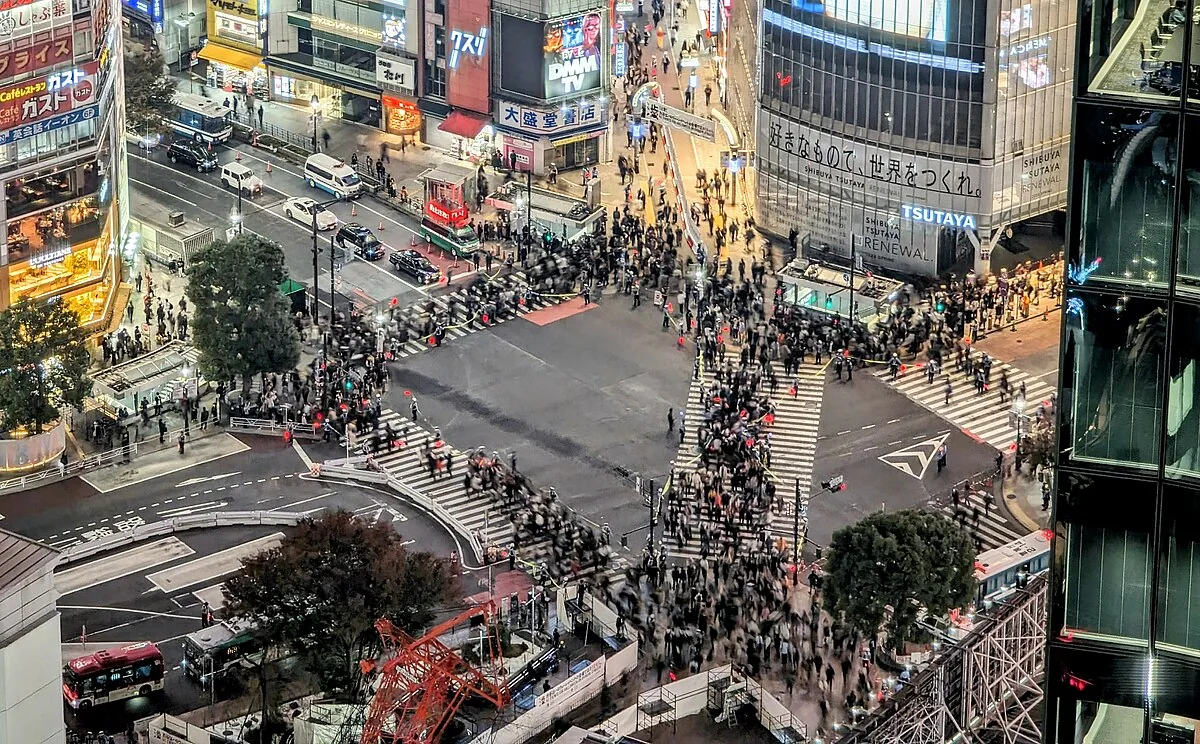
At its peak, more than three thousand people cross this single patch of asphalt every two minutes, yet remarkably, nobody ever bumps into each other.
About Shibuya Crossing
The scramble crossing was installed in 1973, modeled after the 'pedestrian scrambles' that briefly became popular in the United States. While they faded elsewhere, it became the defining characteristic of Shibuya, reflecting the neighborhood's role as a laboratory for Japanese youth culture. The surrounding buildings have been in a constant state of demolition and rebirth; the latest 'Shibuya Scramble Square' tower has added a 230-meter observation deck that looks down on the intersection from the clouds. Despite the rapid technological shifts, from the pagers of the 90s to the TikTokers of today, the crossing remains the city's primary stage, a place where Tokyo comes to see itself in motion.
What Shibuya Crossing actually is
Giant LED screens wrap around skyscrapers, flashing a neon fever-dream of anime, advertisements, and news, while three thousand people wait for a single light to turn green. Shibuya Crossing is the kinetic heart of Tokyo, the world's busiest intersection where the frantic energy of the 21st century is concentrated into a few square meters of asphalt. The surroundings here smells of grilled yakitori, exhaust, and the faint, sweet scent of tobacco from the nearby smoking areas. From the edge of a human tide. Notice how the crowd tenses as the countdown begins. The volume is an overwhelming wall of noise: J-pop blaring from trucks, the rhythmic chirping of the pedestrian signals, and the collective shuffle of ten thousand shoes hitting the pavement at once.
Shibuya was originally a quiet village
Shibuya was originally a quiet village on the outskirts of Edo, centered around a river that has long since been paved over. The arrival of the railroad in 1885 transformed the area into a major transit hub, but it was the 1970s that turned the crossing into a cultural icon with the rise of the Shibuya 109 fashion building. The crossing is technically a 'scramble,' where all vehicle traffic stops to allow pedestrians to surge in every direction, including diagonally. It is presided over by the small bronze statue of Hachiko, the loyal Akita who waited for his deceased master at the station every day for nine years, a symbol of devotion that stands in stark contrast to the fleeting, anonymous nature of the crowd passing by.
Walking into the center of the scramble, you
Walking into the center of the scramble, There is a strange sense of weightlessness within the swarm. What registers is the way people move with a surgical, subconscious precision, avoiding collisions while staring into their smartphones. Sound-wise is a dizzying mix of electronic pings and the booming voices of digital avatars on the screens above. The heat radiating from the surrounding buildings and the vibration of the subway lines running deep beneath your feet. Immediately, the sudden, eerie silence that falls for ten seconds after the crowd has passed and the cars reclaim the road. The most iconic moment is watching the surge from a second-story window; it looks less like a city and more like a single, multi-headed organism performing a complex, rhythmic dance.
The crossing is located directly
The crossing is located directly outside the Hachiko Exit of Shibuya Station, one of the most complex transit points in the world served by the JR Yamanote Line and multiple subway lines. Finding your way out of the station is half the challenge; follow the signs for 'Hachiko' religiously. For the famous bird's-eye view, head to the second floor of the Starbucks in the Tsutaya building or the glass-walled corridor of the Shibuya Mark City bridge. Arriving on a Friday night at 9:00 PM provides the maximum experience, as the neon is at its brightest and the crowds are fueled by the high-velocity energy of Tokyo's nightlife.
The Experience
The energy at Shibuya is one of controlled, high-speed chaos. The first thing you register is the smell of the city, a metallic, electric tang that feels like the future. The mass of the physical pressure of the air being moved by thousands of bodies, a collective wind that follows the tide of pedestrians. Audibly, the of a thousand different conversations blends into a single, white-noise hum that is strangely soothing once you're inside it. First, the tiny, human details: a teenager adjusting their hair in a reflection, a businessman checking his watch, a tourist lost in wonder. The most striking moment is the transition of the light from green to red, when the wave of humanity breaks and disappears into the subway entrances like water down a drain.
Why It Matters
Shibuya Crossing is the definitive image of modern urban Japan and a global symbol of the hyper-connected 21st century. It represents the efficiency and social harmony of a society that can manage three thousand individual paths simultaneously without friction. Culturally, it is the Ground Zero of Japanese fashion and pop-culture trends.
Why Visit
The reason to come: you need to feel the pulse of the world's largest city. Shibuya is not a monument to the past, but a monument to the 'now.' You come here to be a single atom in a massive, glittering explosion of human activity, proving that even in a city of millions, there is a rhythm and a grace to the chaos.
✦ Photo Gallery
Best Season
🌤 A rainy night in June is the most cinematic time, when the wet pavement reflects the neon lights like a black mirror and the crossing becomes a sea of transparent umbrellas.
Quick Facts
Best time to visit
A rainy night in June is the most cinematic time, when the wet pavement reflects the neon lights like a black mirror and the crossing becomes a sea of transparent umbrellas.
Getting there
In Tokyo, Japan; reach Tokyo first, then continue to the site.
What's nearby
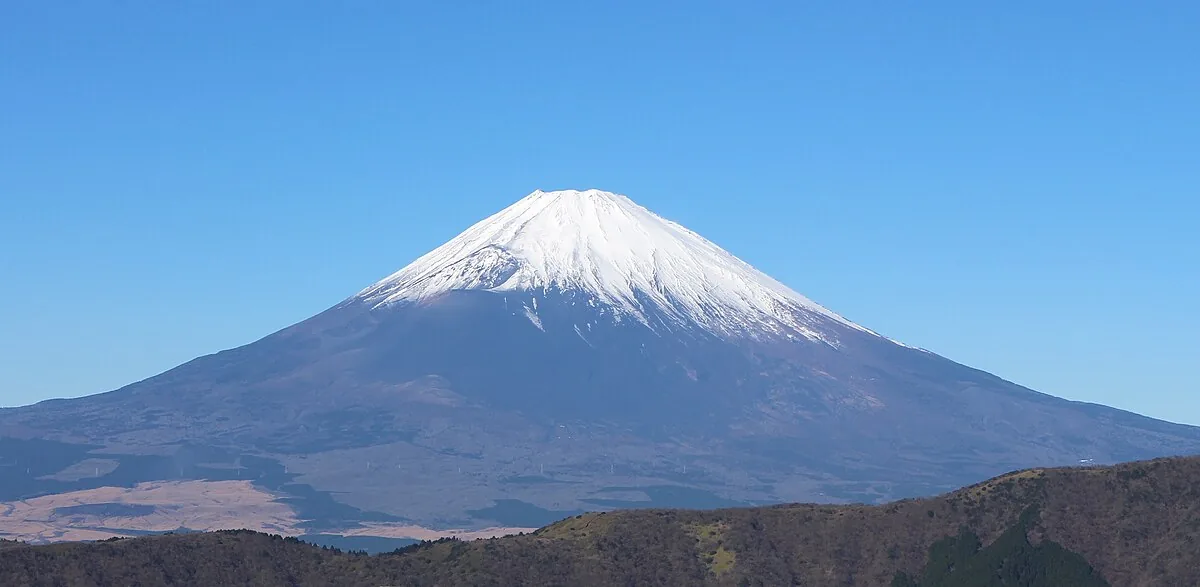
Tokyo National Museum and Mount Fuji are also in the area.
Location
Tokyo, Japan
Type
attraction
Coordinates
35.6595°, 139.7006°
Insider Tips
- 1
The best free view is from the glass corridor between the JR station and the Mark City building; it's less crowded than the Starbucks.
- 2
Don't stop in the middle of the crossing to take a selfie; the crowd is moving at a specific pace and you will cause a human pile-up.
- 3
Wait for the 'big' screen to sync up; every hour, several of the surrounding monitors play a synchronized animation that temporarily unifies the visual chaos.
- 4
The Hachiko statue is the city's most famous meeting point, but it's so crowded you'll never find your friend; pick a specific shop entrance instead.
- 5
Visit the 'Shibuya Sky' rooftop at twilight for a view of the crossing that makes the people look like a slow-moving river of light.