“You can find five thousand years of history in a single afternoon here, from the jagged clay of prehistoric tribes to the steel perfection of a master's sword.”
About Tokyo National Museum
The museum's origins lie in the 1872 Yushima Seido Exposition, a landmark event that catalyzed the modern Japanese museum movement. Throughout the early 20th century, it became a symbol of Japan's dual identity: a nation adopting modern European systems while fiercely protecting its unique artistic heritage. During World War II, the most precious items were evacuated to rural temples for safety. Post-war, the museum transitioned from an imperial institution to a public one, focusing on education and the global loaning of its treasures to foster international understanding of Japanese culture.
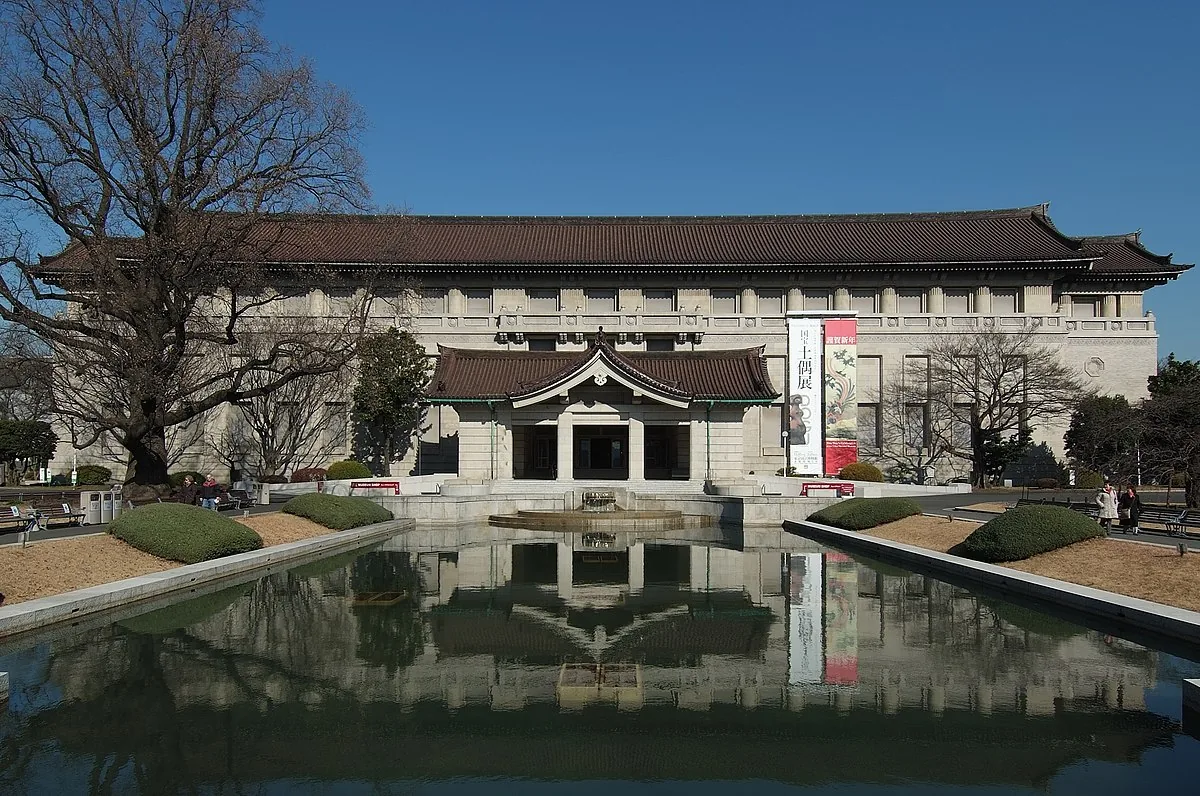
Within the leafy expanse of Ueno Park, five
Within the leafy expanse of Ueno Park, five distinct buildings house the very DNA of Japanese civilization. The Tokyo National Museum is the oldest and largest institution of its kind in the country, a repository for over 120,000 objects ranging from prehistoric pottery to the delicate woodblock prints of the Edo period. The main building, the Honkan, is a striking example of the 'Imperial Crown' style, blending Western brick architecture with a traditional Japanese tiled roof. The walk through its galleries is not a dusty academic exercise; it is a route through the evolution of the Japanese soul. The museum manages to be both vast and intimate, offering everything from massive Buddhist statues that fill entire halls to tiny, intricate 'netsuke' carvings that require a magnifying glass to fully appreciate.
Within the leafy expanse of Ueno Park, five distinct buildings house the very DNA of Japanese civilization.
museum was founded, 1872
The museum was founded in 1872, born from a desire to showcase Japan's cultural identity to the world during the rapid Westernization of the Meiji era. Its first exhibition was held in a Confucian temple, but the collection quickly outgrew its surroundings. The current main building was completed in 1938, designed to be earthquake-resistant after the Great Kanto Earthquake destroyed previous structures. Over the decades, the museum expanded to include specialized wings like the Gallery of Horyu-ji Treasures, which houses some of the oldest Buddhist artifacts in existence. It has was a cultural anchor for the nation, surviving wars and social shifts to remain the definitive authority on Japanese art and history.
On site
Entering the grand foyer of the Honkan, The soft echo of footsteps on marble and the dramatic sweep of the central staircase. The interior is meticulously controlled, cool and still, creating a sense of reverence for the objects on display. First you see the way the lighting is designed to highlight the subtle texture of silk kimonos and the razor-sharp edge of samurai swords. There is a feeling of sheer weight of time in the Jomon period gallery, where clay figures from 5,000 years ago stare back with mysterious, wide eyes. People often miss the outdoor garden behind the Honkan, which is only open during specific weeks in spring and autumn. The deep, meditative silence in the Horyu-ji wing, where the minimalist architecture perfectly complements the ancient bronze statues. What sticks with you is standing before a screen painted by Hasegawa Tohaku, where the mist seems to actually move across the paper.
The museum is located
The museum is located at the northern end of Ueno Park, a short ten-minute walk from the Park Exit of JR Ueno Station. Ueno is a major transport hub, accessible via the Yamanote Line, the Shinkansen, and multiple subway lines. The walk through the park itself is a pleasant introduction, passing by fountains, street performers, and other cultural institutions. Because the museum is so large, it is best to dedicate at least half a day to the main galleries, perhaps breaking for lunch at the on-site cafe which overlooks the museum's smaller, hidden gardens.
The museum is located at the northern end of Ueno Park, a short ten-minute walk from the Park Exit of JR Ueno Station.
The Experience
What you smell is the scent of old paper and wood in the scroll galleries, a subtle reminder of the fragility of the artifacts. Nearby, the museum is one of hushed whispers and the low hum of climate control systems. There is a sense of overwhelming scale as you realize each building could be a museum in its own right. Most visitors miss the collection of 'Ainu' artifacts from Hokkaido, which provides a fascinating glimpse into Japan's indigenous northern culture. The moment that stays with you is seeing a 12th-century scroll up close, the ink still remarkably black and vibrant.
Why It Matters
This is the 'Louvre of Japan.' It holds more National Treasures and Important Cultural Properties than any other institution. It is the essential starting point for anyone wishing to understand the aesthetic development of Japan, from the influence of Chinese Buddhism to the rise of the uniquely Japanese 'Ukiyo-e' art style.
Why Visit
Visit this museum because it is the only place in the world where you can see the complete arc of Japanese creativity under one roof. While individual temples in Kyoto might have one or two great pieces, this museum has the best of everything. It is a masterclass in presentation and a sanctuary of calm in the middle of Tokyo's most chaotic district.
✦ Insider Tips
- 1
Start with the Honkan (Main Building) to get a chronological overview of Japanese art before exploring the specialized wings.
- 2
The Gallery of Horyu-ji Treasures is an architectural masterpiece by Yoshio Taniguchi, even if you aren't into Buddhist art, the building itself is worth the walk.
- 3
Check the schedule for the special exhibitions; they often feature items from private collections that are rarely seen by the public.
- 4
Don't miss the museum shop; it has some of the highest-quality reproductions and art books in Japan.
- 5
Rent an audio guide; the context it provides for the symbolism in the paintings and sculptures is invaluable for non-experts.