Even after the world-famous tuna auctions moved across the bay, the remaining stalls at Tsukiji still consume more than two thousand tons of seafood every single morning.
About Tsukiji Outer Market
The location was originally a residential area for samurai, but after the 1923 earthquake, the shogunate's former land became the logical site for a modern, rail-connected market. The architecture of the market, with its curved, fan-shaped design, was meant to facilitate the movement of freight trains. Over the decades, it became a culinary university for the nation, where the standards for 'sushi-grade' were invented and enforced. When the move to Toyosu was announced, many feared Tsukiji would die, but the Outer Market’s deep ties to the local community and its role as a retail hub have allowed it to thrive as an independent destination.
What Tsukiji Outer Market actually is
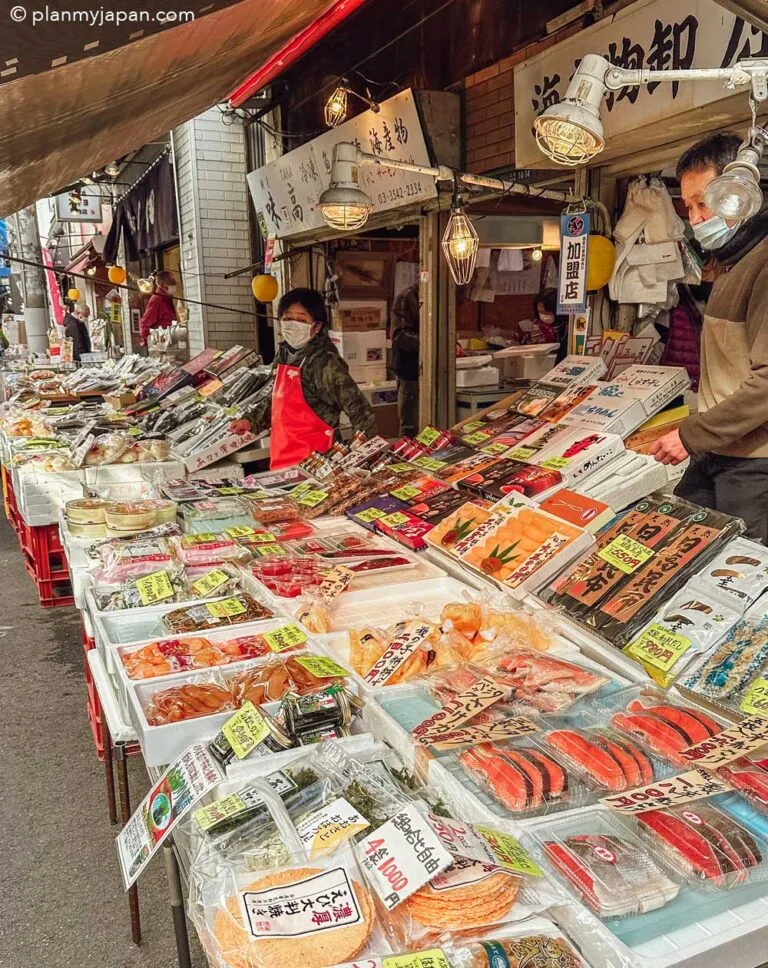
Stalls overflowing with ruby-red tuna, sea urchins in wooden crates, and blocks of sweet tamagoyaki line the narrow, wet alleys of Tokyo’s most famous culinary district. While the inner wholesale market moved to Toyosu years ago, the Tsukiji Outer Market remains the chaotic, delicious soul of the city's food culture. Here, The air is a thick cocktail of salt, vinegar, grilled scallops, and the clean, metallic scent of industrial-grade knives. The walk through a labyrinth of over four hundred shops where the ground is often slick with melted ice and the air is filled with the rhythmic shouting of vendors. Audible here is a constant, high-energy hum of a thousand transactions occurring simultaneously against the background hiss of blowtorches and the clatter of Styrofoam boxes.
Tsukiji was born from the ashes
Tsukiji was born from the ashes of the 1923 Great Kanto Earthquake, which destroyed the previous fish market in the Nihonbashi district. The market was built on 'reclaimed land', the meaning of the word Tsukiji, and grew to become the largest seafood market in the world. While the famous tuna auctions were the headline act, the Outer Market developed as the retail heart where the city’s chefs and home cooks came to buy high-end knives, specialty dried bonito, and seasonal vegetables. For nearly a century, it has survived economic shifts and the eventual relocation of its industrial half, proving that the culture of the market is rooted in its people and its streets rather than just its wholesale volume.
Arriving as the sun rises over the Sumida
River, The raw energy of a city that has been awake for hours. What lands is the way the light catches the silver skin of mackerel laid out on beds of shaved ice. The sound layer is a cacophony of knives hitting wooden boards and the low, gutteral rumble of the 'turret trucks' that still weave through the crowds. You get a warmth of a freshly made dashi omelet in your hand and the stinging cold of the wind blowing off the bay. Immediately, the intense focus of the knife-sharpeners at Masamoto, who have spent decades perfecting an edge that can slice through a tuna belly with no resistance. The most satisfying moment is finding a tiny, six-seat sushi counter and eating fish that was swimming only a few hours ago.
The market is a five-minute walk
The market is a five-minute walk from either the Tsukiji Shijo Station on the Oedo Line or the Tsukiji Station on the Hibiya Line. Most stalls begin opening at 5:00 AM and many start closing by 1:00 PM, making this a strictly morning destination. Because the alleys are narrow and the crowds are dense, large luggage is practically impossible to navigate. To see the market at its best, arrive by 8:00 AM, which allows you to browse the specialty dry goods shops before the peak tourist lunch rush begins to clog the sushi restaurant queues near the main gate.
The Experience
Walking into Tsukiji is a masterclass in organized chaos. The smell of the charcoal grills, smoky, salty, and sweet with unagi sauce, and the way the humidity in the alleys keeps the fish fresh. The physical press of the crowd, a mix of international tourists and local grandmothers who know exactly which stall sells the best dried kelp. Audibly, the of a vendor's bell announcing a fresh batch of fish cakes is a signal for a polite but firm scrum. The most memorable moment is standing at a street corner with a skewer of grilled Wagyu beef, watching the sun hit the copper roof of the nearby Namiyoke Inari Shrine. It is a place that celebrates the appetite of a world-class city.
Why It Matters
Tsukiji Outer Market is the culinary heart of Japan and a vital repository of traditional food knowledge. It represents the 'shokunin' spirit, the obsessive dedication to craft, whether that is carving a fish or forging a blade. Historically, it is the link between the Edo-period fish markets and the modern global supply chain.
Why Visit
What makes it worth the trip: you need to understand that sushi is just the beginning of Japanese food. Tsukiji is a sensory library where you can taste, smell, and see the ingredients that define a nation’s palate. You come here to eat the best breakfast of your life on a plastic stool, surrounded by the history of a city that never stops eating.
✦ Photo Gallery
8 photos of Tsukiji Outer Market · click to enlarge
Best Season
🌤 Winter is the best time for seafood lovers, as the cold water makes the fish fattier and more flavorful, and the morning air is crisp and clear.
Quick Facts
Best time to visit
Winter is the best time for seafood lovers, as the cold water makes the fish fattier and more flavorful, and the morning air is crisp and clear.
Getting there
In Tokyo, Japan; reach Tokyo first, then continue to the site.
Location
Tokyo, Japan
Type
attraction
Insider Tips
- 1
Avoid the restaurants with the longest lines; often the stall two doors down has the same fish for a lower price and half the wait.
- 2
Visit the rooftop of the Tsukiji Uogashi building for a quiet, elevated view over the market and a place to sit and eat your takeaways.
- 3
Buy your souvenirs here, high-quality dried seaweed (nori) and Japanese knives are cheaper and better than what you will find in Ginza.
- 4
Don't walk and eat; buy your food, stand in front of the stall to finish it, and then move on, as walking while eating is considered rude.
- 5
Look for the small shrine at the entrance dedicated to the 'God of the Waves,' where fishermen have prayed for safe returns for a hundred years.