“A giant marble hand is all that remains of a colossal statue of Hercules on a hill that humans have occupied for some 7,000 years.”
About Amman Citadel (Jabal al-Qal'a)
The citadel has been inhabited since prehistoric times and was the heart of Ammonite Rabbath Ammon, later the Roman and Byzantine city of Philadelphia, and then an Umayyad administrative centre. The Temple of Hercules was built in the 2nd century AD, the Umayyad palace in the 8th. Successive earthquakes and empires reshaped the hill, leaving the rich jumble of ruins seen today.
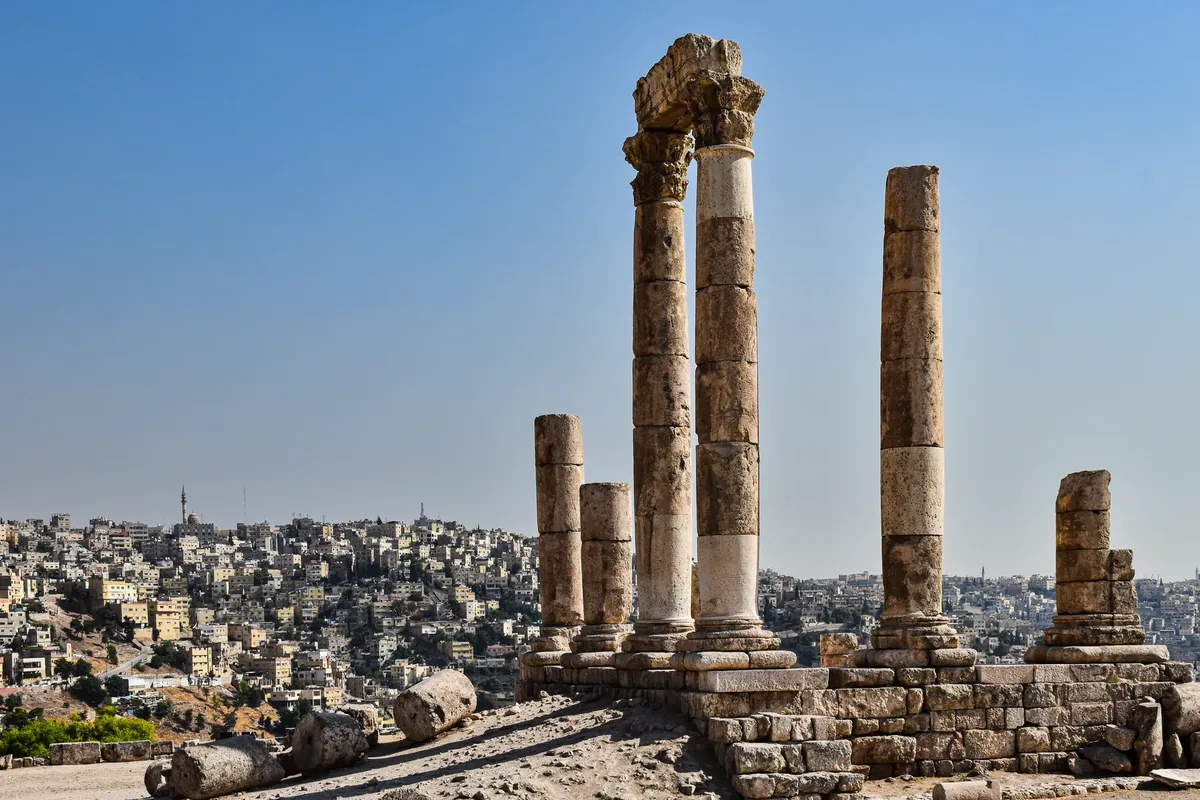
The Amman Citadel, known in Arabic as Jabal al-Qal'a, crowns the highest hill at the heart of Jordan's capital, a layered archaeological site occupied by one civilisation after another for thousands of years. Among its ruins stand the columns of a Roman Temple of Hercules, a domed Umayyad palace and a Byzantine church, with sweeping views over the white city below.
Among its ruins stand the columns of a Roman Temple of Hercules, a domed Umayyad palace and a Byzantine church, with sweeping views over the white city below.
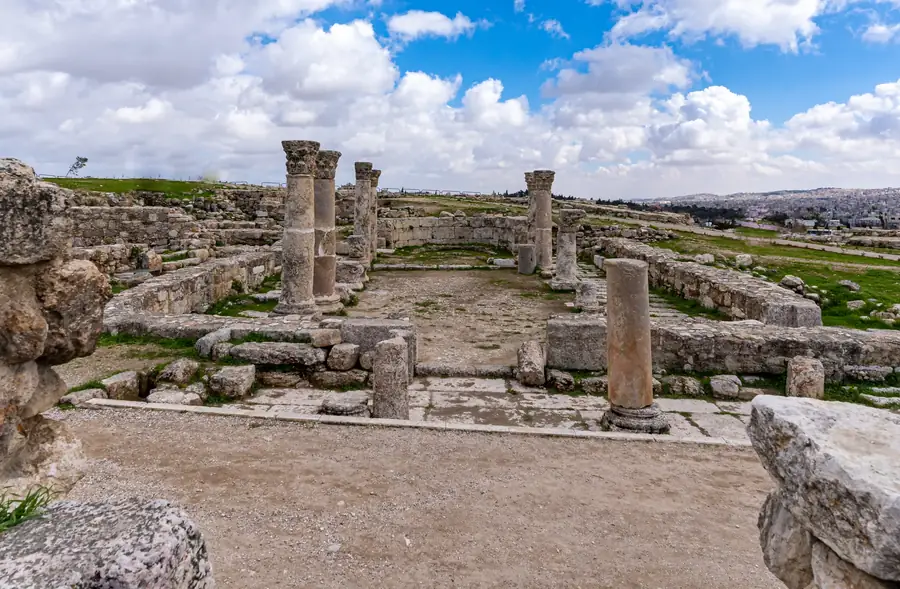
Seven Thousand Years on One Hill
Few places are so densely layered with history. The citadel hill has been settled since the Neolithic, and over the millennia it served the Ammonites, Romans, Byzantines and Umayyads in turn, each leaving traces. The most haunting relic is a giant marble hand and elbow, all that survives of a colossal statue of Hercules that once stood here, hinting at a figure of staggering size. The site reads like a vertical slice through the history of the Near East.
The Experience
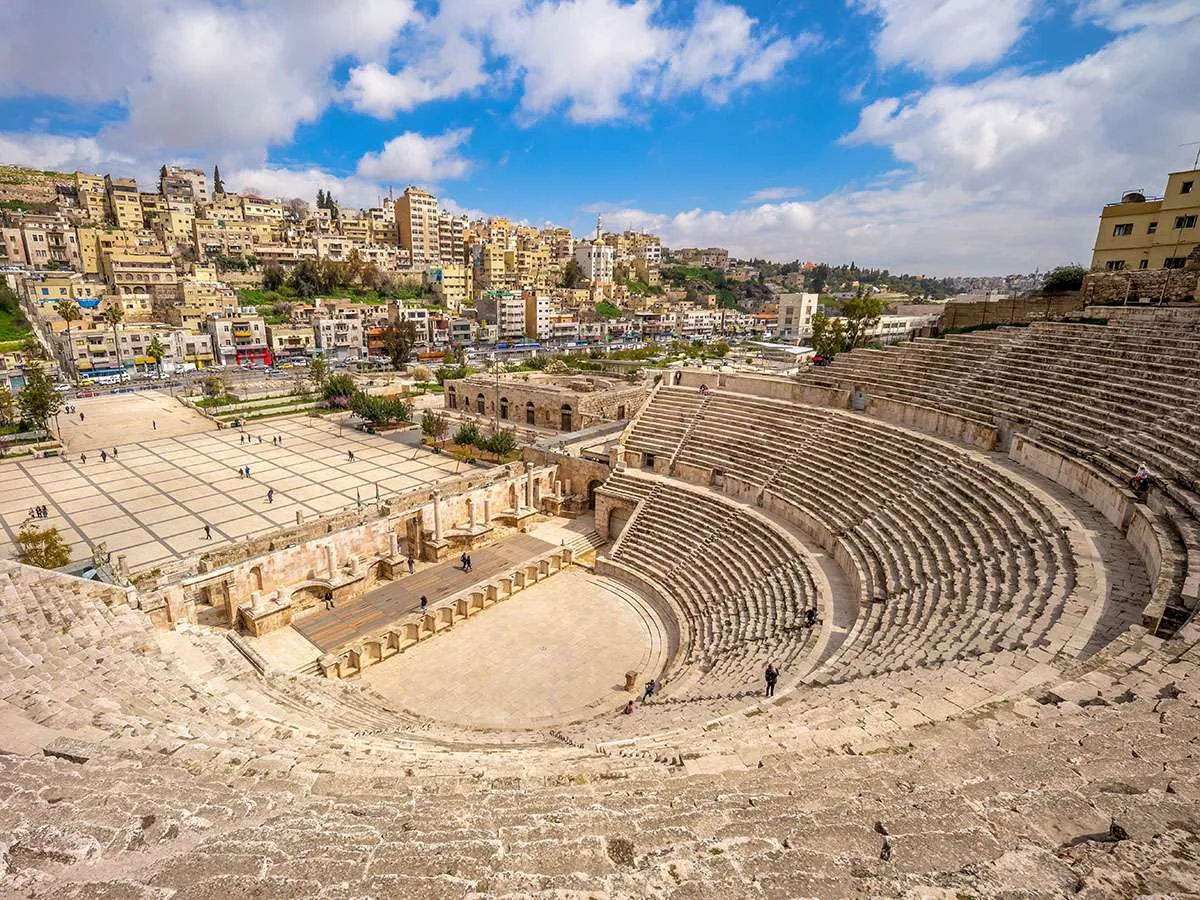
You wander between the towering columns of the Hercules temple, peer at the enormous fragmentary marble hand, explore the restored domed audience hall of the Umayyad palace and look out over the Roman Theatre and the sea of pale buildings filling Amman's hills. The on-site museum adds context. The combination of ruins from many eras and the panoramic city views makes the citadel Amman's essential sight.
Why It Matters
The Amman Citadel is the historical core of Jordan's capital and one of the most continuously occupied places on Earth, compressing seven thousand years of Near Eastern history into a single hilltop. It is the best place to grasp the deep past beneath the modern city.
The Amman Citadel is the historical core of Jordan's capital and one of the most continuously occupied places on Earth, compressing seven thousand years of Near Eastern history into a single hilltop.
Why Visit
Amman's most important historic site, a hilltop layered with Roman, Byzantine and Umayyad ruins, a giant Hercules hand and panoramic views over the capital.
✦ Insider Tips
- 1
Find the giant marble hand from the lost Hercules statue.
- 2
Visit the small museum on site for context.
- 3
Go at sunset for the best light over the city.
- 4
Combine it with the Roman Theatre visible below.