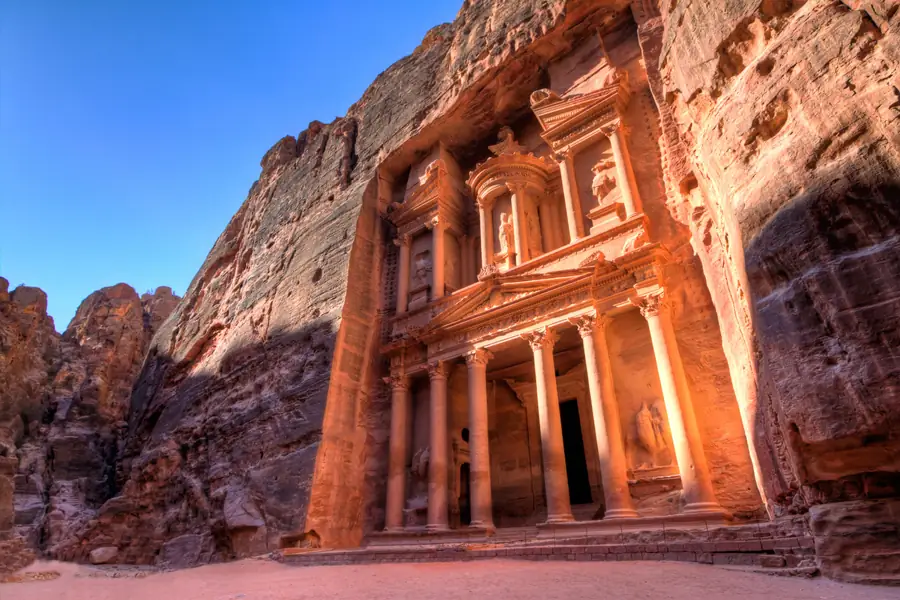
“Petra's entire city, including the towering Treasury facade, was carved directly into rose-red sandstone cliffs by the Nabataeans, then lost to the West until a Swiss explorer bluffed his way in in 1812.”
About Petra
The Nabataeans built Petra into the hub of a trading empire from around the fourth century BCE, mastering water engineering in the desert to support a large population. Rome annexed the kingdom in 106 CE, and earthquakes and shifting trade routes gradually emptied the city. It survived only in local Bedouin knowledge until Johann Ludwig Burckhardt reached it in 1812, and it was named one of the New7Wonders in 2007.
Petra in Jordan
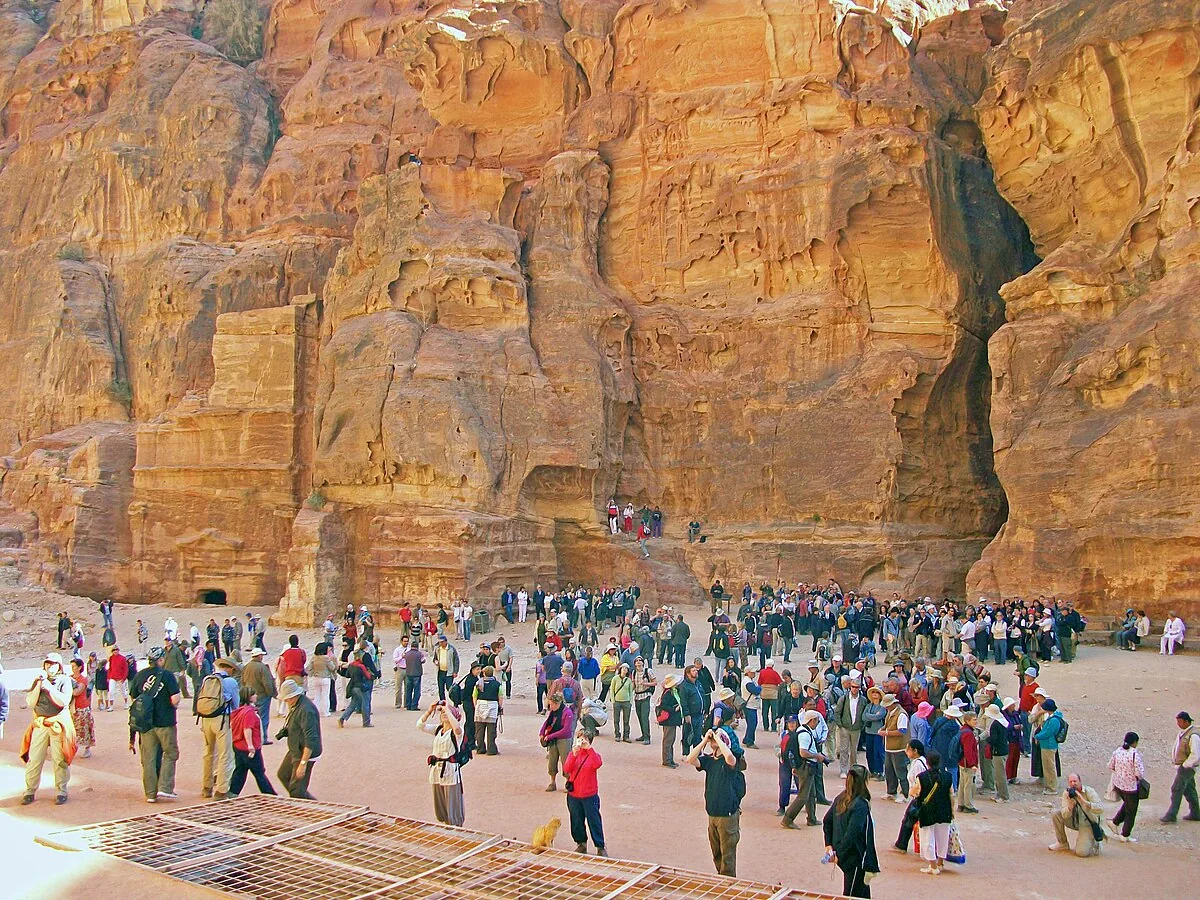
Petra was the capital of the Nabataeans, a desert trading people who grew rich controlling the incense and spice routes and carved their city directly into rose-red sandstone cliffs more than two thousand years ago. Reaching it through the Siq, a narrow gorge over a kilometre long that twists between walls a hundred metres high before opening, in one famous gap, onto the facade of Al-Khazneh, the Treasury.
Reaching it through the Siq, a narrow gorge over a kilometre long that twists between walls a hundred metres high before opening, in one famous gap, onto the facade of Al-Khazneh, the Treasury.
Beyond the Treasury
The Treasury is only the beginning. Petra spreads for kilometres into tombs, a Roman-era theatre, a colonnaded street and, after an 800-step climb, the even larger Monastery, Ad-Deir. The city was lost to the outside world for centuries until the Swiss explorer Johann Ludwig Burckhardt talked his way in disguised as a pilgrim in 1812.
The Experience
The walk through the Siq builds the whole experience: cool shadow, towering walls, the crunch of gravel, and then the Treasury appearing in a slot of light. Push on past it and the crowds thin among tombs and the theatre. The climb to the Monastery is long and hot but rewards you with a facade larger than the Treasury and far fewer people. Allow a full day at least.
Why It Matters
Petra is the defining monument of the Nabataean civilisation and one of the most recognisable archaeological sites in the world, a UNESCO World Heritage Site and a New7Wonder. Its rock-cut architecture and ingenious desert water systems made it a model studied far beyond Jordan.
Petra is the defining monument of the Nabataean civilisation and one of the most recognisable archaeological sites in the world, a UNESCO World Heritage Site and a New7Wonder.
Why Visit
No photograph prepares you for the scale or the colour of the carved facades or the drama of the Siq reveal. Arrive at opening to walk the Siq in quiet, carry plenty of water, and budget a second day for the Monastery and the high places if you can.
✦ Insider Tips
- 1
Enter at opening time to walk the Siq and see the Treasury before the tour groups arrive.
- 2
The Monastery is an 800-step climb but far quieter than the Treasury, so save energy for it.
- 3
Carry far more water than you think you need; the site is huge, exposed and hot.
- 4
A two-day ticket costs little more than one day and lets you reach the high places and back valleys.