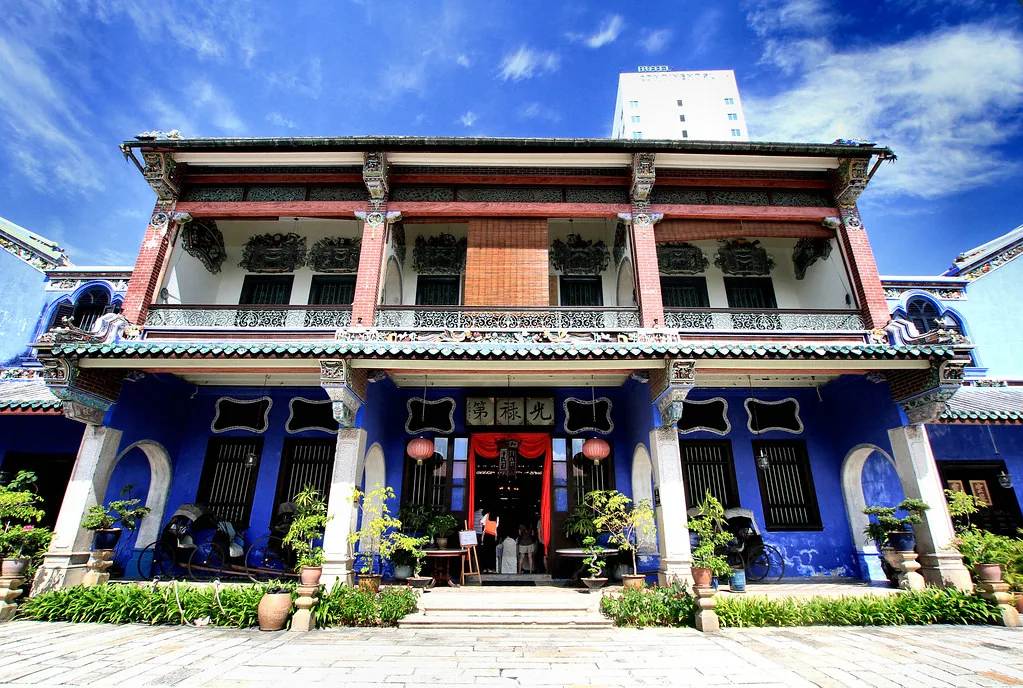
“Built on the ashes of a home destroyed by war, this hilltop bungalow was the sanctuary where an American writer found the words to name Borneo the 'Land Below the Wind.'”
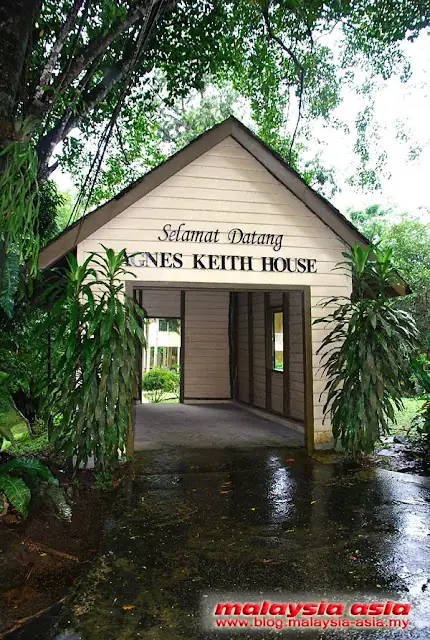
About Agnes Keith House
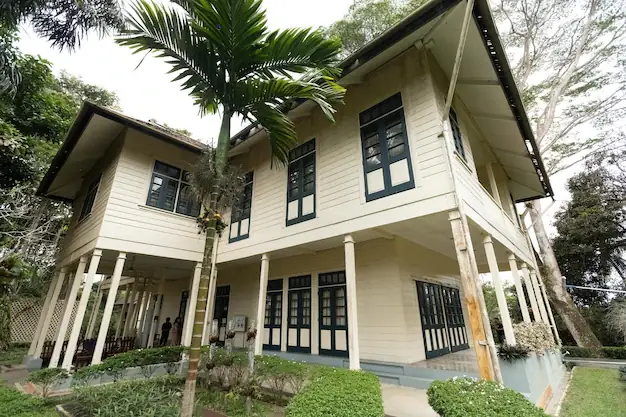
Agnes Keith’s books provided a rare, empathetic look at the people of Borneo during a time of colonial transition and wartime trauma. Her first home, named 'Newlands,' was the epicenter of social life in pre-war Sandakan. The 1947 reconstruction was a symbol of the town's rebirth; Sandakan was the most bombed town in the British Empire relative to its size. The house was designed with a unique 'butterfly' roofline and massive windows to maximize airflow, a design that Agnes personally influenced. It remained a government residence for decades after the Keiths departed, slowly gathering the layers of history that the museum now carefully peels back for the public.
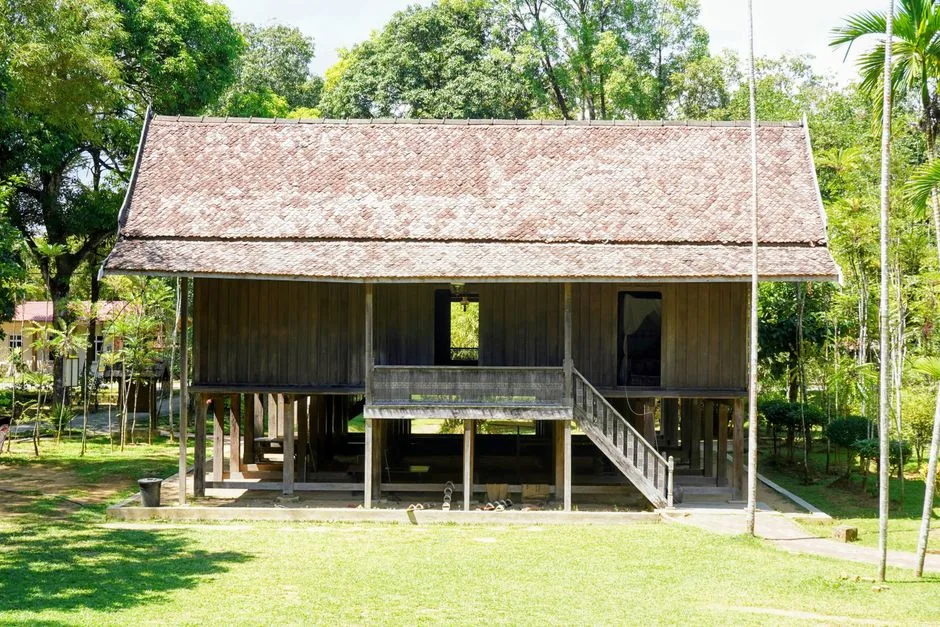
What Agnes Keith House actually is
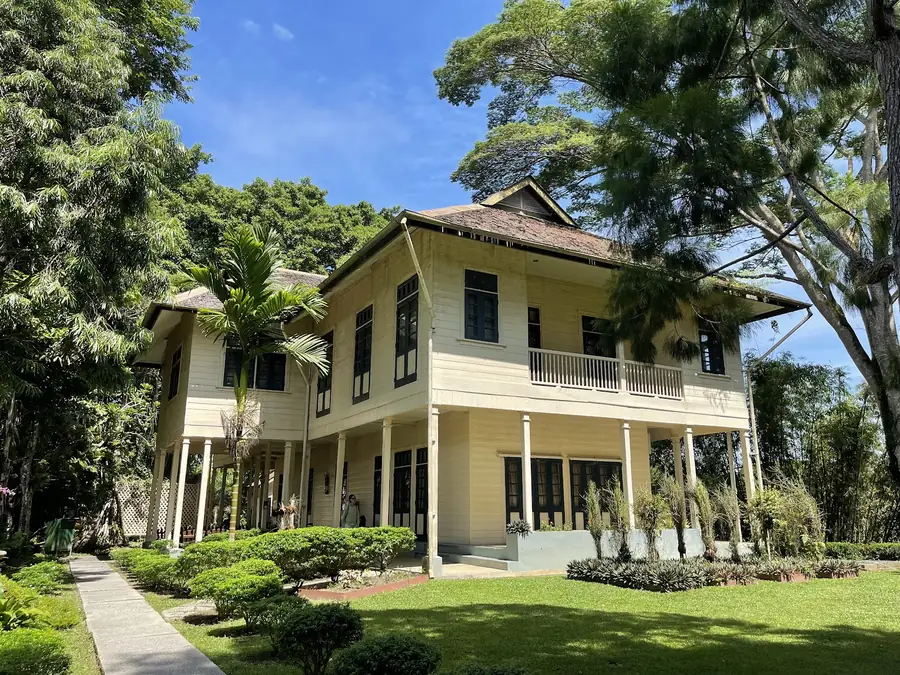
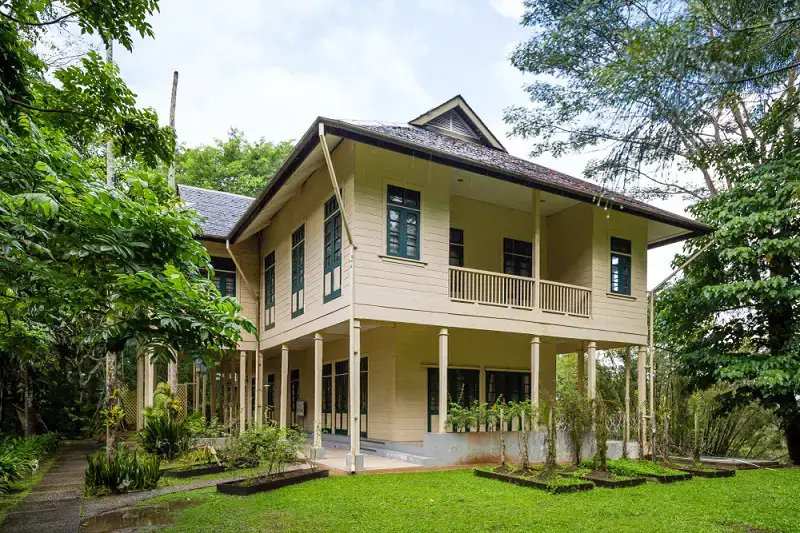
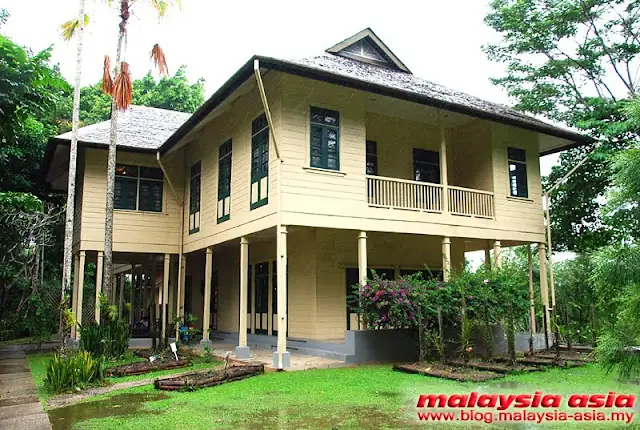
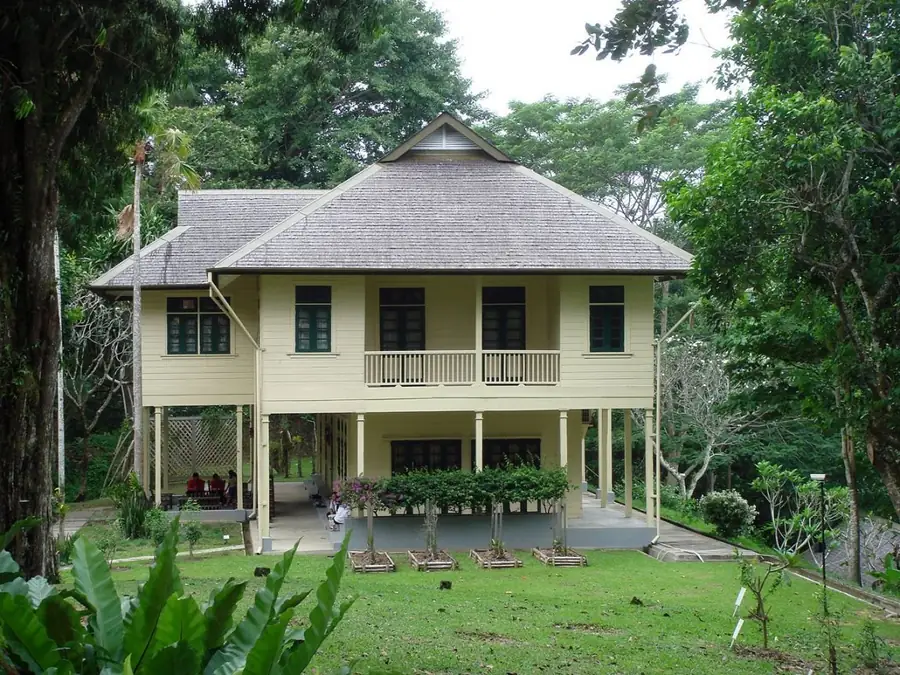
A two-story timber bungalow sits atop a hill in Sandakan, its wide verandas capturing the breeze from the Sulu Sea. The Agnes Keith House is a quiet, evocative monument to the colonial era and the literary legacy of the woman who made North Borneo famous through her memoirs. Rebuilt on the foundations of her original home, the house is a masterclass in tropical colonial architecture, designed to ward off the heat with high ceilings and dark, polished wood. It is a place of heavy shadows and sweeping views, where the domestic life of an American writer intersected with the brutal history of World War II. To walk through its rooms is to step into the pages of 'Land Below the Wind,' a narrative that defined the Western perception of Borneo for a generation.
A two-story timber bungalow sits atop a hill in Sandakan, its wide verandas capturing the breeze from the Sulu Sea.
Agnes Newton Keith moved to Sandakan in 1934
Agnes Newton Keith moved to Sandakan in 1934 as the bride of Harry Keith, the Conservator of Forests for the British North Borneo Company. Her first home on this site was destroyed during the Japanese invasion, a period during which Agnes, Harry, and their young son were imprisoned in harrowing internment camps. After the war, the couple returned to a devastated Sandakan and rebuilt the present house in 1946-1947 on the original ridge. This 'new' house became the setting for her third book, 'White Man Returns.' The Keiths left Borneo in 1952, and the house eventually fell into disrepair until the Sabah Museum Department restored it to its 1940s glory in 2004. It now is a memorial to the resilience of the human spirit and the literary history of the region.
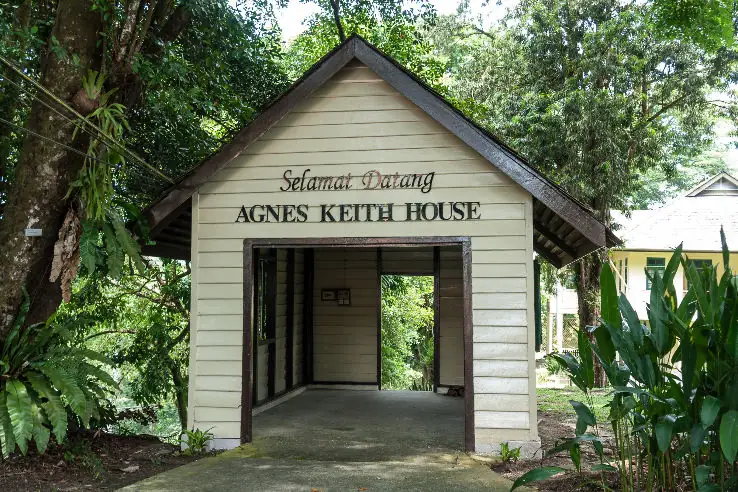
Visiting Agnes Keith House
Stepping onto the polished teak floors, the immediate drop in temperature as the house's clever ventilation pulls the sea air through the living quarters. The space smells faintly of beeswax and old paper, a comforting, domestic scent that feels out of place in the humid tropics. Immediately, the heavy, period-accurate furniture, rattan chairs and dark wardrobes, that look as though Agnes has just stepped out for tea. What emerges is the sunlight filtering through the louvred windows, creating long, golden slats across the floor. The ghosts of the past in the quiet bedrooms, where displays recount the family's time in the camps. Sound-wise of the wind in the surrounding banyan trees is a constant, gentle rustle that accompanies you moving from room to room. From the wrap-around veranda, The sprawling view of Sandakan Bay, seeing the fishing boats and the red roofs of the town below just as the Keiths did seventy years ago. Just about everyone focus on the house, but you should notice the 'English Tea House' on the lawn next door, where the sound of croquet mallets and the scent of scones provide a surreal, colonial-era experience. The small details, a vintage typewriter, a colonial-era globe, that turn the museum back into a home. The house is located on a ridge overlooking Sandakan town, accessible by a short, steep taxi ride or a twenty-minute walk from the central market. It is part of the 'Sandakan Heritage Trail,' which links several historic sites in the area. The road up the hill is well-paved but offers very little shade, so most visitors prefer to arrive by vehicle.
The Experience
The creak of the floorboards under your feet is the only sound in the upstairs gallery, where the humidity is held at bay by the thick timber walls. You register the black-and-white photographs of the family, their smiles a stark contrast to the nearby accounts of their imprisonment on Berhala Island. A sense of melancholy in the nursery, imagining a child growing up on the edge of a wild, unknown jungle. Immediately, the way the green of the tropical garden presses against every window, a constant reminder of the 'Land Below the Wind' that Agnes loved so deeply. What sticks with you is standing on the balcony and realizing that despite the tragedy of the war, this hill remained a place of quiet, creative power.
The creak of the floorboards under your feet is the only sound in the upstairs gallery, where the humidity is held at bay by the thick timber walls.
Why It Matters
The Agnes Keith House is the literary heart of Sabah. It is one of the few surviving colonial-era structures in a town that was almost completely leveled during the war. Historically, it serves as a tangible link to the colonial administration and the resilience of the civilians who endured the Japanese occupation, while culturally preserving the memory of an author who gave Borneo a voice in the global consciousness.
Why Visit
See this house for a rare, intimate look at the human side of history. It is not just a collection of artifacts, but a space that feels lived-in and deeply personal. It gives a particular perspective on the colonial experience, viewed through the lens of a writer who saw the beauty and the struggle of Borneo with equal clarity.
✦ Insider Tips
- 1
Combine your visit with lunch or tea at the English Tea House next door; the view from their lawn is arguably the best in Sandakan.
- 2
Read 'Land Below the Wind' before you arrive; it turns the furniture and rooms into living characters in a story you already know.
- 3
The walk up the '100 Steps' from the town center is a great workout, but do it in the early morning to avoid the brutal midday humidity.
- 4
Look for the display on the Japanese occupation; it provides essential context for the family's survival and the house's subsequent reconstruction.
- 5
The museum staff is incredibly knowledgeable; ask them about the specific types of timber used in the 2004 restoration to understand the house's construction.