Cheong Fatt Tze Blue Mansion — historical landmark in Malaysia
📍 historicalMalaysia

Cheong Fatt Tze Blue Mansion

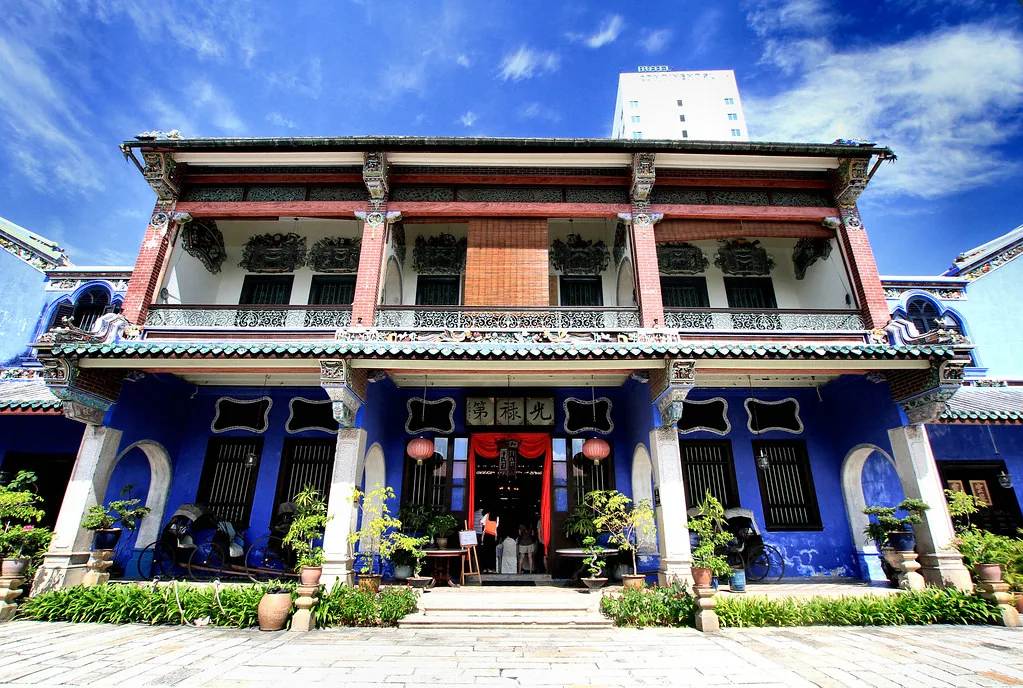
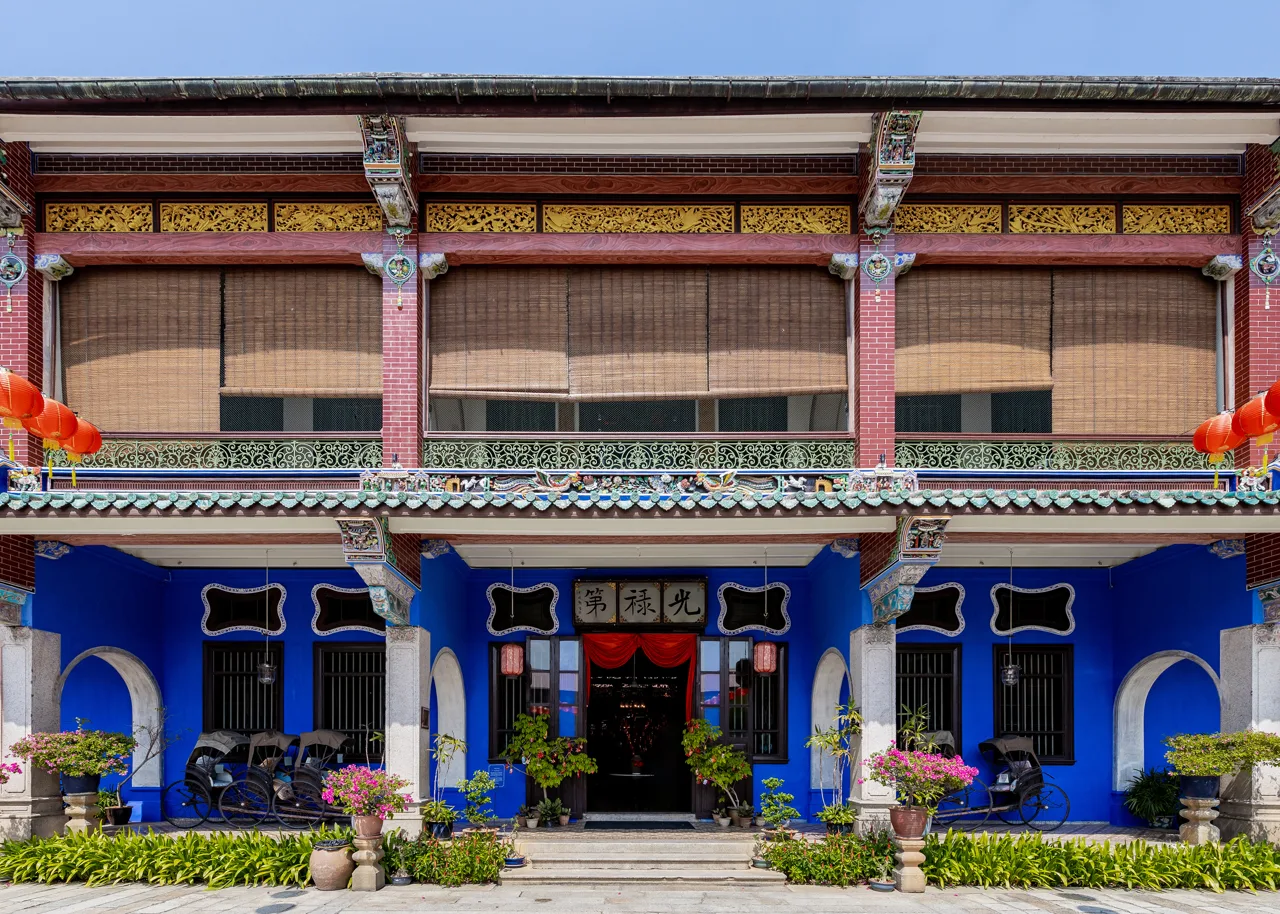
A 19th-century indigo-washed courtyard house built for the 'Rockefeller of the East' using traditional Hakka-Teochew architecture; the 38 rooms feature hand-cast iron balustrades from Glasgow and intricate Chini porcelain mosaics; visit during the 11 am guided tour to witness how the central atrium harnesses specific wind flows according to Feng Shui; the air is cool and smells of aged timber.

Scroll to read

A penniless immigrant built thirty-eight rooms of indigo-stained perfection to prove he had become the most powerful man in the East.

About Cheong Fatt Tze Blue Mansion

Cheong Fatt Tze was a visionary who balanced a deep respect for his Cantonese roots with a fascination for Western technology. His mansion featured the first glass windows in Penang and a complex system of internal plumbing that was centuries ahead of its time. During the restoration in the 1990s, workers discovered that the indigo color was not a paint, but a lime-wash finish that allowed the walls to breathe in the tropical humidity. The project became a catalyst for the entire heritage movement in George Town, proving that colonial-era ruins could be transformed into viable, world-class landmarks. It remains the only house of its kind outside of China that has been preserved with such forensic attention to the original materials and Feng Shui principles.

Cheong Fatt Tze Blue Mansion in Malaysia
Cheong Fatt Tze Blue Mansion — Malaysia

Indigo pigments traditionally derived from the indigofera tinctoria plant saturate the outer walls of this 19th-century masterpiece, creating a visual shock against the sun-bleached streets of George Town. Cheong Fatt Tze Mansion, widely celebrated as the Blue Mansion, stands as a grand architectural dialogue between the sprawling courtyards of Imperial China and the eclectic flourishes of Victorian Britain. The air within the central atrium feels heavy with the scent of old teakwood, cold floor tiles, and the faint, lingering perfume of joss sticks from the family altar. You walk across geometric encaustic tiles imported from Staffordshire, noticing how the light filters through intricate Scottish ironworks to create dancing patterns on the cerulean walls. The soundscape is a meditative retreat from the city's frantic motorbike buzz, defined by the rhythmic drip of rainwater into granite catchment pools and the soft shuffling of feet across timber floorboards.

The air within the central atrium feels heavy with the scent of old teakwood, cold floor tiles, and the faint, lingering perfume of joss sticks from the family altar.

Cheong Fatt Tze Blue Mansion in Malaysia — photo 2
Cheong Fatt Tze Blue Mansion, Malaysia

Cheong Fatt Tze arrived in Southeast Asia as a penniless migrant before ascending to become the 'Rockefeller of the East,' a man whose influence stretched from the boardrooms of international banks to the inner sanctums of the Qing Dynasty. He commissioned this residence in the late 1880s to serve not just as a home for his favored eighth wife, but as a physical manifestation of his immense wealth and adherence to Suan-pan Feng Shui. The construction utilized an army of master craftsmen from Southern China, who spent years perfecting the Chien Nien porcelain shard-work that adorns the rooflines. After Cheong’s death in 1916, the house fell into a decades-long decline, serving as a crowded tenement for squatters before a group of local conservationists rescued it from the wrecking ball in the early 1990s. Their meticulous restoration involved scraping back layers of grey grime to rediscover the original vibrant indigo, eventually earning a top UNESCO award for heritage conservation.

Standing in the main courtyard at mid-morning, you feel the precise architectural balance of the space, where every column and beam was placed to invite prosperity and trap positive energy. You notice the way the indigo walls seem to pulse with color under a clear sky, a shade so deep it feels almost velvety to the touch. The sound of a guide’s voice narrating the history of the eccentric tycoon mingles with the chirping of sparrows that nest in the ornate gables. You feel the temperature drop significantly as you move from the open courtyard into the shaded corridors, where the thick masonry breathes with a natural, centuries-old coolness. You notice the tiny, deliberate imperfections in the porcelain mosaics of dragons and phoenixes, each piece hand-clipped and fired a hundred years ago. The most evocative moment is leaning against a gilded door frame and realizing that this entire structure was built on the dreams of a man who once had nothing.

The mansion occupies a prominent spot on Leith Street, right in the heart of the UNESCO World Heritage zone of George Town, Penang. Walking remains the most rewarding way to arrive, allowing you to transition slowly from the modern city into the mansion’s historical gravity. Taxis and ride-share services can drop you directly at the heavy timber gates, though parking in these narrow colonial lanes is a perpetual challenge. Arriving for one of the scheduled daily tours is essential if you want to see the private wings and the most impressive architectural details, as much of the house functions as a boutique hotel and remains off-limits to casual wanderers. The surrounding neighborhood is a rich tapestry of street food stalls and artisan workshops, making it easy to weave a visit into a broader exploration of the island's capital.

The mansion occupies a prominent spot on Leith Street, right in the heart of the UNESCO World Heritage zone of George Town, Penang.

The Experience

The atmosphere at the Blue Mansion is one of hushed, opulent nostalgia. You notice the smell of the courtyard—a mix of wet stone and tropical air—which changes to the spicy scent of aged wood as you step inside. You feel the physical weight of the history here, amplified by the heavy beams and the dark, polished furniture that anchors each room. The light is a constant performer, shifting from the harsh glare of the tropical sun to the soft, blue-tinted shadows that define the interior corridors. You notice the sound of the wind whistling through the louvred shutters, a low moan that adds to the mansion’s ghostly charm. The most striking detail is the 'void' in the center of the house, a design that makes you feel both indoors and outdoors simultaneously. It is a place that demands a slower heart rate.

Why It Matters

Cheong Fatt Tze Mansion is a rare example of 'Straits Eclectic' architecture and a cornerstone of Penang’s cultural identity. It represents the pinnacle of 19th-century Chinese diaspora success and the survival of traditional craftsmanship against the tide of modern development. Historically, it is a living document of the complex social and economic hierarchies that governed the British Malaya era.

Why Visit

Visit because you want to see what happens when wealth is translated into art. While other colonial buildings are grand, the Blue Mansion is soulful and deeply symbolic. You come here to stand in a courtyard that was engineered for luck and to see a shade of blue that exists nowhere else in the world. It is the only place in George Town where you can truly feel the ghost of a lost empire.

✦ Insider Tips

  • 1

    Book a room for a night to gain access to the private balconies and courtyards that are strictly closed to day-trippers.

  • 2

    The 'center of the world' tile in the main courtyard is where the Feng Shui is strongest; stand there for a moment of quiet reflection.

  • 3

    Look for the original 19th-century iron spiral staircase imported from Scotland—it’s tucked away in a corner and often missed by casual observers.

  • 4

    Join the 11:00 AM tour; the guides are often descendants of the original house staff or deeply connected to the restoration project.

  • 5

    The on-site bar serves a cocktail inspired by the eighth wife; it is the perfect way to end a sunset visit on the terrace.

Free Travel Tools
Games & Discover

Featured

Conquer the World

195 nations. One dart. Build your empire.

New Game

FateLand

Three darts. The world decides your fortune, heartbreak & legacy.

FateLand
Fortune. Heartbreak. Legacy. Throw & find out.
Show on Map