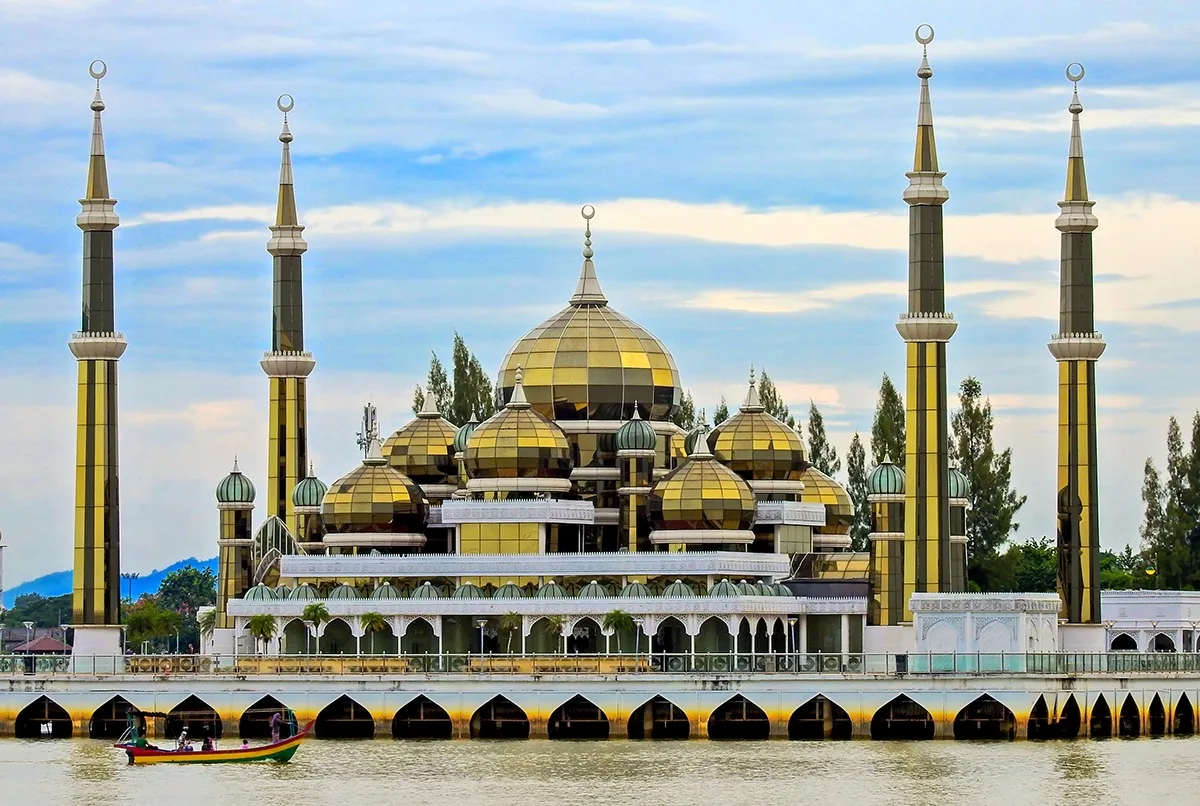
Constructed from steel, glass, and crystal, this mosque was designed to be 'smart' and looks more like a high-tech laboratory than a traditional house of prayer.
About Crystal Mosque
The project took roughly two years to complete, involving international engineering teams to ensure the glass could withstand the intense heat and occasional monsoons of the east coast. It was part of a larger government initiative to boost tourism in Terengganu by creating the Islamic Heritage Park. Since its opening, the mosque has become an icon of the region, featured on countless postcards and travel programs. Though it faced some maintenance challenges due to its unique materials, recent renovations have restored its metallic luster, ensuring it remains one of the most photographed religious buildings in Southeast Asia.
Crystal Mosque
Steel and tinted glass rise from the edge of the Terengganu River, reflecting the shifting tropical sky in a way that makes the structure appear to be made of liquid. The Crystal Mosque, or Masjid Kristal, is a radical departure from traditional Islamic masonry, opting for a high-tech aesthetic like it belongs in a science fiction landscape. Located within the Islamic Heritage Park on Wan Man Island, the mosque is famous for its smoked glass domes that turn from deep bronze to glowing amber depending on the position of the sun. It is a structure that prioritizes light and transparency, shimmering over the water like a mirage and challenging the idea that sacred spaces must be anchored by heavy stone.
“Steel and tinted glass rise from the edge of the Terengganu River, reflecting the shifting tropical sky in a way that makes the structure appear to be made of liquid.”
Crystal Mosque, Malaysia
Abidin and opened, 2008
Commissioned by Sultan Mizan Zainal Abidin and opened in 2008, the mosque was designed to be the centerpiece of a park showcasing replicas of the world's most famous Islamic monuments. However, the Crystal Mosque quickly eclipsed its neighbors to become the primary draw. It was one of the first 'smart' mosques in the world, built with integrated IT infrastructure and Wi-Fi to serve a modern congregation. The construction utilized a massive steel frame to support the heavy glass panels, a feat of engineering that had to account for the corrosive salt air of the nearby South China Sea. While it is a functional place of worship, its primary role has been as a symbol of the state’s modernization and its commitment to blending technology with faith.
Walking along the waterfront promenade,
The heat radiating off the river, but the sight of the mosque's cool, dark glass provides a psychological reprieve. The air is salty and carries the sound of small fishing boats passing by on their way to the coast. You register the way the glass domes catch the light; at midday, they are almost too bright to look at, while at dusk, they glow with a soft, internal illumination. The intricate patterns etched into the glass, which reveal themselves only when you are standing close to the facade. Inside, the prayer hall is bathed in a filtered, ethereal light that makes the white marble floors look like they are glowing. A hint of the silence of the space, which is amplified by the reflective surfaces that seem to swallow sound rather than echo it. At night, the mosque is lit from within by changing LED colors, turning the domes into vibrant shades of blue, magenta, and green. Those who come here stay on the landward side, but The best perspective is from a river cruise, where you can see the entire structure mirrored perfectly in the water. The grain of the building, all smooth glass and cold steel, feels surprisingly welcoming in the tropical humidity.
The mosque is situated on Wan
The mosque is situated on Wan Man Island, just outside the city of Kuala Terengganu. Visitors generally arrive by taxi or private car, crossing the bridge that connects the island to the mainland. For a more scenic approach, local 'bot penambang' (water taxis) can be hired from the central pasar to take you up the river, offering a vivid first view of the domes from the water.
“The mosque is situated on Wan Man Island, just outside the city of Kuala Terengganu.”
The Experience
The sun plays a constant game with the domes, turning them from solid dark spheres to translucent lanterns in the space of a cloud passing. The first thing you register is the way the steel minarets look like rockets aimed at the heavens, sharp and uncompromising against the palms. The breeze off the river cooling your skin as you walk the perimeter, hearing the rhythmic lapping of water against the pilings. From the start, the way the shadows of the geometric window patterns crawl across the prayer rugs as the day progresses. The moment that stays with you is seeing the mosque at sunset when the glass turns a fiery orange, blending perfectly with the sky.
Why It Matters
Masjid Kristal represents a bold step in modern Islamic architecture. It breaks away from the heavy, opaque traditions of the past to embrace transparency and modern materials. Culturally, it signifies Terengganu’s desire to be seen as a forward-thinking, technologically savvy state while maintaining its deep religious roots.
Why Visit
Check out this mosque to see how light can be used as a primary building material. It is one of the few places where you can witness the intersection of 21st-century technology and ancient spiritual devotion. It offers a visual experience that is entirely unique in the Muslim world, making it a mandatory stop for anyone interested in design.
Insider Tips
- 1
Hire a local boat at sunset to see the mosque from the river; the reflection on the water is often more impressive than the building itself.
- 2
Check the prayer times before you go; non-Muslim visitors are welcome to explore the exterior but should avoid the interior during active worship.
- 3
The surrounding Islamic Heritage Park contains miniature models of other famous mosques, which are worth a quick walk-through for context.
- 4
Wear socks, as you will need to remove your shoes to enter the prayer hall, and the marble can be surprisingly chilly compared to the outside heat.