Beneath a Sarawak rainforest lies a cave chamber so vast it could hold forty jumbo jets, while above ground, limestone shards rise like the teeth of a giant.
About Gunung Mulu National Park
The discovery of the Sarawak Chamber in 1980 by British cavers changed the world's understanding of cavernous geology. The park was established in 1974, but the 2000 UNESCO listing brought the funding necessary to build the extensive boardwalk system that protects the fragile jungle floor. The local Penan people, once nomadic, now serve as some of the most skilled guides in the park, sharing their knowledge of the forest's medicinal plants and hidden trails. Mulu continues to be explored; new cave passages are discovered nearly every year, making it one of the last frontiers for subterranean exploration on the planet.
Gunung Mulu National Park in short
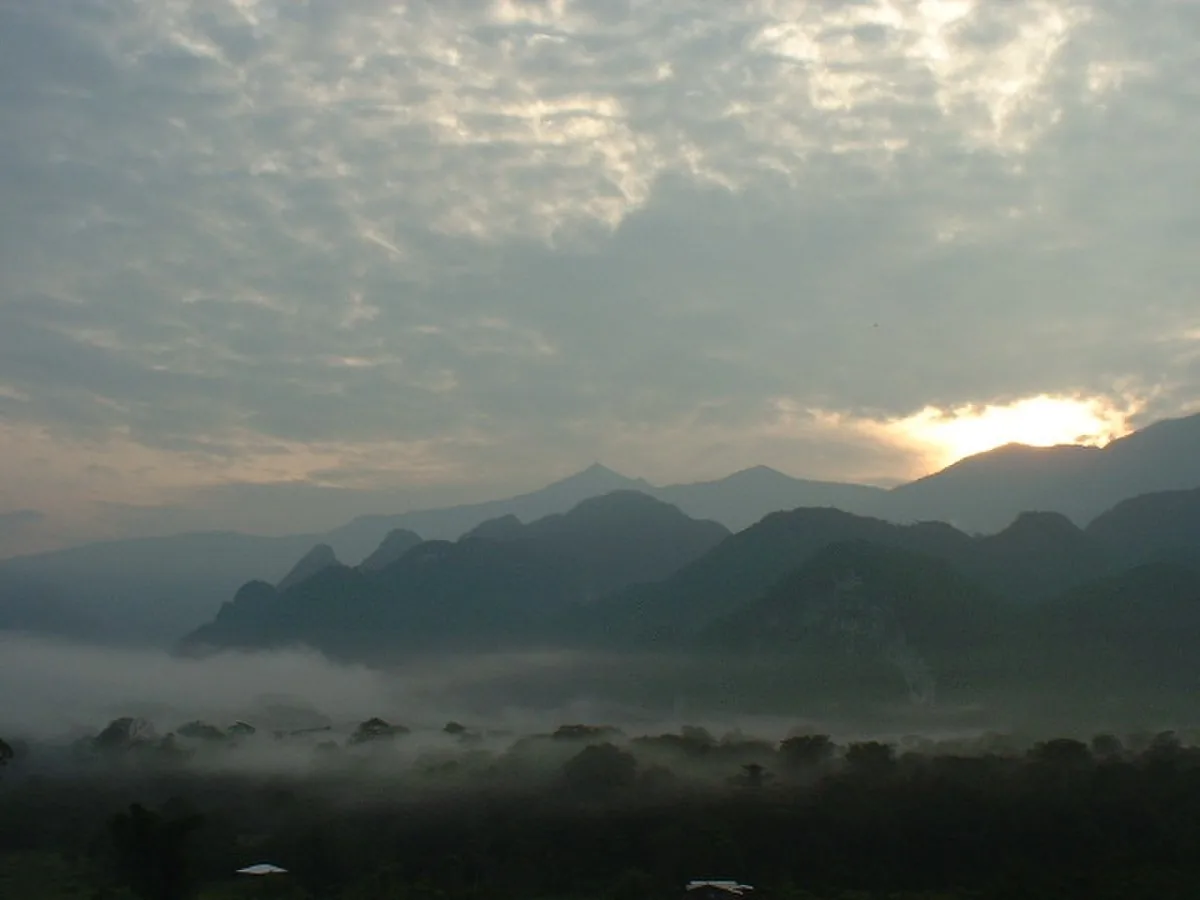
Rainforest canopies hide one of the world's most extensive underground labyrinths beneath the limestone karst of Sarawak. Gunung Mulu National Park is defined by its extremes: the world's largest cave chamber, the longest cave system in Southeast Asia, and the jagged, razor-sharp limestone pinnacles that pierce the jungle like stone knives. This UNESCO World Heritage site is an island of biodiversity where the earth has been dissolved and sculpted by millions of years of rainfall. Here nature operates on a subterranean scale, hosting millions of bats that emerge in synchronized spirals every evening. To enter Mulu is to step into a landscape like the set of a prehistoric film, untouched and intimidatingly vast.
The limestone that forms Mulu
The limestone that forms Mulu was laid down nearly 40 million years ago, but the caves themselves are much younger, carved by the slow, persistent flow of groundwater. Indigenous Berawan and Penan people have lived in these forests for generations, using the caves as burial sites and sources of edible bird's nests. The park first gained international attention in the late 1970s when a massive Royal Geographical Society expedition mapped the Sarawak Chamber, a space so large it could fit forty Boeing 747s. Since then, Mulu has become a global center for cave research and tropical ecology. It remains one of the few places in Malaysia that is almost entirely inaccessible by road, preserving its primitive character through geographic isolation.
Stepping onto the raised wooden boardwalks that snake through the park, The vibrating heat of the lowland forest and rotting leaves and sweet orchids. What hits is the size of the insects here, vibrantly colored dragonflies and beetles that look like they belong in a museum. Inside Deer Cave, the air changes to a heavy, musky scent of guano, and the ceiling is so high it disappears into shadow. Audible: the 'bat exodus' at dusk, a rhythmic whirring of millions of wings that creates a black ribbon across the sky. A humidity intensify as you hike toward the Pinnacles, where the terrain becomes a vertical scramble over sharp rock. When you reach the viewpoint, The stark white limestone blades contrasting with the deep green of the surrounding jungle. The hum of rain here is deafening, a sudden and violent downpour that turns the jungle floor into a series of rushing streams. People generally miss the tiny, translucent cave pearls and strange sightless insects that have evolved in the permanent darkness of the inner chambers.
Mulu is accessible almost exclusively by air
Mulu is accessible almost exclusively by air. Daily flights on small turboprop planes run from Miri, Kuching, and Kota Kinabalu, landing at a tiny airstrip in the middle of the jungle. Once at the park, all movement is on foot or by longboat along the Melinau River. There are no roads connecting Mulu to the outside world, making it a true wilderness destination.
The Experience
The darkness in the deep caves is absolute, a velvety blackness that makes your other senses sharpen to the sound of dripping water. What hits is the breeze moving through the 'Garden of Eden,' a hidden valley accessible only through a cave tunnel, where the sunlight feels like a holy presence. You get a vibration of the river through the hull of the longboat as you navigate the rapids toward Wind Cave. What draws the eye is the millions of swiflets that share the caves with the bats, their nests glued to the high walls like tiny barnacles. The moment that lingers is watching the bat spiral at sunset, a natural phenomenon so synchronized it feels like a single, massive organism moving against the clouds.
Why It Matters
Gunung Mulu is a biological fortress. It protects some of the most significant karst formations on earth and serves as a vital refuge for endangered Borneo wildlife. Culturally, it is a site of ancestral importance for the local tribes and shaped by the international cooperation required to map and preserve the world's great wonders.
Why Visit
Visit Mulu if you want to feel the raw power of geology. It is not just a park but a three-dimensional world where you explore the heights of the limestone peaks and the depths of the earth's crust. It is the ultimate destination for those who find beauty in the strange, the dark, and the ancient.
✦ Photo Gallery
Best Season
🌤 July to September are the driest months, making the river navigation more predictable and the steep hike to the Pinnacles less slippery.
Quick Facts
Best time to visit
July to September are the driest months, making the river navigation more predictable and the steep hike to the Pinnacles less slippery.
Getting there
In Mulu National Park, Malaysia; reach Mulu National Park first, then continue to the site.
Location
Mulu National Park, Malaysia
Type
attraction
Coordinates
4.0425°, 114.8125°
Insider Tips
- 1
Bring a powerful flashlight with extra batteries; the 'show caves' have lighting, but many of the best features are hidden in deep shadow.
- 2
Book your Pinnacles trek and accommodation months in advance, as the park’s limited capacity means it is often full during the dry season.
- 3
Wear leech socks for the jungle treks; the damp forest floor is home to small but persistent leeches that can easily bypass standard socks.
- 4
The bat exodus is weather-dependent; if it rains heavily in the late afternoon, the bats often stay inside, so stay for a few days to ensure a sighting.