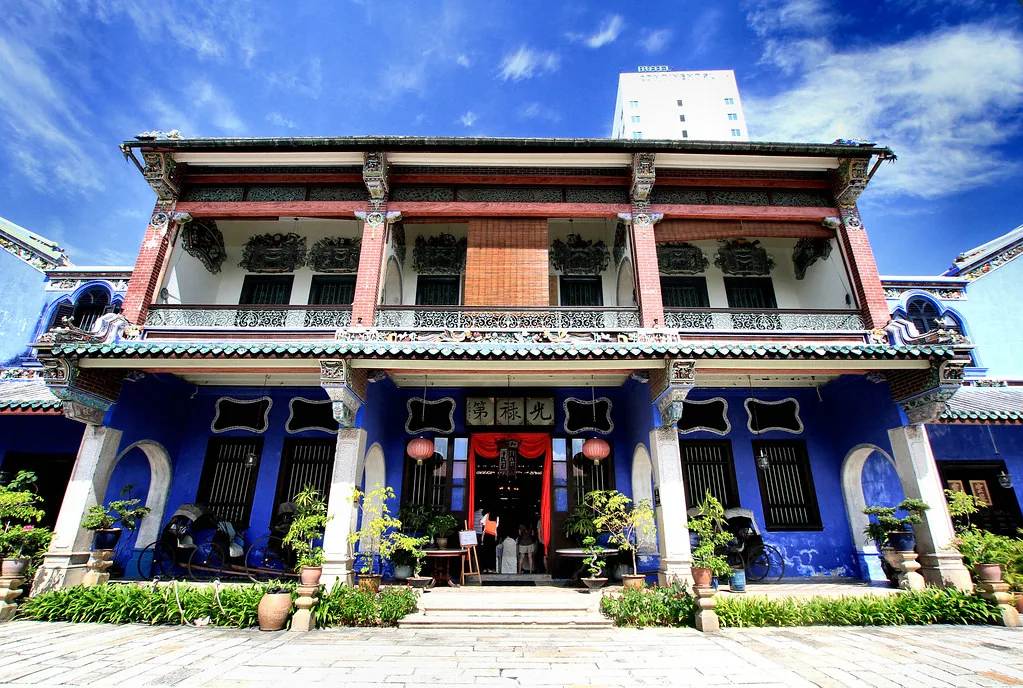
Fire destroyed the original temple because its creators dared to build something as opulent as the Emperor’s own palace, leaving the clan to rebuild a more modest masterpiece in 1906.
About Khoo Kongsi
The Khoo family traces their lineage back 650 years, but their Penang chapter began in earnest during the British colonial era. After the 1894 fire, the clan spent eight years refining the 1906 reconstruction, importing master craftsmen directly from southern China. These artisans used the 'Cut-and-Paste' porcelain technique to create the vibrant roof sculptures, a craft that has almost vanished today. The building served as a community center, a school, and a theater, ensuring the Khoo identity remained intact despite the pressures of modernization and war.
What Khoo Kongsi actually is
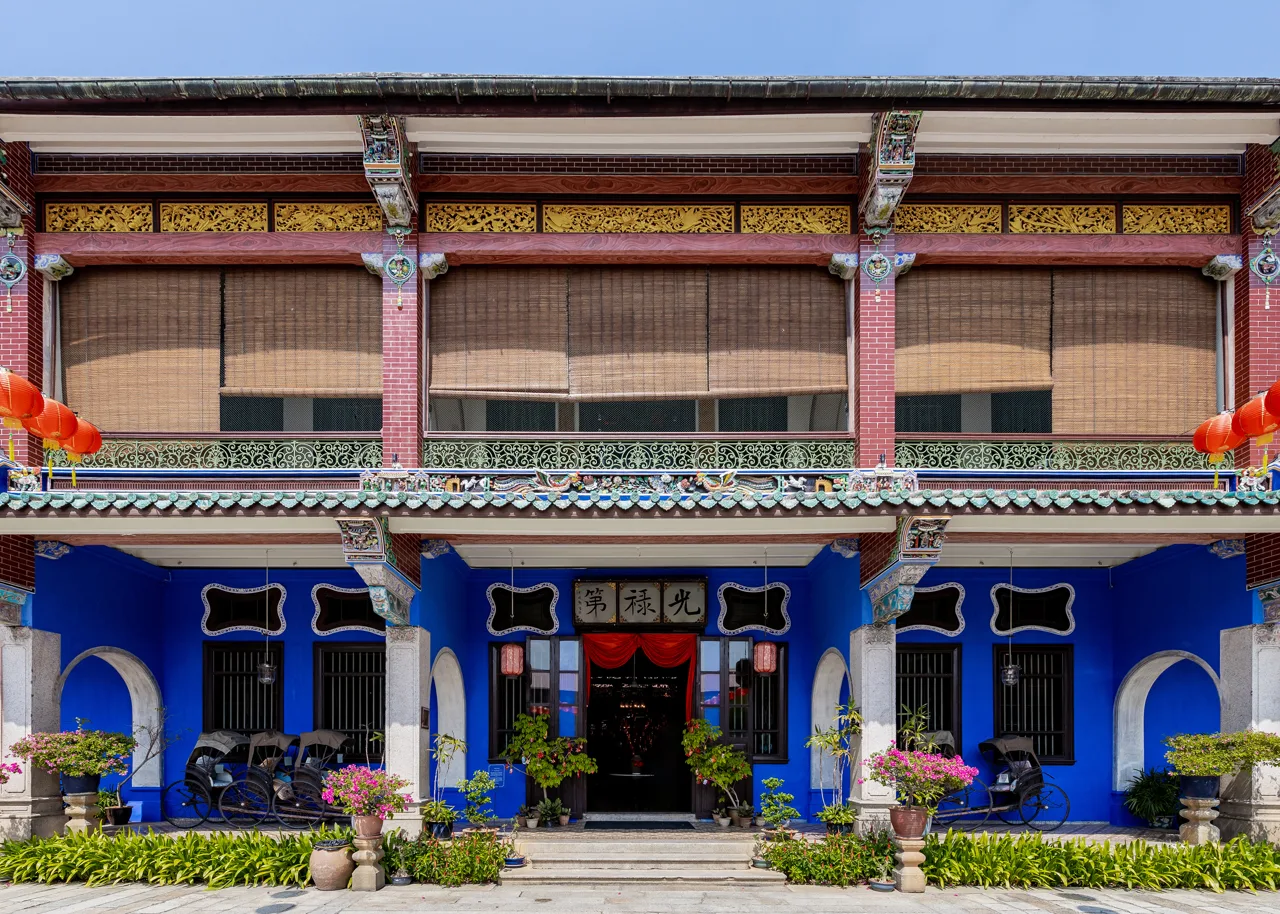
Golden dragons coil around emerald-tiled roofs in a narrow alleyway of George Town, creating a spectacle of Chinese craftsmanship that feels almost too dense for the eyes to process. Khoo Kongsi represents the pinnacle of clan house architecture in Southeast Asia, a physical manifestation of the wealth and social cohesion of the Hokkien community in Penang. The structure sits tucked away behind a modest row of terrace houses, a deliberate architectural choice that makes the sudden reveal of its gilded stone carvings and ornate friezes feel like stumbling upon a royal secret. Every inch of the granite and wood is etched with parables, mythological figures, and ancestral records, serving as a spiritual anchor for one of the most powerful families in the region.
“Golden dragons coil around emerald-tiled roofs in a narrow alleyway of George Town, creating a spectacle of Chinese craftsmanship that feels almost too dense for the eyes to process.”
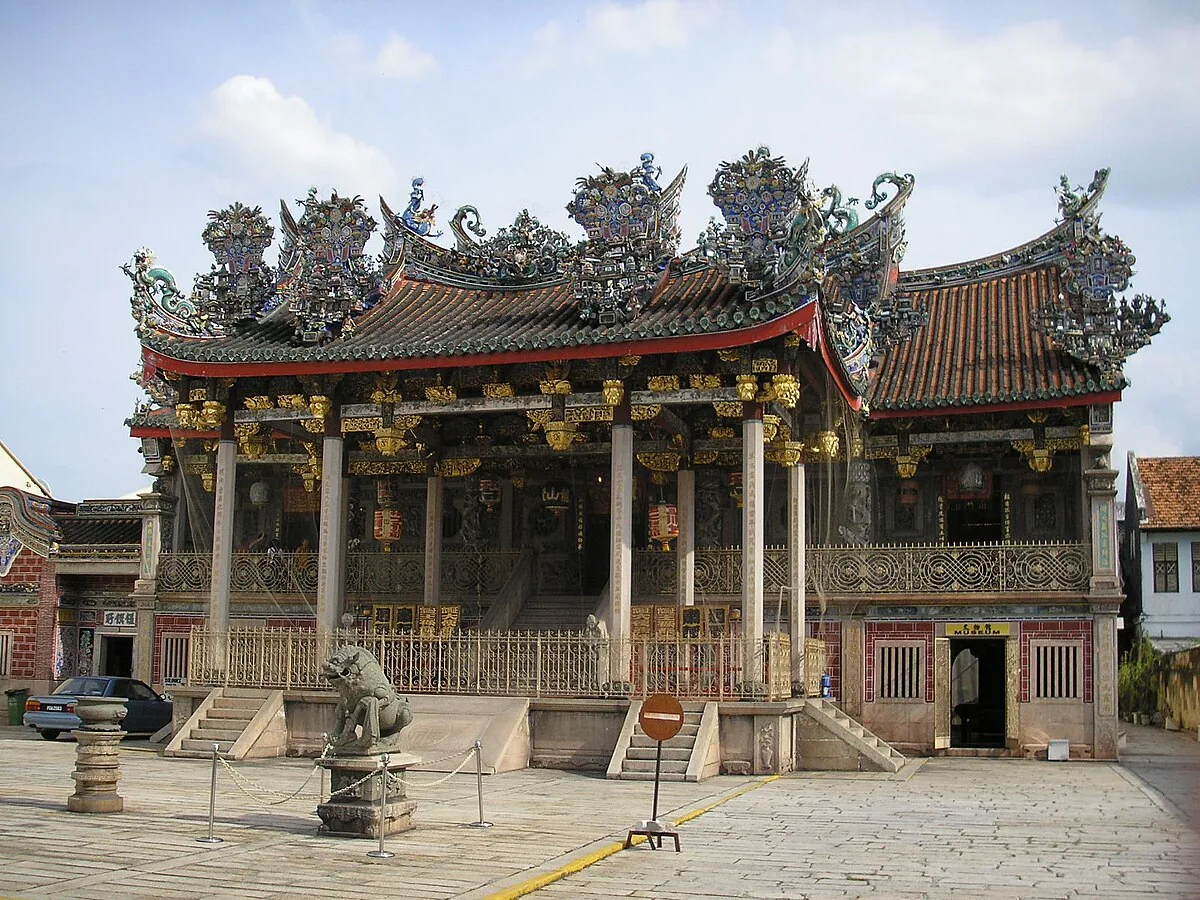
Khoo Kongsi, Malaysia
The past
The Khoo clan arrived from Fujian province in the late 19th century, quickly establishing themselves as titans of industry in the burgeoning port of Penang. They built their first clan house in 1894, but legend says it was so grand that it rivaled the Emperor’s palace in China, provoking the gods to strike it down with fire. Undeterred, the family rebuilt the present structure in 1906, scaling back the height slightly but doubling down on the intricate detail. During the Japanese occupation in World War II, the building suffered damage but survived, eventually undergoing a massive restoration in 2001 that utilized traditional artisans to revive the fading gold leaf and ceramic ornamentation. It remains a living institution where the clan still gathers for traditional opera and ancestral rites.
Crossing the threshold into the central courtyard, you
Crossing the threshold into the central courtyard, the temperature drop as the shadows of the heavy eaves shield you from the midday heat. Nearby, A thick, sweet scent of burning joss sticks mingled with the earthy aroma of old teak wood. The sheer depth of the stone carvings on the pillars; they are so deeply undercut that the figures seem to hover in mid-air. Under the main hall, The rhythmic clicking of fans and the distant chatter of the neighborhood, which fades away as you ascend the stairs to the ancestral altar. You discover a weight of history in the quiet upper gallery, where thousands of wooden tablets bear the names of the deceased in gold calligraphy. The light at four in the afternoon is transformative, catching the glass-mosaic dragons on the roof and making them shimmer as if they were wet. People generally forget to look at the murals on the side walls, which depict the 24 examples of filial piety in soft, ink-wash styles that contrast with the riot of color elsewhere. Entry is through a small gateway on Cannon Square, just a short walk from the famous street art of Armenian Street. The walk through the narrow 'alley of the dragon' prepares you for the grandeur ahead. Local buses stop at nearby Pitt Street, but the most atmospheric way to arrive is by a traditional trishaw from the waterfront.
The Experience
How quiet the inner hall is occasionally broken by the clinking of porcelain as clan members prepare tea in the side rooms. Right away you see how the gold leaf on the altars glows even in the dim light, casting long, dancing shadows across the polished floor. The mass of the vibration of the city outside, but here the air feels stationary, trapped by the heavy ceramic tiles and thick masonry. The intricate detail of the floor tiles, worn smooth by a century of barefoot pilgrims. What anchors the visit is standing in the courtyard and looking up at the roofline, where a chaotic assembly of ceramic warriors and deities seems to guard the sky.
Why It Matters
Khoo Kongsi is more than a temple; it is a repository of Hokkien heritage. It remains proof of to the success of the Chinese diaspora in the Nanyang and the enduring power of kinship. Culturally, it preserves a specific style of Southern Chinese architecture that is now rare even in its ancestral home.
Why Visit
This clan house to understand the true architectural soul of George Town. While the street art nearby is charming, Khoo Kongsi offers a level of artistic complexity and historical weight that no mural can match. It provides a rare look at a private world of ritual and wealth that has survived unchanged for over a century.
Insider Tips
- 1
Look for the 'secret' museum in the basement levels which explains the clan's business history in fascinating detail.
- 2
Bring a pair of binoculars to see the tiny, intricate expressions on the ceramic figures perched high on the roof ridges.
- 3
Visit during the monthly Chinese Opera performances if your schedule allows; the acoustics of the courtyard are designed for it.
- 4
Check the weather and visit just after a rainstorm; the wet tiles and stones take on a deep, saturated color that is perfect for photography.
- 5
The entrance is notoriously easy to miss; look for the small green sign on Cannon Street that looks like a residential driveway.