Seven indigenous tribes live under the shadow of a single mountain here, proving that a longhouse is not just a home but an entire village under one roof.
About Sarawak Cultural Village
The village opened its doors in 1989 at a time when the rapid modernization of Sarawak threatened to leave behind the architectural wisdom of its river people. Curators traveled deep into the interior to recruit families who could bring the structures to life, ensuring the village was a functional community rather than a silent exhibit. It was a bold experiment in cultural tourism that prioritized the dignity of the residents, allowing them to remain the masters of their own narrative. Today, it works as a successful model of how heritage can be curated without being hollowed out.
Rainforest steam rises against the backdrop of Mount
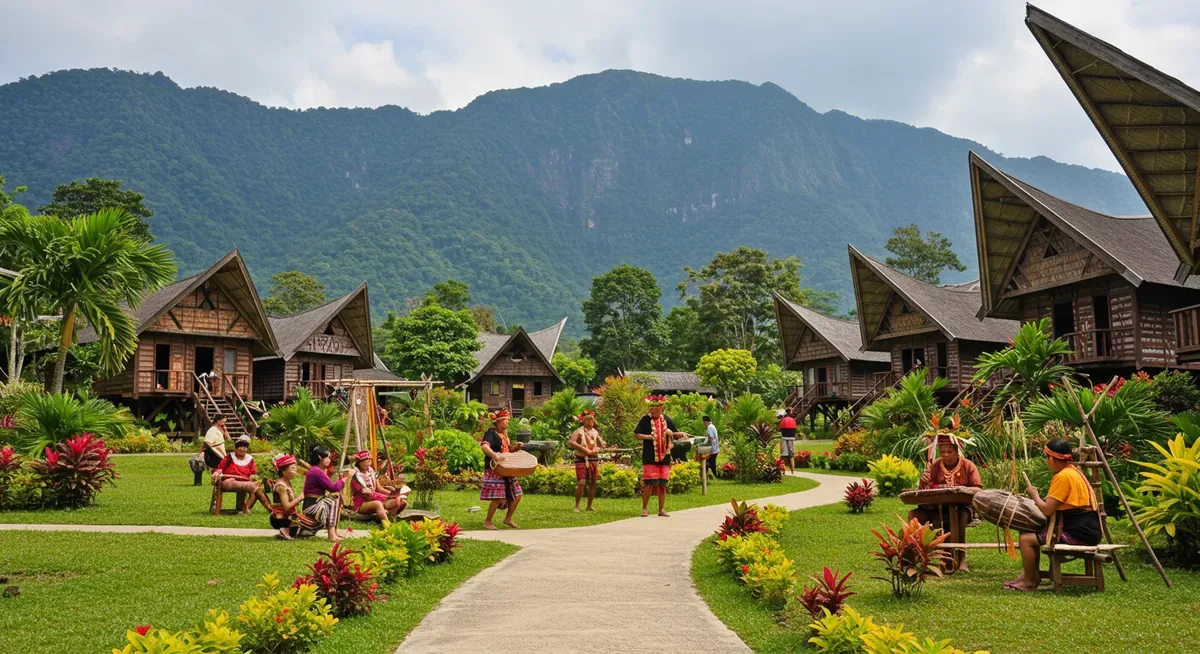
Rainforest steam rises against the backdrop of Mount Santubong, where seven distinct architectural legacies cluster around a central lake. Sarawak Cultural Village acts as a living bridge to the indigenous soul of Borneo, offering a rare proximity to the communal lifestyles of the Iban, Bidayuh, and Orang Ulu peoples. Unlike a static museum, this seventeen-acre site hums with the rhythmic clatter of looms and the scent of sago palm bread cooking over open hearths. Tall bamboo bridges and massive timber longhouses dominate the landscape, providing a physical map of the island’s tribal diversity. Visitors walk through history, moving from the notched-log ladders of a melanau tall house to the intricate beadwork of a highland longhouse, all while the primary jungle whispers at the perimeter.
Conceived in the late 1980s as a safeguard
Conceived in the late 1980s as a safeguard against the erosion of tribal traditions, the village was established to preserve the vanishing architectural styles of Sarawak’s many ethnic groups. Each structure was built using authentic materials and traditional construction methods, often involving the very craftsmen whose ancestors perfected these designs over centuries. The site gained global recognition as the home of the Rainforest World Music Festival, which turned this quiet ethnographic park into a stage for global indigenous voices. It is a social enterprise, providing a space where artisans from remote river settlements can showcase their skills to the world while keeping their heritage viable in a modern economy. The history here is not found in dusty books but in the calloused hands of the woodcarvers and the oral traditions shared by the elders sitting on the verandas.
Climbing the single, notched tree trunk that serves
Climbing the single, notched tree trunk that is the entrance to an Iban longhouse, the smooth, oiled texture of timber worn down by thousands of feet. The interior is heavy with the smoky aroma of slow-burning firewood and the dry, sweet scent of woven rattan mats. The way the light filters through the bamboo slats, creating a striped pattern on the floor that shifts with the afternoon sun. The first thing you register is the rhythmic thumping of a wooden pestle as a Bidayuh woman grinds rice, a sound that resonates through the floorboards. A cool breeze coming off the mountain crossing the high bamboo walkways. Notice how the structure flexes slightly under your weight. The interior of the Orang Ulu house reveals walls covered in spiraling tree-of-life murals, painted in earthy reds and blacks that seem to pulse in the dim light. Just about everyone focus on the central theater, but the real magic happens in the quiet corners of the residential rooms where elders recount stories of the river spirits. Right away, the intricate tattoos on the arms of the woodcarvers, mirroring the patterns they etch into the ironwood pillars. The taste of freshly pressed sago biscuits, still warm and slightly nutty, provides a physical connection to the land. Damai Beach is the starting point for the village, located roughly 35 kilometers north of Kuching. Shuttle buses depart regularly from the city center, winding through coastal roads that offer glimpses of the South China Sea. Travelers usually combine the trip with a visit to the nearby beach resorts or a sunset boat cruise along the Santubong peninsula.
The Experience
The damp heat of the morning begins to lift as you reach the Melanau Tall House, a massive structure elevated forty feet on timber stilts to ward off enemies and floods. You register the way the air circulates naturally through the high ceilings, a primitive form of climate control that feels more effective than any modern fan. A remnant of the vibration of the drums during the midday performance, a deep, resonant throb that seems to shake the very foundations of the wooden stage. Right away, the intricate beadwork on a dancer's headdress, each tiny seed bead contributing to a pattern of a hornbill’s flight. The piece that stays with you is the silence of the forest at dusk, just before the village shuts its gates and the spirits of the mountain take over.
Why It Matters
Sarawak Cultural Village is the repository of Borneo’s oral and architectural memory. It functions as a living archive, protecting the specialized knowledge of bamboo engineering, natural dyeing, and tribal governance. Culturally, it is the heart of Sarawakian identity, representing a pluralistic society that finds strength in its shared indigenous roots.
Why Visit
See this village to experience the rainforest on human terms. While a jungle trek gives you the nature, this site gives you the culture that evolved within that green wall. It is the only place where you can traverse the entire ethnic map of Sarawak in a single afternoon, walking through homes that feel occupied rather than displayed.
✦ Photo Gallery
Best Season
🌤 Best time: July to coincide with the Rainforest World Music Festival, when the village transforms into a global stage and the atmosphere is electric with song and ritual.
Quick Facts
Best time to visit
Best time: July to coincide with the Rainforest World Music Festival, when the village transforms into a global stage and the atmosphere is electric with song and ritual.
Getting there
In Kuching, Malaysia; reach Kuching first, then continue to the site.
Location
Kuching, Malaysia
Type
attraction
Insider Tips
- 1
Request a 'Passport' at the entrance and collect stamps from each ethnic house to ensure you don't accidentally skip the smaller, more remote structures.
- 2
Arrive early in the morning to watch the artisans setting up their looms and hearths before the crowds and the afternoon heat arrive.
- 3
The 'Umai', a local raw fish dish cured in lime and chiles, is prepared fresh in the Melanau house and is a culinary revelation for the adventurous.
- 4
Wear socks that are easy to remove, as every indigenous home requires you to leave your shoes at the base of the ladder or entrance.
- 5
The traditional dance performance at 11:30 AM is worth seeing, but sit in the back row to appreciate the scale of the choreography and the costumes.