“Deep in the Borneo jungle, orphaned 'men of the forest' attend a specialized school where the final exam is a permanent return to the wild canopy.”
About Sepilok Orangutan Rehabilitation Centre
In the early 1960s, the idea of animal rehabilitation was revolutionary and often met with skepticism. Sepilok began with just a few rescued infants in a small wooden hut, but its mission quickly gained international support as the plight of the Borneo orangutan became a global concern. The center has faced challenges, including the rise of surrounding palm oil plantations, which makes the 4,300-hectare reserve an increasingly vital 'island' of biodiversity. The 2014 addition of the Outdoor Nursery allowed for a more naturalistic training environment, further increasing the success rate of the release program.
Rust-colored fur blends into the deep green
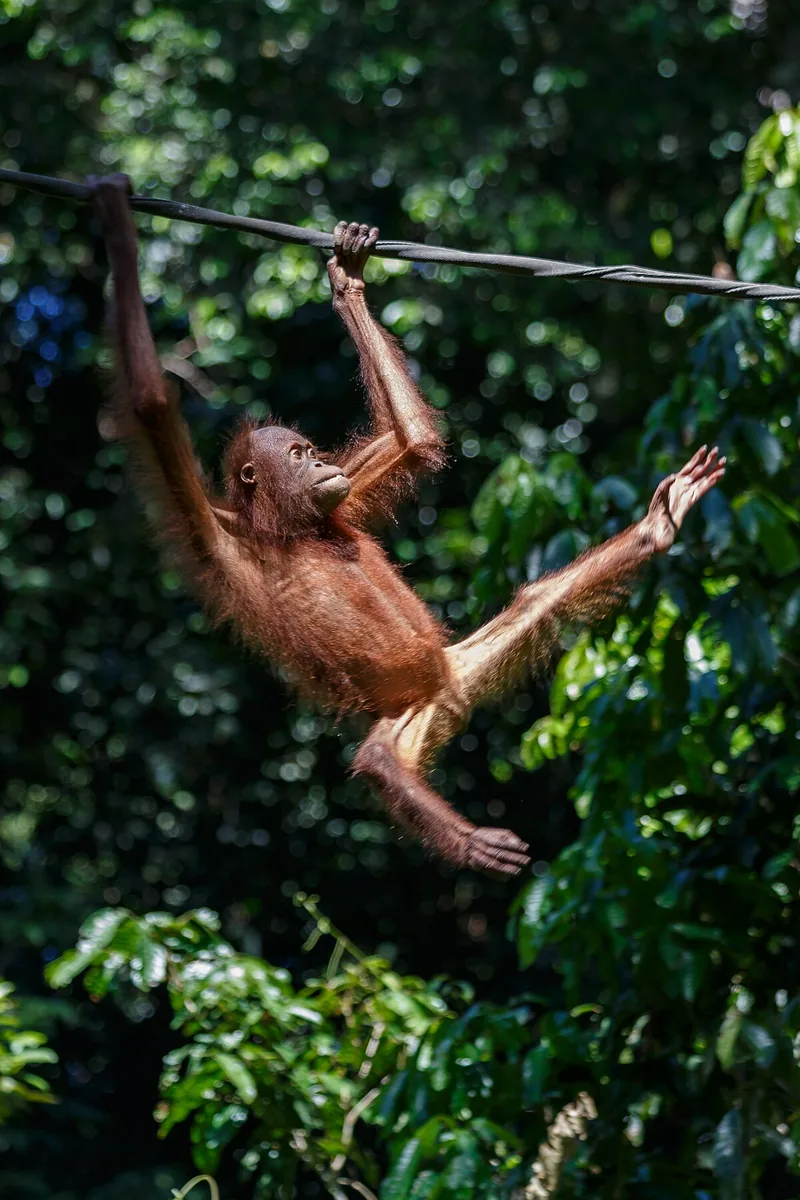
Rust-colored fur blends into the deep green of the Kabili-Sepilok Forest Reserve, where orphaned primates learn the essential skills of survival. The Sepilok Orangutan Rehabilitation Centre is one of the most important wildlife sanctuaries in the world, a place where the line between humans and nature is drawn with incredible care. Set within 4,300 hectares of virgin lowland rainforest, the center is dedicated to teaching orangutans who have been displaced by logging or the illegal pet trade how to climb, forage, and nest in the wild. It is a site of quiet patience, where success is measured by the animals eventually disappearing back into the deep jungle, never to return to the feeding platforms.
Rust-colored fur blends into the deep green of the Kabili-Sepilok Forest Reserve, where orphaned primates learn the essential skills of survival.
Founded, 1964
Founded in 1964 by Barbara Harrison, the center was the first of its kind in the world. At the time, the orangutan population in Borneo was plummeting due to rapid habitat loss. Harrison, an Englishwoman living in Sarawak, recognized that young orphans could not simply be released; they needed a 'forest school' to replace the years of training they would normally receive from their mothers. Over the decades, the center has successfully rehabilitated hundreds of orangutans. Today, it is managed by the Sabah Wildlife Department and has expanded to include a specialized nursery for infants and a dedicated veterinary clinic. It has become a global model for primate conservation, proving that with enough time and protection, even the most traumatized animals can reclaim their wild heritage.
Walking along the wooden boardwalks , the heavy, mossy humidity of the Borneo jungle clinging to your clothes. The air smells of wet bark and tropical flowers, punctuated by the sharp, electric buzz of cicadas. The standout is the sudden shaking of the canopy long before seeing the primates; a rhythmic swaying that signals a large body moving through the branches. On the feeding platform, The incredible dexterity of the orangutans as they peel bananas with their feet or hang effortlessly by a single arm. A collective breath of the crowd catch when a mother emerges from the trees with a tiny infant clinging to her orange hair. The first thing you register is the intelligent, observant eyes of the older 'graduates' who sit on the ropes, watching the humans with a curiosity that mirrors our own. Inside the nursery viewing area, There is a sense of hope watching the younger ones tumble and play in a gymnasium made of ropes and tires. The hum of the jungle is constant, a multilayered combination of bird calls, falling leaves, and the distant bark of a macaque. Beginning with the transition at the edge of the reserve, where the managed trails give way to the impenetrable, dark green wall of the primary forest. Most people miss the smaller residents, like the bright green lizards or the giant squirrels that frequent the boardwalk railings.
The center is located about 25
The center is located about 25 kilometers west of Sandakan in Sabah. Travelers usually arrive via a short flight from Kota Kinabalu followed by a taxi or shuttle bus from Sandakan airport. There are several lodges within walking distance of the center, allowing for early morning visits when the jungle is most active.
The center is located about 25 kilometers west of Sandakan in Sabah.
The Experience
How quiet the viewing gallery is thick with anticipation as the feeding time approaches. What hits is the way the light filters through the giant dipterocarp trees, creating long beams of dust-filled gold that illuminate the forest floor. You get a sheer power of the jungle when a large male orangutan moves through the trees, making branches as thick as a human leg bend like twigs. Opening with the subtle differences in personality, the shy ones who grab a single fruit and retreat, and the boisterous youngsters who perform for the cameras. What remains with you is when an orangutan looks directly at you, creating a split-second connection that bridge the gap between species.
Why It Matters
Sepilok is a marker of conservation in a region under extreme environmental pressure. It serves as a vital genetic reservoir for the species and a major educational center for both locals and international visitors. Its success demonstrates that humans can act as a restorative force in nature, rather than just a destructive one.
Why Visit
Visit Sepilok to see conservation in action. Unlike a zoo, this is a place where the animals have the choice to stay or go. It is a rare opportunity to witness the grace and intelligence of our closest relatives in their natural habitat, and your entrance fee directly supports the veterinary care of the next generation of orphans.
✦ Insider Tips
- 1
Visit the Sun Bear Conservation Centre right next door; it is often quieter and features the world's smallest and most elusive bears.
- 2
Mosquito repellent is essential, but apply it before you enter the park to avoid spraying chemicals near the sensitive primates.
- 3
Stay for the afternoon feeding session if the morning one was crowded; the light is better for photography and the tour groups are often smaller.
- 4
Leave your bags in the lockers; orangutans are incredibly curious and will happily 'confiscate' any loose items like water bottles or cameras if they can reach them.