Suspended over the city on a verdant hill, thousands of red lanterns create a glowing canopy for the goddess who once guided sailors through the South China Sea.
About Thean Hou Temple
The construction of Thean Hou was a massive community effort, funded almost entirely by donations from the Hainanese diaspora. The artisans who worked on the temple used traditional techniques for the ceramic 'cut-and-paste' sculptures on the roof, which depict scenes from Chinese folklore and the journey of the Eight Immortals. While Mazu is the central figure, the temple also honors Guan Yin, the Goddess of Mercy, and Shui Wei Sheng Niang, the Goddess of the Waterfront. This tripartite arrangement reflects the practical spiritual needs of a seafaring people who sought protection from the unpredictable forces of the ocean while building new lives in a foreign land.
Thean Hou Temple in Malaysia
Six tiers of scarlet pillars and sweeping pagoda roofs sit atop Robson Heights, overlooking the sprawl of Kuala Lumpur with the watchful eyes of a sea goddess. Thean Hou Temple is a flamboyant masterpiece of syncretic architecture, blending elements of Buddhism, Taoism, and Confucianism into a single, vibrant sanctuary. Dedicated to Mazu, the Heavenly Mother who protects seafarers, the temple is a riot of color, dominated by thousands of red lanterns that sway in the breeze. While the city below hums with the grit of commerce and traffic, this hilltop retreat offers a sensory overload of traditional Chinese aesthetics, from intricate woodcarvings to elaborate murals of mythological beasts. The ancient spiritual traditions of the Hainanese community have been scaled up to match the ambition of a modern capital.
“Six tiers of scarlet pillars and sweeping pagoda roofs sit atop Robson Heights, overlooking the sprawl of Kuala Lumpur with the watchful eyes of a sea goddess.”
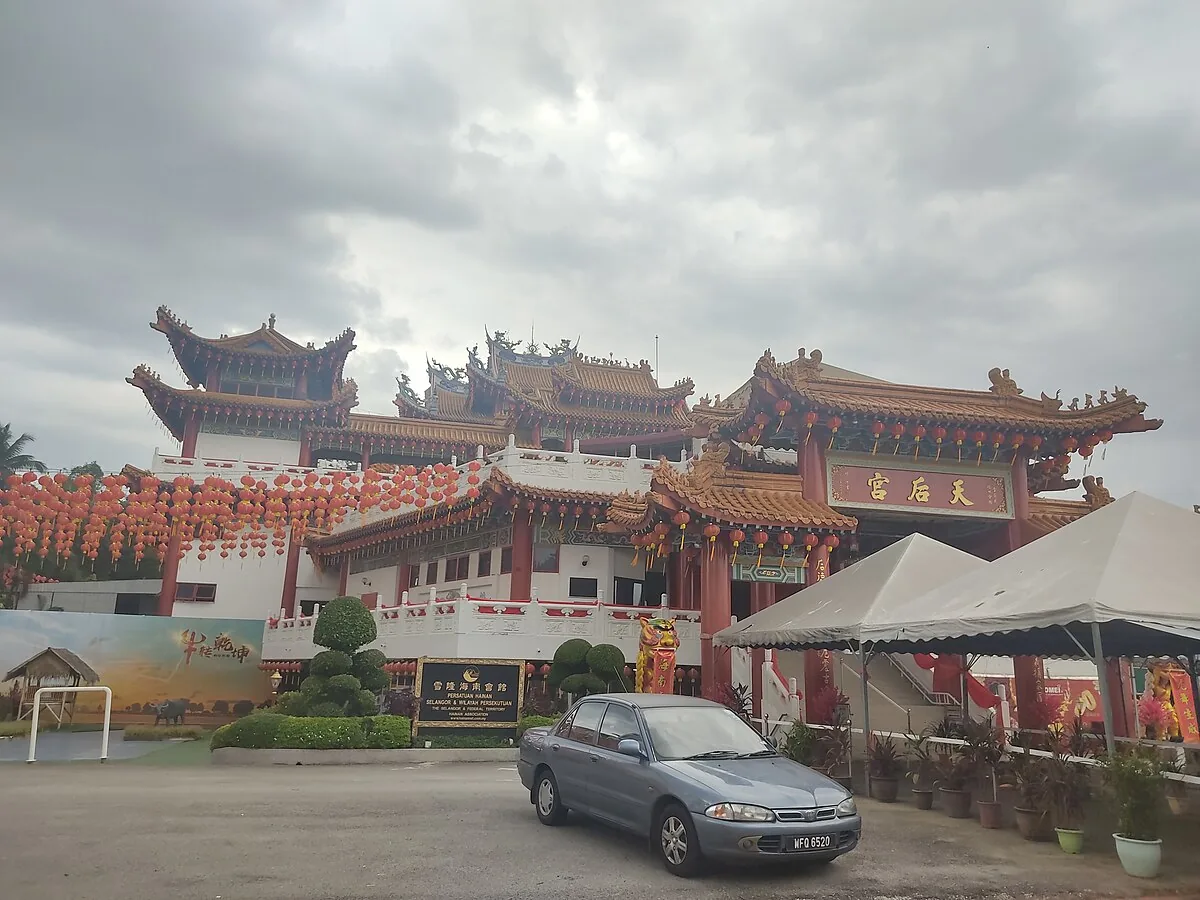
Thean Hou Temple, Malaysia
was actually completed, 1987
Though it looks centuries old, the temple was actually completed in 1987 and officially opened in 1989. It was built by the Selangor and Federal Territory Hainan Association, representing a community that has traditionally been the backbone of Malaysia's maritime and culinary trades. The architects chose a site that once was a residential hill, ensuring the temple would be visible from almost every corner of the city. The design incorporates the 'Golden Phoenix' style, with multi-layered eaves and elaborate dragon carvings that symbolize power and protection. Over the last three decades, it has evolved from a local clan temple into one of the most popular wedding venues and cultural centers in the country, serving as the focal point for Chinese New Year and the Mid-Autumn Festival celebrations in the Klang Valley.
Approaching the temple at dusk,
Approaching the temple at dusk, the air cool slightly as you ascend the winding road toward the peak. The room is sweet with the scent of sandalwood incense and the oily, rich aroma of burning red candles. First, the sheer scale of the red lanterns, thousands of them, strung across the courtyard like glowing fruit. The standout is the intricate detail of the prayer halls, where the ceilings are decorated with complex geometric patterns in gold and blue. An echo of the smooth, cool marble of the floors walking toward the three main altars, where the Goddess of Mercy and the Goddess of the Waterfront sit in gilded splendor. You register the sound of the 'fortune sticks' being shaken in their bamboo tubes, a rhythmic, wooden clatter that provides the background music to the temple’s daily life. From the upper balconies, the contrast between the traditional orange tiles and the distant, neon-lit skyscrapers of the city center. The way the smoke from the incense burners swirls in the evening light, creating a hazy, mystical atmosphere that masks the nearby highway. Just about everyone stay in the main hall, but you should notice the medicinal herb garden and the tortoise pond in the lower levels, where the slow movement of the animals offers a quiet lesson in Taoist patience. The temple is located about 3 kilometers from the city center, but it is not easily accessible by public rail. Those who come take a taxi or a ride-share from the Bangsar or KL Sentral stations. The walk from the main road is steep and lacks shade, so arriving by vehicle is highly recommended, especially during the midday heat.
The Experience
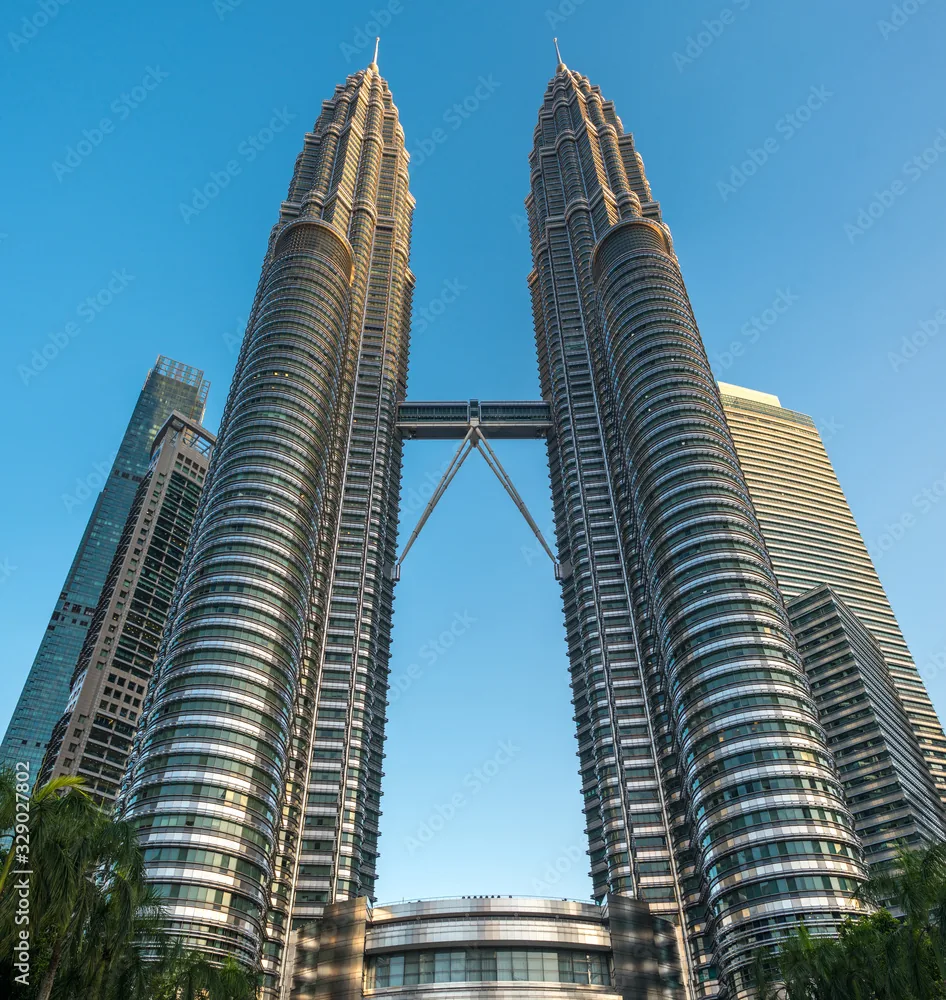
The orange glow of the lanterns at night turns the entire hill into a signal of light that can be seen for miles. The first thing you register is the soft murmur of the devotees as they light their candles, a collective whisper of hope and gratitude. Something like a sense of grandiosity in the sweeping roofs, which look like the wings of a phoenix about to take flight. The standout is the vibrant murals on the side walls, where warriors and dragons are frozen in mid-battle against a backdrop of stylized clouds. The bit that lingers is looking out over the city skyline at midnight during a festival, when the ancient architecture of the temple frames the futuristic silhouette of the Petronas Towers.
Why It Matters
Thean Hou Temple is the spiritual heart of the Chinese community in Kuala Lumpur. It represents the successful preservation of ancestral traditions within a rapidly changing urban environment. Historically, it serves as a monument to the Hainanese contribution to Malaysia’s development, bridging the gap between old-world faith and new-world prosperity.
Why Visit
This temple for the best panoramic views of the city and the most vibrant display of traditional Chinese art in Malaysia. It is a photographer's dream, offering a scale of color and architectural detail that is unmatched in the region. It provides a profound sense of how the ancient and the modern can coexist in a single, hilltop frame.
Insider Tips
- 1
Visit just before sunset to see the temple in natural daylight, and then stay for the 'blue hour' when the lanterns are switched on.
- 2
Check the basement level for the marriage registry office; it's a great place to see local couples in traditional wedding finery.
- 3
The fortune sticks are free to use, but be sure to leave a small donation if you take a printed interpretation of your result.
- 4
Wear comfortable but respectful clothing; while there is no strict dress code for the courtyard, the inner prayer halls require modest attire.
- 5
The small vegetarian canteen on the ground floor serves some of the most authentic and affordable Hainanese-style snacks in the city.