In these shallow turquoise meadows, the only sound is the rhythmic grazing of ancient green turtles and the gentle 'whoosh' of them breaking the surface for air.
About Turtle Bay
Historically, the Perhentian Islands were a stopping point for traders between Malaysia and Bangkok, the name 'Perhentian' literally means 'place to stop.' Turtle Bay remained a secret known only to local boatmen until the rise of eco-tourism in the 1990s. The establishment of the Marine Park in 1994 brought strict regulations against anchoring and fishing in the bay, which allowed the sea grass to flourish. The bay is now a critical part of a regional network of sanctuaries, linked to the nesting beaches on the northern side of the islands, ensuring that the turtles have a safe place to grow before they begin their massive oceanic migrations.
What Turtle Bay actually is
Golden sands slope gently into the turquoise waters of the Perhentian Islands, where the sea grass meadows provide a permanent buffet for the region’s most beloved residents. Turtle Bay, located on the uninhabited side of Perhentian Besar, is a sanctuary of quietude and crystal-clear visibility. Unlike the packed beaches of the main resorts, this bay is a protected nursery where green turtles and hawksbills come to feed and rest away from the noise of boat engines. The water here is so shallow and transparent that you can see the intricate patterns on the turtle shells from the surface. Here time slows down to the pace of a slow-moving flipper, offering a profound connection to the marine life of the South China Sea in an environment that feels entirely wild.
“Golden sands slope gently into the turquoise waters of the Perhentian Islands, where the sea grass meadows provide a permanent buffet for the region’s most beloved residents.”
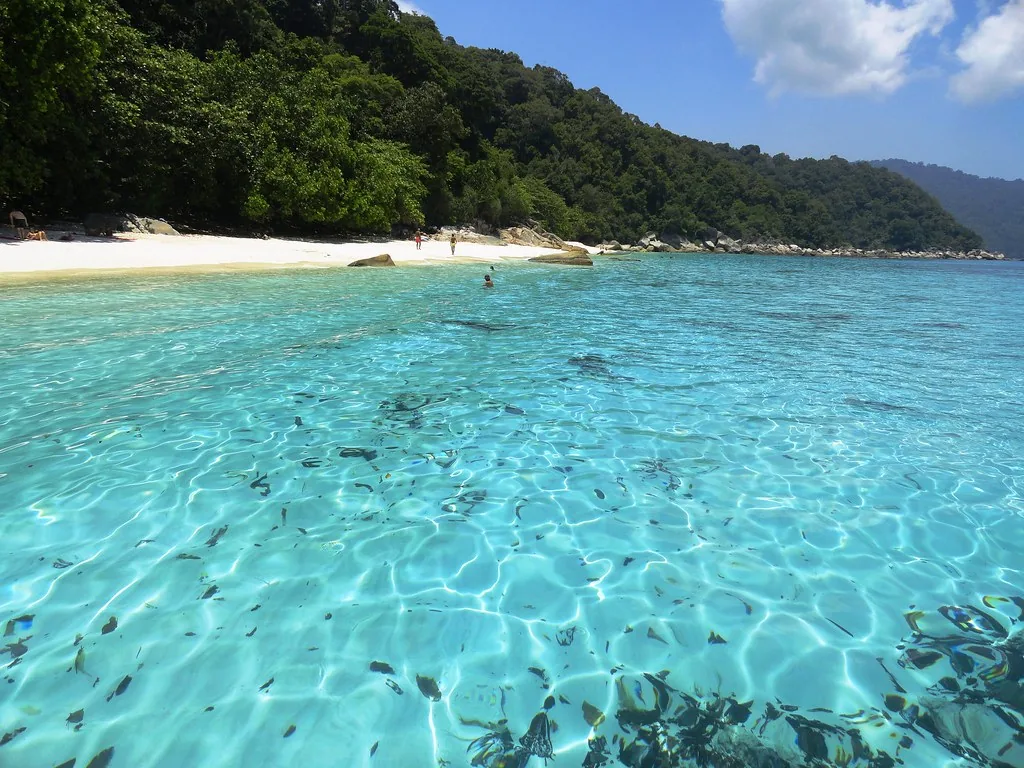
Turtle Bay, Malaysia
The Perhentian Islands have long been a focal
The Perhentian Islands have long been a focal point for marine conservation in Malaysia. Turtle Bay was designated a protected area to ensure that the vital sea grass beds, the primary food source for green turtles, remained undisturbed by the construction and pollution that often accompany island development. For years, the 'Perhentian Turtle Project' has monitored the individuals that frequent this bay, identifying them by the unique scale patterns on their faces. Local fishermen, once hunters of turtle eggs, have largely transitioned into conservationists and guides, recognizing that a living turtle is far more valuable to the local economy than a harvested one. This shift in local perspective has allowed the population to stabilize, making Turtle Bay one of the most reliable spots in the country to observe these ancient mariners in their natural habitat.
Floating face-down in the warm, buoyant water, you
Floating face-down in the warm, buoyant water, The rhythmic pull of the gentle tide against your limbs. The room is silent except for the soft sound of your own breathing through the snorkel. Immediately, the expansive meadows of green sea grass swaying on the sandy bottom, occasionally punctuated by a colorful brain coral or a blue starfish. What gets your attention is the arrival of a green turtle, a slow, imposing shadow that materializes from the blue. Something like a surge of quiet excitement as it begins to graze, its powerful beak tearing at the grass just a few feet below you. The way the light ripples across its shell, turning the brown and olive plates into a shimmering mosaic of gold. What hits is the tiny remora fish clinging to the turtle’s underbelly, hitching a free ride through the bay. When the turtle rises to the surface for air, The gentle 'whoosh' of its breath before it dives back down into the silence. Most people stay in the deeper water, but you should notice the shallow nurseries near the rocks, where baby black-tip reef sharks dart through the ripples. The smell of the salt air and the warm, white sand provides a peaceful backdrop to the underwater drama. First, the complete lack of buildings on the shore, a rare sight that makes like an explorer on a lost island.
Turtle Bay is accessible only
Turtle Bay is accessible only by water taxi from the main beaches of Perhentian Besar or Perhentian Kecil. The boat ride takes about ten to fifteen minutes, and most visitors arrange for a drop-off and a scheduled pick-up. There are no facilities on the beach, so travelers must bring their own water and sun protection.
“Turtle Bay is accessible only by water taxi from the main beaches of Perhentian Besar or Perhentian Kecil.”
The Experience
The clarity of the water in Turtle Bay is so absolute that you feel as though you are suspended in glass rather than sea. The first thing you register is the tiny bubbles trapped in the sea grass, sparkling like diamonds in the morning sun. Part of the warmth of the shallow water on your back, a soothing heat that allows you to float for hours without fatigue. What you catch first is the social hierarchy of the bay, the large, dominant males who take the best grazing spots and the smaller juveniles who hang back in the shadows. The piece that lingers is when a turtle swims directly beneath you, its massive flippers moving with a grace that makes your own movements feel clumsy and heavy.
Why It Matters
Turtle Bay is a vital link in the life cycle of the South China Sea’s turtle population. It is one of the few remaining accessible spots where sea grass ecosystems are healthy enough to support a permanent resident population. Culturally, it represents the success of community-led conservation, where local knowledge and international tourism combine to protect a threatened species.
Why Visit
Visit Turtle Bay for a low-impact, intimate encounter with wildlife that doesn't require a scuba tank. It is the perfect place for families and casual snorkelers to see these creatures without the crowds of more famous spots. It offers a rare chance to see turtles behaving naturally, feeding and resting in a bay that looks exactly as it did a century ago.
Insider Tips
- 1
Hire a private water taxi for an early morning drop-off at 8:00 AM to have the entire bay to yourself before the snorkel tours arrive at 10:30 AM.
- 2
Wear a rash guard or a t-shirt while snorkeling; the sun reflects off the white sand and can cause a severe burn before you even realize it.
- 3
Do not attempt to touch or chase the turtles; they are sensitive to stress and will leave the bay if they feel threatened by human contact.
- 4
Bring a high-quality mask and snorkel; the experience is all about the visual detail of the turtle's scales and the life in the sea grass.
- 5
Keep an eye out for the 'Sandwich Man', a local who occasionally paddles a boat around the bay selling fresh fruit and cold drinks.