“A beach backed by pine trees that shouldn't be there, planted by accident when Mount Pinatubo's 1991 eruption deposited volcanic ash that pine seedlings colonised. No electricity, no signal, no buildings. Just tents and stars.”
About Anawangin Cove
The 1991 Mount Pinatubo eruption, one of the largest of the 20th century, deposited volcanic ash that washed into this cove and created a grey sand beach. Agoho pine seedlings colonised the ash without human intervention.
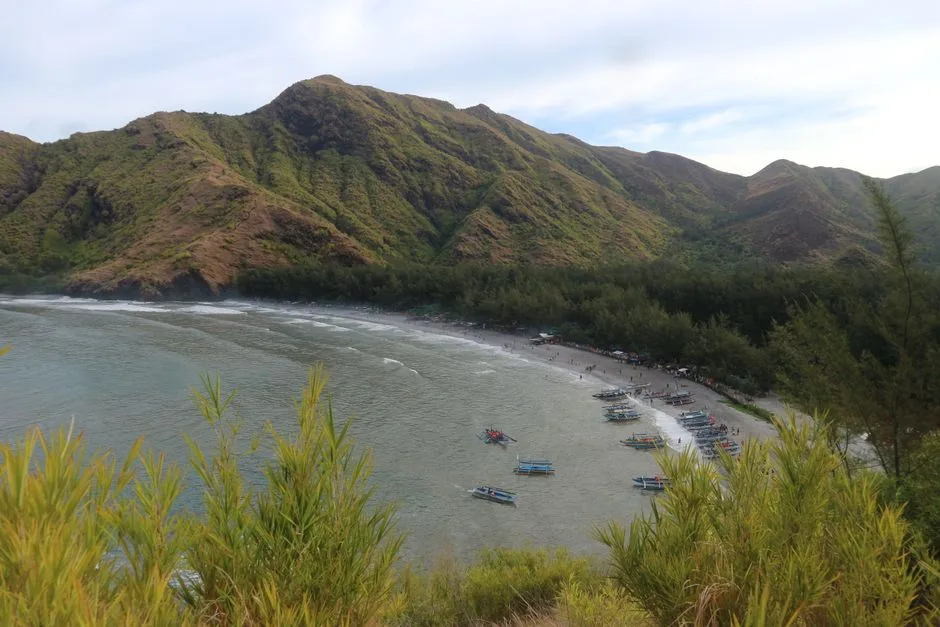
A crescent-shaped cove backed by Agoho pine trees on a grey volcanic sand beach in Zambales. The pines are unusual for the Philippines, they colonised the volcanic ash deposited by the 1991 Mount Pinatubo eruption, creating a landscape that looks more like a Pacific Northwest lake shore than a tropical beach. There's no electricity, no phone signal, no buildings. You camp.
A crescent-shaped cove backed by Agoho pine trees on a grey volcanic sand beach in Zambales.
When Pinatubo erupted in June 1991 , it was one of the largest volcanic eruptions of the 20th century. The lahar flows and ashfall reshaped the landscape across central Luzon. The volcanic sediment that washed into Anawangin Cove created a new beach of grey sand, and pine seedlings, from the Agoho species that grows at altitude in the Cordillera, somehow took root in the ash and grew into the forest that now backs the beach. Nobody planted them. It's an accidental landscape.
You reach the cove by boat from San
Antonio, Zambales, about 30 minutes. The boatman drops you on the beach and comes back at an agreed time. A sense of nothing at the cove except tents that you bring yourself. No facilities, no running water (bring your own), no electricity. At night the stars are extraordinary because there's zero light pollution. The water is swimmable but not crystal clear, the volcanic sand makes it greyish. The pine trees rustling in the sea breeze is the dominant sound.
Drive or bus from Manila to San Antonio , Zambales, about 4-5 hours. From the San Antonio fishport, hire a boat to the cove. Bring all your own food, water, and camping gear. Leave no trace, the cove's beauty depends on people cleaning up after themselves.
Drive or bus from Manila to San Antonio , Zambales, about 4-5 hours.
The Experience
Camp on a volcanic sand beach under accidental pine trees with no electricity, no phone signal, and no light pollution. Swim in the cove and watch the stars come out.
Why It Matters
An accidental landscape created by one of the largest volcanic eruptions of the 20th century, a trace of how nature reclaims disturbed ground.
Why Visit
One of the last places near Manila where you can camp on a beach in actual silence. No generators, no karaoke, no wifi, just the sound of pines and waves.
✦ Insider Tips
- 1
Bring everything, water, food, tent, trash bags. There are zero facilities.
- 2
The boat from San Antonio costs about 1,500-2,000 pesos roundtrip shared.
- 3
Leave no trace. The cove stays beautiful only if campers clean up.
- 4
Bring a headlamp. It is genuinely dark at night.