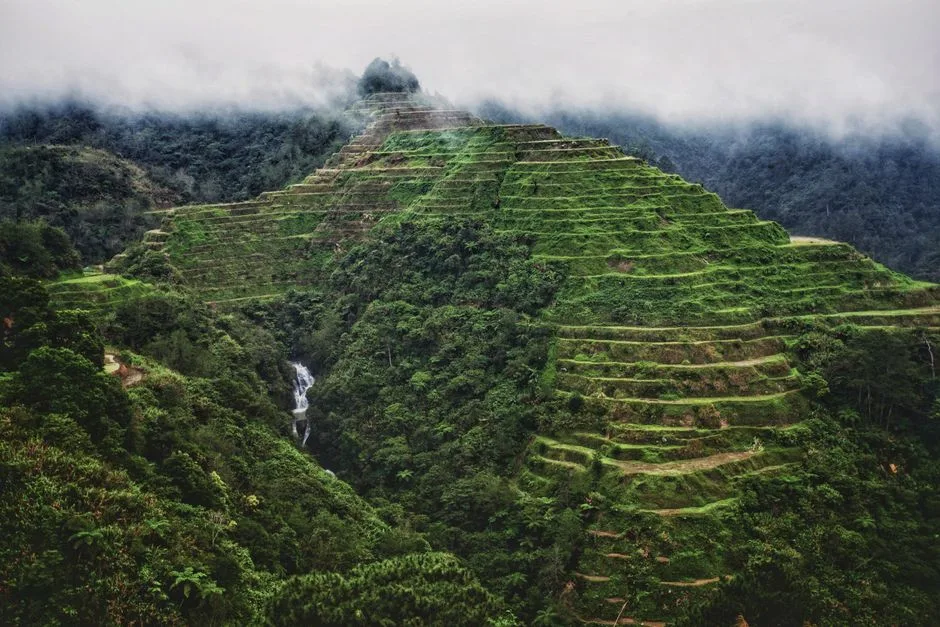
Two thousand years of hand-carved rice terraces climbing above 1,500 metres, UNESCO-listed and UNESCO-endangered, because the Ifugao who built them are leaving for the cities.
About Banaue Rice Terraces
Carved by Ifugao ancestors using hand tools over 2,000 years ago. The irrigation system runs on gravity and mountain watershed without pumps. UNESCO listed them in 1995 and flagged them as endangered due to deforestation and rural migration.
What Banaue Rice Terraces is
Rice terraces carved into the mountains of the Cordillera region by Ifugao ancestors over 2,000 years ago, climbing to elevations above 1,500 metres. If laid end to end the terrace walls would stretch halfway around the world, or so the local tourism board claims, and the math might actually check out. UNESCO listed them in 1995 but also placed them on the endangered list because the irrigation system is failing and fewer Ifugao want to farm.
The Ifugao carved these terraces using hand tools and an irrigation system fed by the mountain forests above. The engineering is remarkable, water flows from terrace to terrace through a network of channels that has functioned for two millennia without pumps or modern materials. But the system depends on the forest watershed above, and deforestation has damaged it. Younger Ifugao are migrating to cities for jobs, leaving fewer people to maintain the stone walls. Some terraces are already collapsing.
The main viewpoint is on the road above
Banaue town and gives you the classic wide-angle panorama. But the viewpoint is just a photo stop. Hire a local Ifugao guide, about 500-800 pesos, and hike down into the terraces through the villages of Batad or Bangaan. Batad has an amphitheatre-shaped terrace formation that's the most photographed. The hike takes you along the terrace walls, through the rice paddies, and past Ifugao homes. Expect mud, especially in the wet season. Leeches are common on the forest trails.
Overnight buses from Manila to Banaue take about
9-10 hours. The road is mountainous and winding so motion sickness is a real possibility. From Banaue town, jeepneys and tricycles run to the various viewpoints and trailheads.
The Experience
Hike down into the Batad amphitheatre terraces with an Ifugao guide, walk along the terrace walls through active rice paddies, and pass through villages where the traditional houses are still occupied.
Why It Matters
One of the greatest examples of ancient agricultural engineering in the world and a living cultural landscape that's in real danger of disappearing.
Why Visit
The scale only registers when you're walking on the terrace walls and realize the entire mountain has been reshaped by hand over twenty centuries. The viewpoint photo doesn't convey this.
Best Season
🌤 February to March and June to July when the terraces are flooded or bright green with growing rice. April and May are harvest and the terraces look drier and less photogenic.
Quick Facts
Best time to visit
February to March and June to July when the terraces are flooded or bright green with growing rice. April and May are harvest and the terraces look drier and less photogenic.
Getting there
In Banaue, Philippines; reach Banaue first, then continue to the site.
Location
Banaue, Philippines
Type
attraction
Insider Tips
- 1
Hire a local Ifugao guide, the hike is the experience, not the viewpoint.
- 2
The Batad amphitheatre is the most dramatic formation. Allow a full day.
- 3
The overnight bus from Manila is the standard route. Take motion sickness pills.