“The execution site of the Philippines' national hero is now a 58-hectare park connected to two world-class museums that are completely free, and that combination surprises everyone who actually bothers to stop in Manila.”
About Rizal Park
Jose Rizal was executed here by Spanish firing squad on December 30, 1896 for writing novels criticizing colonial abuse. His death sparked the Philippine Revolution. His final poem was smuggled out of his cell hidden in an oil lamp.
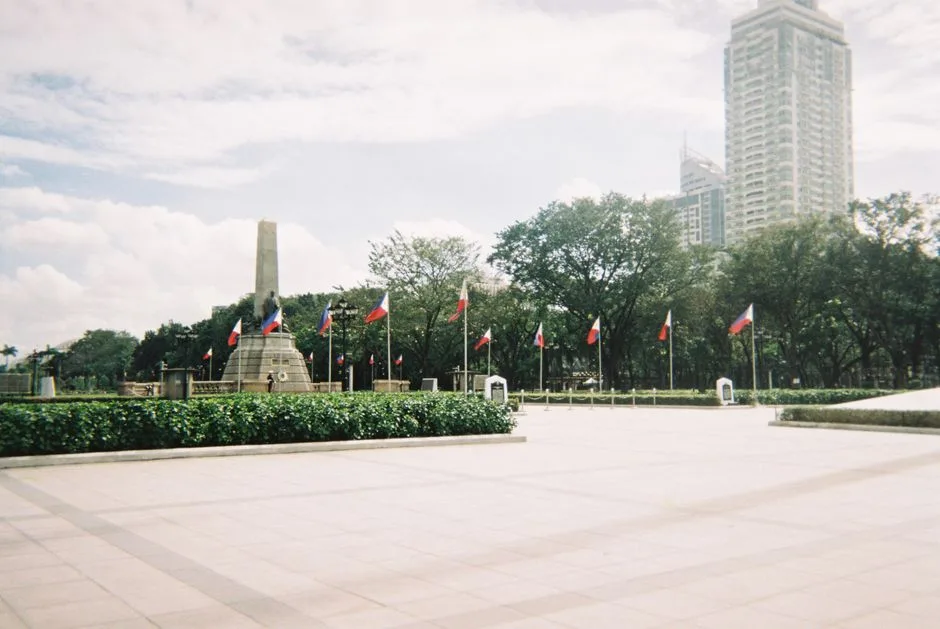
A 58-hectare park in the center of Manila named after Jose Rizal, the national hero executed here by Spanish authorities on December 30, 1896. His death sparked the Philippine Revolution and he's been on the currency and in every schoolbook since. The park connects to the National Museum complex, which is genuinely world-class and free, something that surprises basically everyone who visits.
A 58-hectare park in the center of Manila named after Jose Rizal, the national hero executed here by Spanish authorities on December 30, 1896.
Rizal was a novelist, doctor, and polyglot whose two novels, Noli Me Tangere and El Filibusterismo, criticized Spanish colonial abuses and are still required reading in Filipino schools. The Spanish authorities charged him with sedition and executed him by firing squad at what was then called Luneta. His final poem, 'Mi Ultimo Adios', was hidden in an oil lamp and smuggled out of his cell. The park was renamed in his honor after independence.
The Rizal Monument at the north end is guarded 24 hours by honor guards. Behind it, the exact spot of his execution is marked. The relief map of the Philippines near the children's playground is enormous, maybe 30 metres across, and shows every island and mountain range in physical scale. Worth finding even though it's oddly tucked away. The National Museum of Fine Arts, directly adjacent, has the Spoliarium by Juan Luna, a massive canvas depicting dead gladiators being dragged out of a Roman arena, painted by a Filipino in Paris in 1884. The Natural History museum across the road has a whale skeleton and a beautiful interior.
The park is in central Manila along Roxas
Boulevard. LRT-1 to United Nations station or Pedro Gil station. It's walkable from Intramuros. The museums close on Mondays.
The Experience
See the execution site, find the enormous relief map of the Philippines, then spend the afternoon in the free National Museum of Fine Arts where the Spoliarium, a massive 1884 canvas, dominates an entire room.
Why It Matters
The site of the event that ignited the Philippine Revolution and the spiritual centre of Filipino national identity.
Why Visit
Most people skip Manila for the beaches. The National Museum alone, free, world-class, nearly empty, is reason enough to stay a day. Rizal Park gives it historical weight.
✦ Insider Tips
- 1
The National Museum of Fine Arts and Natural History are both free. Don't miss them.
- 2
The Spoliarium by Juan Luna is in the Fine Arts building, it's the single best artwork in the country.
- 3
The relief map is near the children's playground area. It's not well signposted.
- 4
Museums close Mondays. Plan accordingly.