“Near-vertical coral walls dropping hundreds of metres into open ocean, patrolled by whale sharks and hammerheads, Tubbataha is a top-ten world dive site that only a few thousand people visit each year.”
About Tubbataha Reefs
Declared a National Marine Park in 1988 after dynamite fishing nearly destroyed it. UNESCO-listed in 1993. Navy-patrolled and strictly permit-controlled. The recovery has been extraordinary, fish populations are now among the densest in the Coral Triangle.
What Tubbataha Reefs actually is
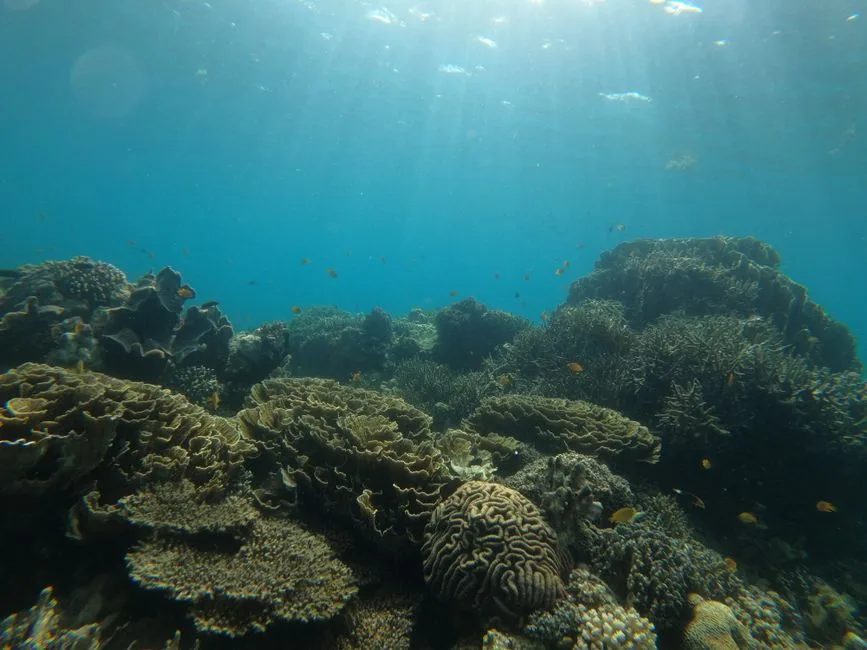
Two coral atolls in the middle of the Sulu Sea, about 150 kilometres southeast of Puerto Princesa. The reef walls drop near-vertically from the surface into hundreds of metres of open ocean, patrolled by whale sharks, hammerhead sharks, manta rays, and pretty much everything else. It's consistently ranked among the top ten dive sites in the world and the permit system keeps it pristine, only a few thousand divers visit per year.
Two coral atolls in the middle of the Sulu Sea, about 150 kilometres southeast of Puerto Princesa.
Tubbataha was declared a National Marine Park in 1988 and became a UNESCO World Heritage Site in 1993. Before protection, the reefs were being destroyed by dynamite and cyanide fishing. A permanent ranger station was established on one of the atolls and the Philippine Navy patrols the boundaries. The strict protection has paid off, the reefs have recovered to near-pristine condition, and the fish populations are among the densest in the Coral Triangle.
The only way to visit is by liveaboard dive boat from Puerto Princesa, during the March-to-June dive season when the sea is calm enough to make the 10-12 hour crossing. A typical trip is six days and includes 10-12 dives. The wall dives are the highlight, you hover over a sheer drop into deep blue water while sharks cruise below. The coral coverage is dense, colourful, and undamaged. Night dives bring out the hunters. The experience is expensive, expect $2,000-3,000 for a liveaboard, but there is nothing else like it in Southeast Asia.
Fly to Puerto Princesa, then board a liveaboard vessel . The crossing takes 10-12 hours overnight. There's no day-trip access and no way to snorkel, this is a serious dive destination. You need at least Open Water certification; Advanced is recommended for the wall dives.
Fly to Puerto Princesa, then board a liveaboard vessel .
The Experience
Wall dives over sheer coral drops into deep blue water, sharks cruising below, and coral coverage so dense and colourful it looks artificial. Night dives bring out the hunters. Six days on a liveaboard with 10-12 dives.
Why It Matters
One of the most important marine sanctuaries in the Coral Triangle and proof that strict protection can restore a reef system from near-destruction.
Why Visit
If you dive, this is one of the best places in the world to do it. The permit system means you're sharing the reef with very few other divers. The coral and marine life are in a condition most reefs lost decades ago.
✦ Insider Tips
- 1
Book liveaboards months ahead, there are limited vessels and the season is short.
- 2
Advanced Open Water certification is recommended for the wall dives.
- 3
Budget $2,000-3,000 for a 6-day liveaboard trip. It's not cheap but it's worth it.
- 4
Bring your own dive computer. Rental availability on liveaboards varies.