A trumpet call from the tower here cuts off abruptly every hour, marking the spot where a medieval trumpeter was supposedly shot mid-warning.
About Main Market Square
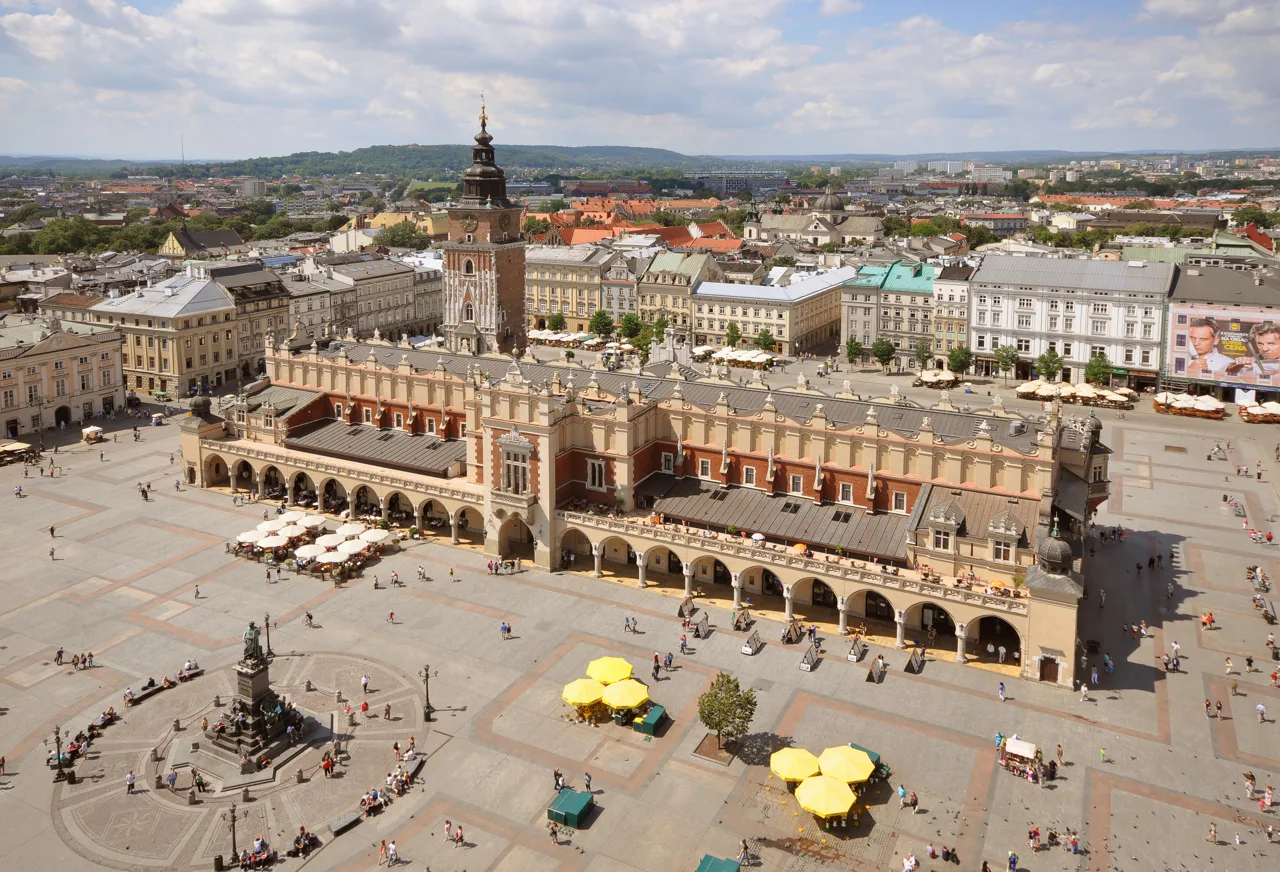
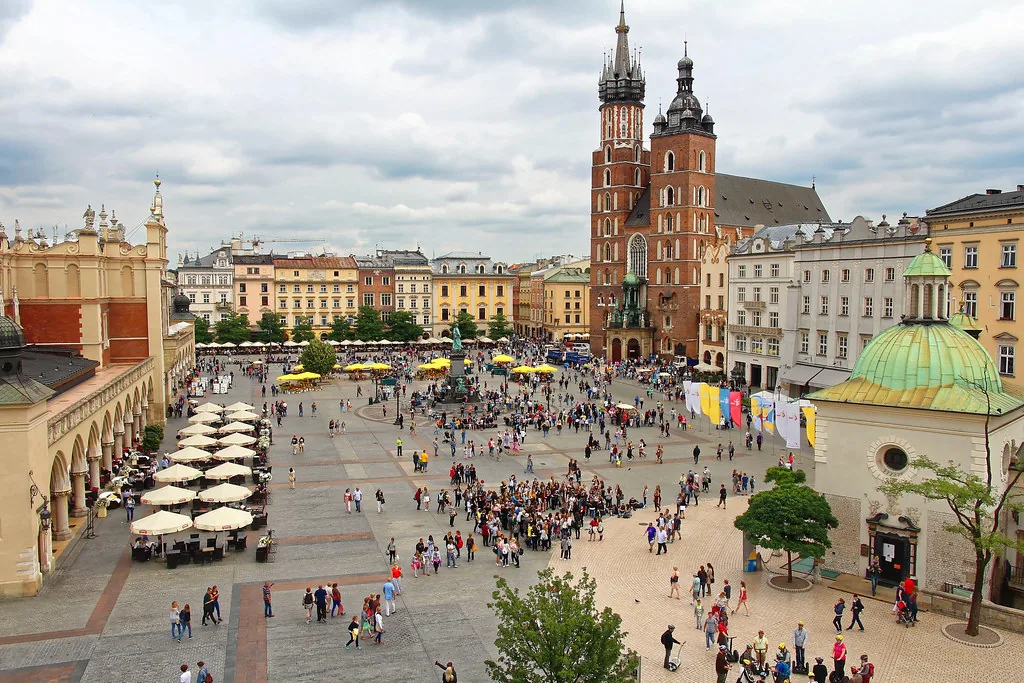
The square was laid out in 1257 after the Mongol raids, on a grand grid that made it the largest medieval marketplace in Europe. At its centre rose the Cloth Hall, a Renaissance trading hall, while St Mary's Basilica and merchant houses framed the sides. For centuries it was the commercial and ceremonial heart of Krakow, the royal capital of Poland, and it survived the Second World War largely intact.
The short version
The Main Market Square in Krakow is the largest medieval town square in Europe, a vast cobbled expanse at the heart of the city's UNESCO-listed Old Town. Laid out in the 13th century and ringed by churches, palaces and the great Cloth Hall at its centre, it has been the beating heart of Krakow for over 700 years.
The Broken Trumpet Call
Every hour, a trumpeter plays the Hejnal Mariacki from the tower of St Mary's Basilica on the square, and every hour the tune breaks off abruptly mid-note. The interruption commemorates a legendary medieval trumpeter who, according to tradition, was shot through the throat by an arrow while sounding the alarm during a Mongol attack on the city. The call is played to all four points of the compass and is even broadcast on Polish national radio at noon.
The Experience
Stepping through, an enormous open square alive with cafes, flower stalls, horse-drawn carriages and pigeons, dominated by the twin towers of St Mary's and the long arcaded Cloth Hall, where stalls still sell amber and crafts. On the hour you can stop to hear the broken Hejnal trumpet call drift down from the basilica tower. The scale, history and atmosphere make it one of Europe's great urban spaces.
Why It Matters
The Main Market Square is the centrepiece of Krakow's Old Town, a UNESCO World Heritage Site and one of the best-preserved medieval cityscapes in Europe. As the historic heart of Poland's former royal capital, it embodies the country's rich past and remains the vibrant social centre of the city.
Why Visit
The largest medieval square in Europe, the heart of Krakow's UNESCO Old Town, with the Cloth Hall, St Mary's Basilica and the famous hourly broken trumpet call.
✦ Photo Gallery
Best Season
🌤 Krakow is lovely in late spring and early autumn, with mild weather and fewer crowds than midsummer. The square is atmospheric year-round, including the Christmas market in December.
Quick Facts
Best time to visit
Krakow is lovely in late spring and early autumn, with mild weather and fewer crowds than midsummer. The square is atmospheric year-round, including the Christmas market in December.
Getting there
In Kraków, Poland; reach Kraków first, then continue to the site.
Location
Kraków, Poland
Type
attraction
Insider Tips
- 1
Listen for the broken Hejnal trumpet call on the hour from St Mary's tower.
- 2
Step inside St Mary's Basilica to see the great carved altarpiece.
- 3
Browse the amber and craft stalls in the central Cloth Hall.