“While the rest of Europe’s medieval hearts were shattered by war or sanitized by modern wealth, this red-brick fortress on the Vistula survived with its crooked soul entirely intact.”
About Medieval Town of Toruń
The Teutonic Knights established the first fortress here in 1231, utilizing the river as a highway for conquest. By the 14th century, the city had joined the Hanseatic League, becoming a powerhouse of trade between the Polish interior and the Baltic Sea. This period of prosperity funded the construction of the massive brick churches and the soaring Town Hall. Political tensions between the city and the Knights eventually led to the Thirteen Years' War, after which Toruń pledged its loyalty to the Polish Crown. Through the partitions of Poland and the world wars, the city’s thick walls and fortuitous geography protected it from the leveling forces that destroyed its neighbors.

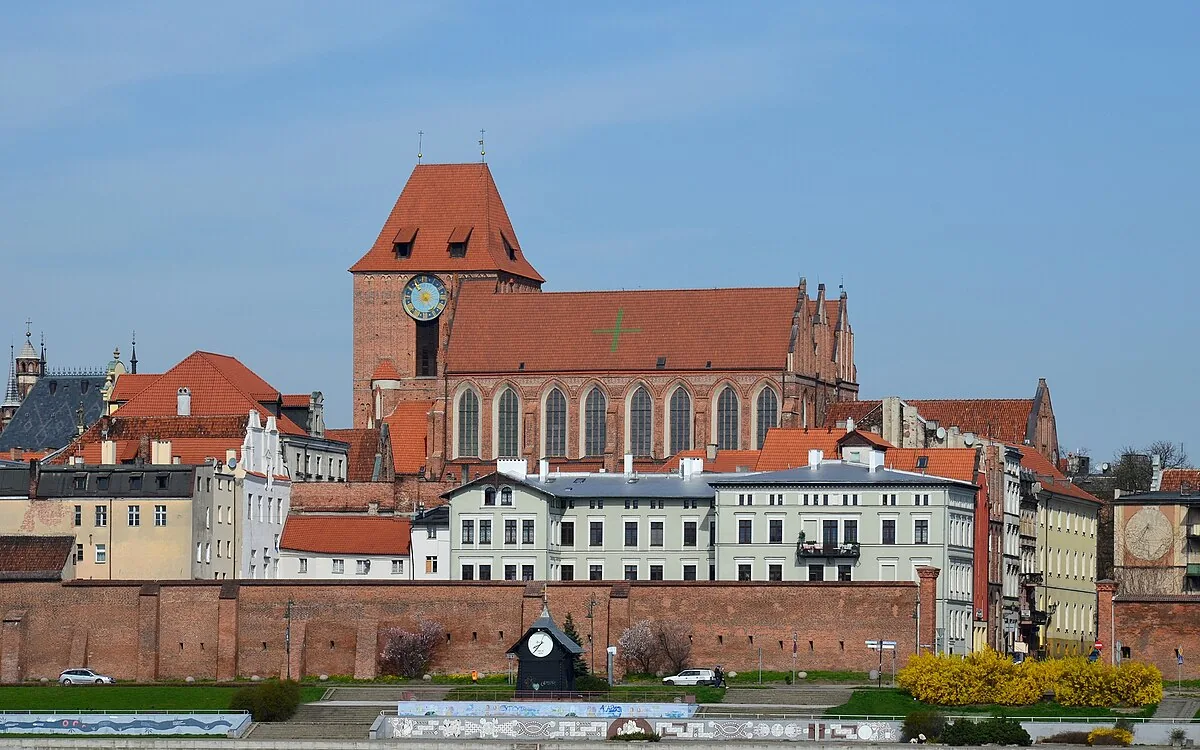
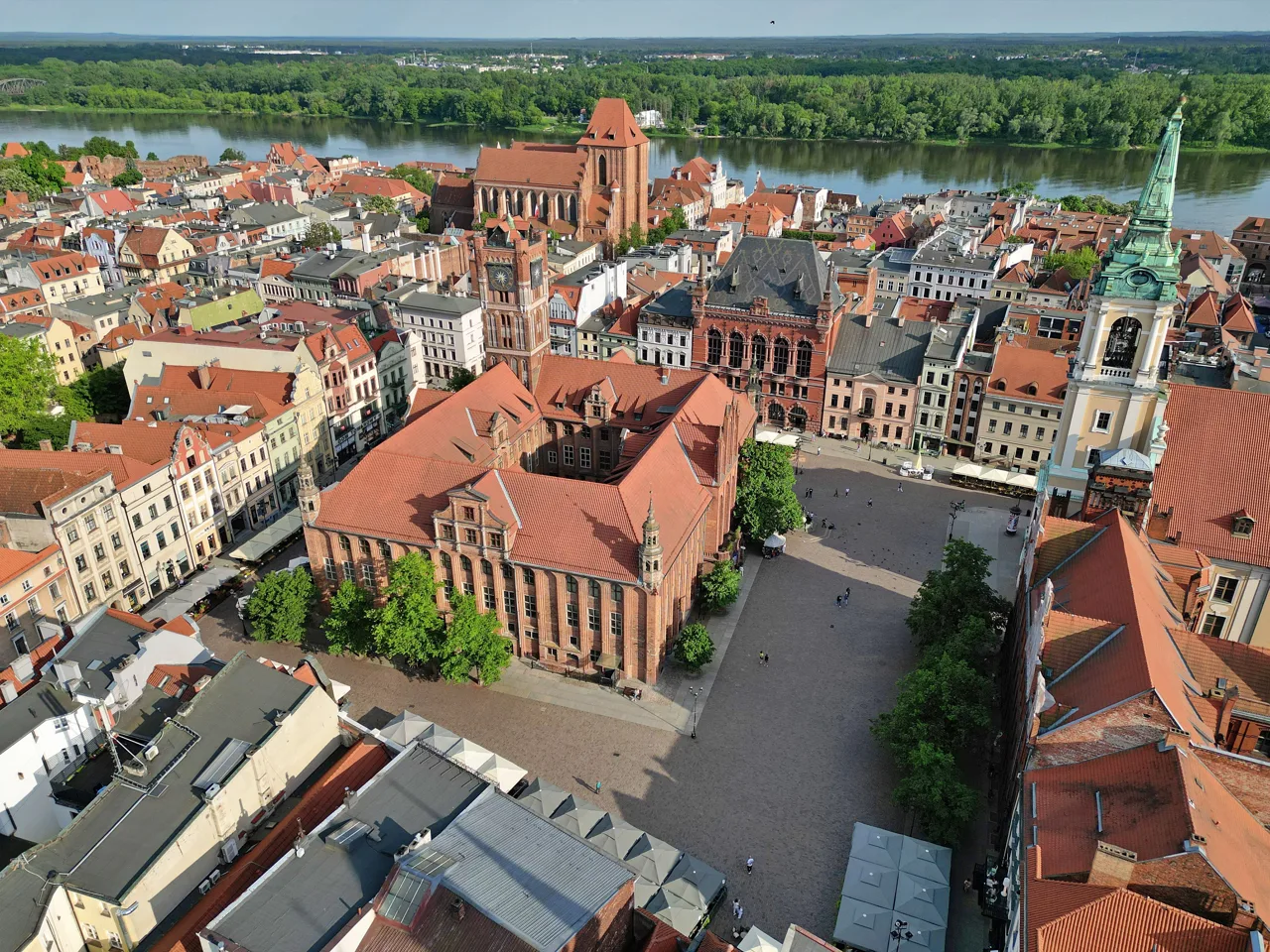
While Warsaw was rebuilt from ash and Krakow grew into a cosmopolitan hub, Toruń remained frozen in its red-brick glory along the banks of the Vistula. This is the city of Nicolaus Copernicus and gingerbread, a place where the scent of baking spices literally hangs in the humid river air. The Old Town is a dense thicket of Gothic architecture, featuring crooked walls and leaning towers that seem to defy gravity. Unlike many European centers that feel like open-air museums, Toruń retains a grit and a liveliness that suggests the medieval merchants just stepped out for a moment. The brickwork here is not just a building material; it is a tonal palette ranging from burnt orange to deep, bruised purple.
While Warsaw was rebuilt from ash and Krakow grew into a cosmopolitan hub, Toruń remained frozen in its red-brick glory along the banks of the Vistula.

Founded by the Teutonic Knights in the 13th century, Toruń served as a vital port in the Hanseatic League. The wealth generated by the river trade allowed the burghers to build some of the most opulent houses in Northern Europe. It was here, in a modest brick house on what is now Kopernika Street, that a young Nicolaus Copernicus first looked at the stars and decided the earth was not the center of everything. The city managed to escape the catastrophic destruction of World War II, leaving its original street plan and hundreds of authentic Gothic structures intact. This survival makes it one of the most complete medieval ensembles in the Baltic region, a rare window into the height of the Middle Ages.
Walking through the gate from the riverbank, the first thing you notice is the sound of footsteps on uneven cobblestones. The streets are narrow, designed to funnel the wind and keep the houses cool in the summer. You feel the history in the textures—the rough, hand-fired bricks of the Town Hall and the cool, damp stone of the Cathedral of St. John the Baptist. The Town Hall courtyard is a masterpiece of proportions, where the shadows of the clock tower stretch across the square. In the evening, the streetlights cast a soft, amber glow on the gingerbread shops, where the smell of cinnamon and black pepper is almost intoxicating. You notice that the Leaning Tower really does lean quite dramatically, a result of the unstable loess soil and a local legend about a wayward knight.
Toruń is well-connected by rail to Warsaw and Poznań, with the journey taking roughly two to three hours. The main station, Toruń Główny, is on the opposite side of the Vistula. To reach the medieval center, you take a short bus ride or walk across the bridge, which offers the most famous panoramic view of the city skyline. Once inside the walls, the town is entirely pedestrian-friendly, with every major landmark within a ten-minute walk of the central Market Square.
Toruń is well-connected by rail to Warsaw and Poznań, with the journey taking roughly two to three hours.
The Experience
The air in Toruń feels heavier, laden with the dampness of the river and the spice of the bakeries. You find yourself constantly looking up at the elaborate brick patterns on the gables, each house trying to outdo its neighbor in decorative complexity. The Cathedral’s massive bell, the Tuba Dei, occasionally lets out a deep, resonant hum that vibrates in your chest. You notice the locals congregating around the statue of Copernicus, not as tourists, but as people living in a space where the 15th and 21st centuries coexist. The moment that stays with you is standing on the river boulevard at dusk, watching the red bricks turn into liquid gold.
Why It Matters
Toruń is the premier example of brick Gothic architecture in Europe, proving that stone was not the only medium for monumental grandeur. It represents the height of the Hanseatic spirit—independent, wealthy, and scientifically curious. It is the birthplace of modern astronomy, making it a site of global intellectual heritage as much as architectural beauty.
Why Visit
Visit Toruń because it offers an authenticity that more famous cities have lost. It’s not just a place to see; it’s a place to smell and taste. Between the world-class gingerbread workshops and the genuine medieval atmosphere, it provides a sensory immersion into the past that feels remarkably unforced and deeply charming.
✦ Insider Tips
- 1
Cross the Piłsudski Bridge at sunset for the iconic view of the illuminated city walls reflecting in the Vistula.
- 2
The Gingerbread Museum is not just for kids; the interactive workshop uses 16th-century molds and is a genuine historical experience.
- 3
Climb the Town Hall tower for a bird's-eye view of the medieval grid; the stairs are steep, but the perspective is unmatched.
- 4
Look for the 'donkey' statue near the market square, a grim reminder of medieval punishments that locals now use as a meeting spot.
- 5
Seek out the ruins of the Teutonic Castle; they are less crowded than the main square and offer a quiet place to reflect on the city's origins.