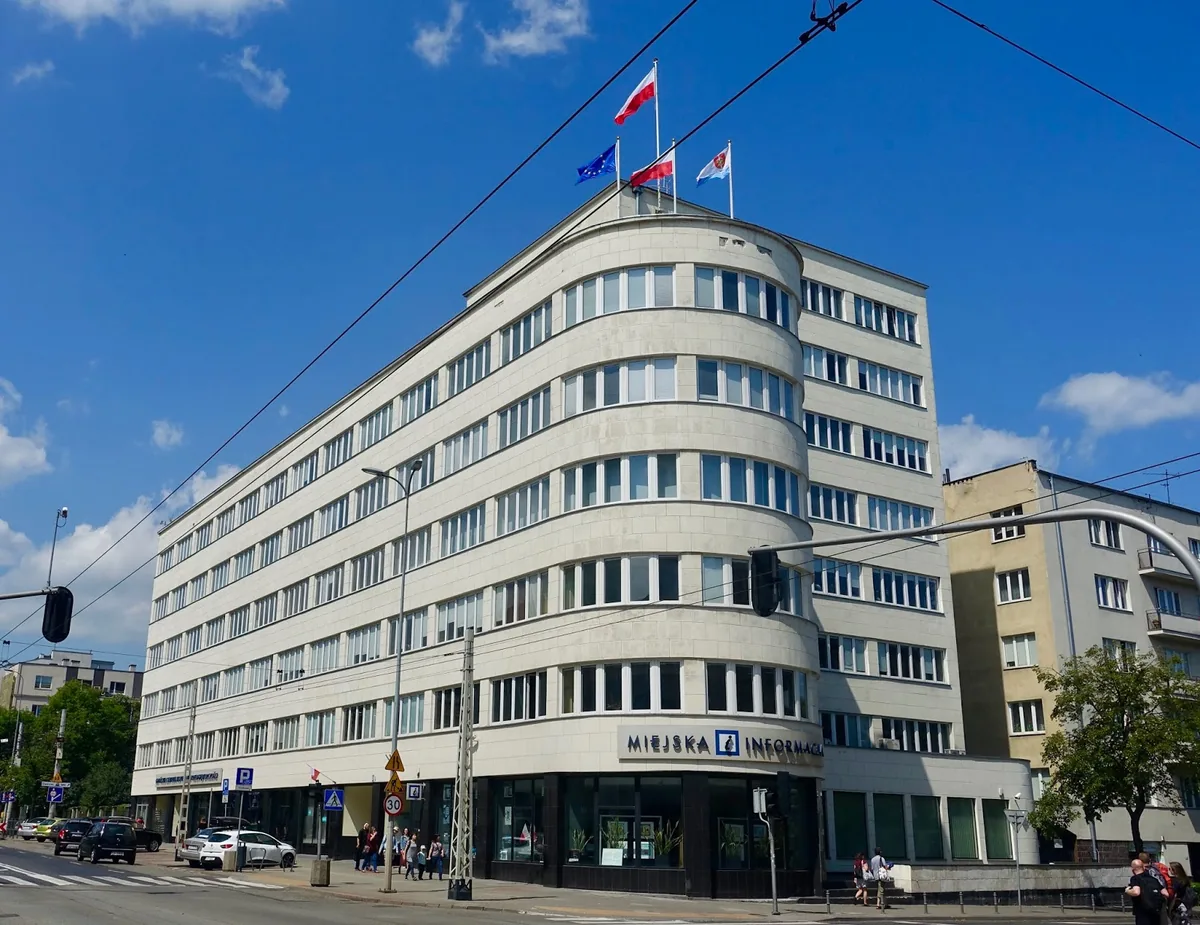
Poland built this entire city from a fishing village in the 1920s, in sleek white modernist buildings designed to look like ocean liners.
About Modernist City Centre
When Poland regained independence after the First World War, it lacked a major port of its own, so in the 1920s it constructed Gdynia at speed beside the Baltic. Designed in the modernist and functionalist idiom of the interwar years, the new city embodied national ambition and the optimism of the age. Its streamlined, nautical-inspired architecture survives as a celebrated example of European modernism.
The modernist city centre of Gdynia, on Poland's
Baltic coast, is a remarkable ensemble of 1920s and 1930s architecture, built almost from nothing in a single burst of optimism when Poland created a brand-new port city. Its white, streamlined buildings, many evoking ocean liners with porthole windows and curved balconies, make it one of Europe's finest collections of interwar modernist architecture.
“Baltic coast, is a remarkable ensemble of 1920s and 1930s architecture, built almost from nothing in a single burst of optimism when Poland created a brand-new port city.”
Modernist City Centre, Poland
A City Conjured From the Sea
After Poland regained independence in 1918, it needed its own seaport, and so it built Gdynia rapidly from a small fishing village into a thriving modern port and city in the 1920s and 1930s. The new town was designed in the fashionable modernist and functionalist styles of the era, with sleek white buildings inspired by ocean liners, expressing the youthful, forward-looking spirit of the reborn nation. The result is a coherent and distinctive interwar cityscape.
The Experience
You walk streets lined with crisp white modernist buildings, many with rounded corners, porthole windows, ribbon glazing and balconies that recall the decks of liners, especially along the main Swietojanska Street. The seafront, with its piers and ships, completes the maritime feel. For lovers of architecture, Gdynia offers a rare, coherent townscape of interwar design built in one confident sweep.
Why It Matters
Gdynia's modernist centre is one of the most significant collections of interwar functionalist architecture in Europe and a symbol of Poland's national revival between the wars. Built from scratch as a statement of independence and modernity, it is a unique and increasingly celebrated piece of 20th-century heritage.
Why Visit
One of Europe's finest interwar modernist cityscapes, a Baltic port built from scratch in the 1920s in sleek white ocean-liner-inspired architecture.
Insider Tips
- 1
Walk Swietojanska Street for the best modernist facades.
- 2
Look for porthole windows and curved liner-style balconies.
- 3
The whole city was built from scratch in the 1920s and 30s.
- 4
Combine it with the Baltic seafront and piers.