“A Polish nobleman hired an Italian architect to design an entire 'ideal city' from scratch in 1580, and it survives almost intact.”
About Old City of Zamość
In 1580 Jan Zamoyski, a leading magnate of the Polish-Lithuanian Commonwealth, founded Zamosc as his private town and commissioned Bernardo Morando of Padua to lay it out as an ideal Renaissance city. Built with regular streets, a fortified perimeter and a grand arcaded square, it became a thriving multicultural trading centre. Its coherent Renaissance design survives, earning it UNESCO World Heritage status.
What Old City of Zamosc actually is
The Old City of Zamosc is a remarkable late-Renaissance 'ideal city' in eastern Poland, designed as a complete, harmonious whole by an Italian architect in the 16th century. A UNESCO World Heritage Site, its arcaded Great Market Square, regular grid of streets and elegant Mannerist facades make it one of the most distinctive historic towns in the country.
The Old City of Zamosc is a remarkable late-Renaissance 'ideal city' in eastern Poland, designed as a complete, harmonious whole by an Italian architect in the 16th century.
A Renaissance City Built From Scratch
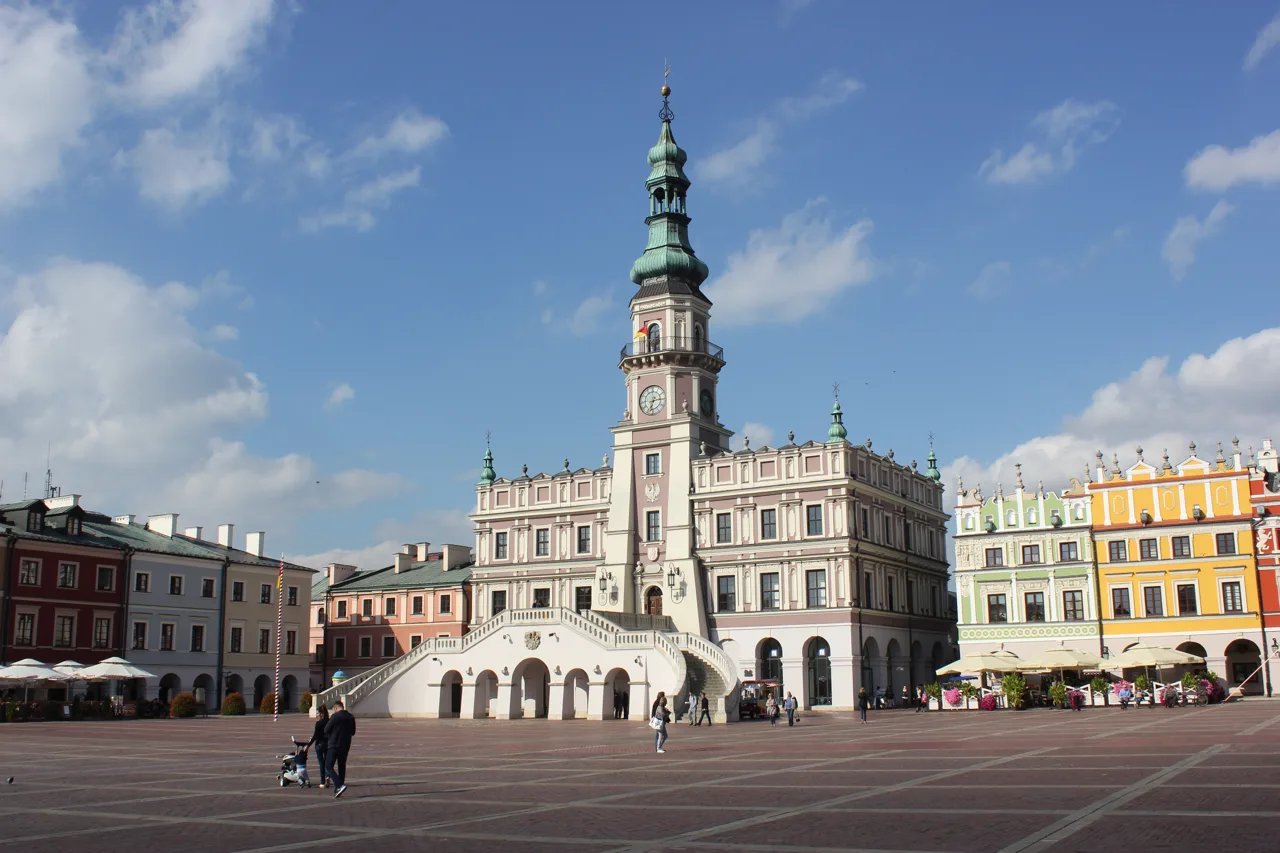
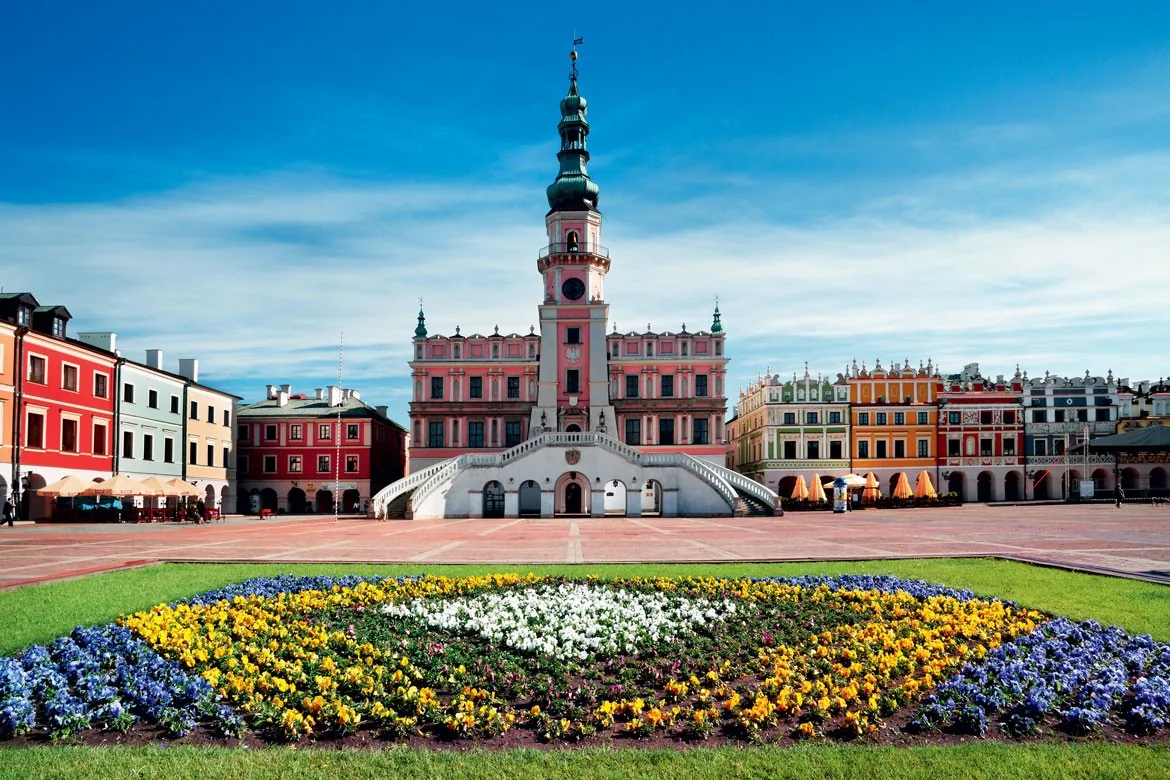
Zamosc was founded in 1580 by the powerful nobleman Jan Zamoyski, who commissioned the Italian architect Bernardo Morando to design an entire city from nothing according to the Renaissance ideals of the perfect town. The result is a unified urban composition centred on the colonnaded Great Market Square, with the town hall, churches and merchant houses all conceived as part of a single, ordered plan, a rare surviving example of Renaissance urban theory made real.
The Experience
Moving through the arcaded Great Market Square, dominated by a tall-towered town hall reached by a sweeping staircase, with brightly painted Armenian merchant houses lining the colonnades. The regular grid, the fortifications and the unified architecture reveal a town built as a single artistic vision. Often called the 'Padua of the North', Zamosc offers an unusually complete experience of Renaissance town planning.
Why It Matters
The Old City of Zamosc is one of the finest and most complete examples of a Renaissance 'ideal city' in the world, a UNESCO World Heritage Site that embodies 16th-century urban theory. Its planned harmony and Italian-influenced architecture make it a unique and important monument of European town design.
The Old City of Zamosc is one of the finest and most complete examples of a Renaissance 'ideal city' in the world, a UNESCO World Heritage Site that embodies 16th-century urban theory.
Why Visit
A beautifully preserved Renaissance 'ideal city' in eastern Poland, with an arcaded great square and unified Italian-influenced architecture, a UNESCO World Heritage Site.
✦ Insider Tips
- 1
Admire the arcaded Great Market Square and town hall staircase.
- 2
Note the painted Armenian merchant houses in the colonnades.
- 3
It was designed as a single Renaissance 'ideal city'.
- 4
Walk the surviving fortifications around the old town.