Royal Castle in Warsaw — modern landmark in Poland
🏙️ ModernPoland · 52.2478° N

Royal Castle in Warsaw

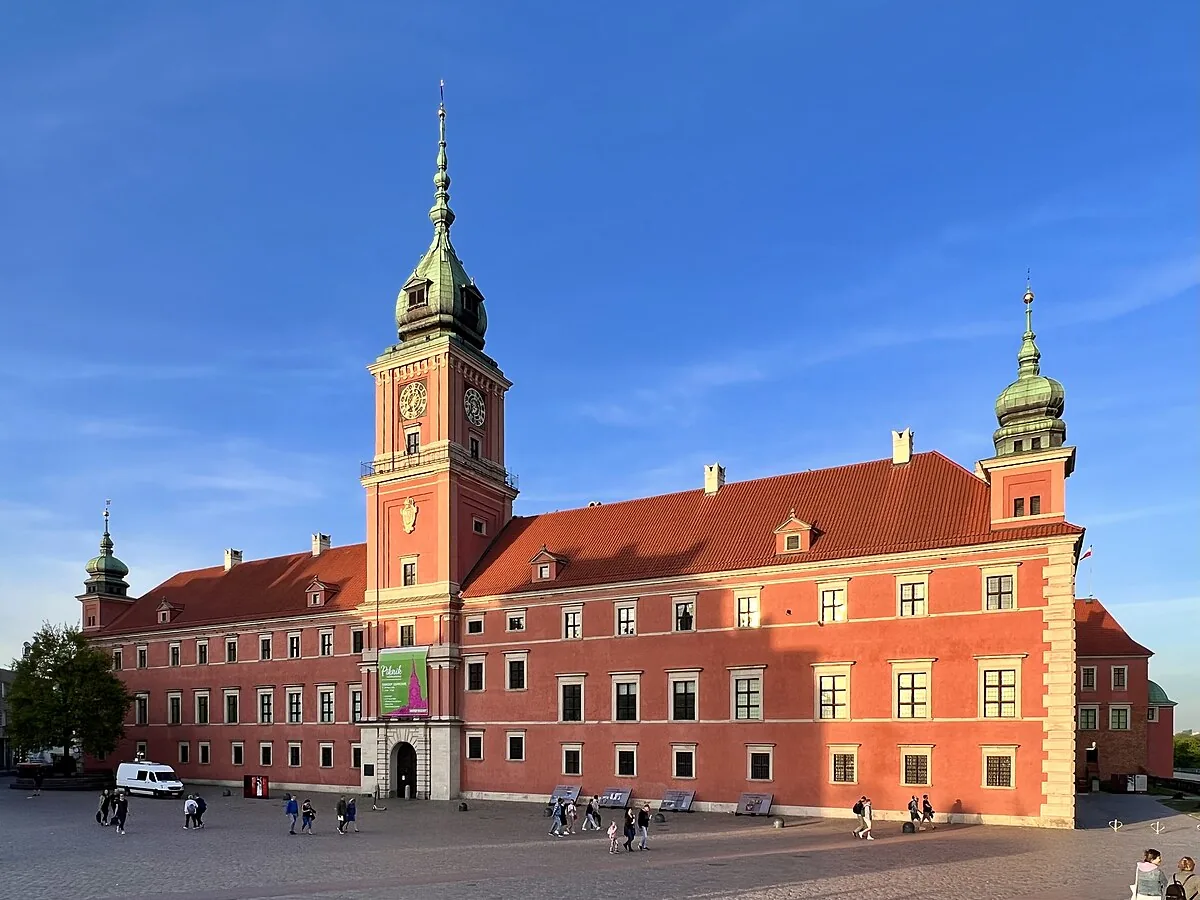
The 16th-century brick fortress was meticulously reconstructed from ruins using original 18th-century architectural plans after its 1944 destruction; the Great Assembly Hall features gilded stucco and a ceiling fresco by Marcello Bacciarelli; stand in the Castle Square at sunset when the red-brick facade absorbs the orange light; the sound of the Sigismund's Column bells marks the transition from old history to modern metropolis.

Every single brick in this royal residence was laid twice—once for the kings of the 17th century, and once for the citizens of the 20th who refused to let their history stay buried.

About Royal Castle in Warsaw

The site evolved from a 14th-century wooden fort into a stone castle for the Mazovian Dukes before becoming the heart of the Polish-Lithuanian Commonwealth. Its architectural peak occurred under Stanisław August Poniatowski, the last king of Poland, who commissioned the Enlightenment-era interiors. During the 19th-century partitions, the Russian tsars stripped the castle of its furnishings, and the 1939 bombings damaged it severely. The final demolition in 1944 was a deliberate attempt to erase the Polish state from existence, making the subsequent 1971-1984 reconstruction a profound act of cultural reclamation and defiance.

Overview Plac Zamkowy opens up to reveal a burnt-orange fortress that looks as though it has stood for five centuries, yet its current bricks are younger than most of the people visiting it. The Royal Castle in Warsaw is a triumph of national memory over total destruction. Once the official residence of Polish monarchs and the seat of the Parliament, it was systematically leveled by German forces in 1944. Today, it stands as a meticulous reconstruction, a ghost made solid through the donations and labor of the Polish people. Inside, the apartments glow with gold leaf and velvet, housing a collection of art and regalia that was heroically hidden away before the bombs fell. The castle marks the start of the Royal Route, a path that links the city's historic palaces.

The Story Behind It King Sigismund III Vasa moved the Polish capital from Kraków to Warsaw in 1596, turning this former stronghold of the Mazovian Dukes into a Mannerist-Baroque masterpiece. It became the birthplace of the May 3rd Constitution in 1791, the world’s second-oldest written supreme law. After the 1944 Warsaw Uprising, the castle was reduced to a pile of rubble three meters high. Only a few fragments of the ground floor and the Gothic cellar survived. For decades, the site remained empty until the 1970s, when a massive national fundraising campaign allowed architects to rebuild the castle using original blueprints and the landscape paintings of Bernardo Bellotto to ensure every molding and window frame was historically accurate.

What You'll Experience Walking through the Throne Room, you are surrounded by 86 silver-embroidered eagles on deep red velvet, a space that feels heavy with the weight of lost and regained sovereignty. The air is still and cool, smelling faintly of furniture wax and old paper. You feel the transition from the austerity of the outer courtyard to the explosive opulence of the Great Assembly Hall. One of the most remarkable sights is the Canaletto Room, where the incredibly detailed 18th-century vistas of Warsaw hang on the walls. These paintings were so precise that they served as the primary technical guides for the reconstruction of the entire Old Town. The texture of the castle is a mix of smooth, new marble and the occasional rough, blackened stone from the original structure, integrated like scars into the new walls.

Getting There The castle is the most prominent landmark in Warsaw’s Old Town, located at the northern end of Krakowskie Przedmieście. It is a fifteen-minute walk from the city's modern skyscraper district. Public transport is efficient, with the 'Stare Miasto' tram and bus stops located just a few hundred meters away in a tunnel beneath the square. For those arriving from the main train station, Warszawa Centralna, a short bus ride or a thirty-minute walk through the Saxon Garden offers a scenic introduction to the historic district.

The Experience

You notice the silence of the King’s Library, a stark contrast to the lively accordion music and chatter in the square outside. The light in the late afternoon catches the dust motes dancing in the grand galleries, illuminating the intricate marquetry of the floors. There is a specific feeling of reverence here; you are walking through a space that exists because a nation willed it back into being. Many visitors overlook the small fragments of the original 17th-century masonry preserved behind glass panels in the lower halls. The smell of the Vistula River often drifts up through the open windows of the lower gardens, reminding you of the castle's strategic position overlooking the valley below.

Why It Matters

The castle is the ultimate symbol of Warsaw's 'Phoenix' spirit. It represents the transition from monarchy to the first stirrings of European democracy, while also serving as a memorial to the reconstruction efforts that saved the city's identity. Culturally, it houses the most important royal collection in Poland, including original works by Rembrandt and Canaletto.

Why Visit

Visit to witness the impossible. It is one thing to see an old palace, but another entirely to see one that was murdered and resurrected. The interiors are so flawlessly executed that you will find yourself searching for the seams between the original fragments and the modern masonry, a search that reveals the incredible skill of Polish restorers.

✦ Photo Gallery

Best Season

🌤 May is the best time to visit, as the castle gardens overlooking the Vistula are in full bloom and the weather is mild enough for the walk along the Royal Route.

Quick Facts

Location

Poland

Type

attraction

Coordinates

52.2478°, 21.0142°

Learn More

Wikipedia article available

Insider Tips

  • 1

    Look for the two Rembrandt paintings, 'The Girl in a Picture Frame' and 'The Scholar at his Writing Desk,' in the Lanckoroński Collection on the ground floor.

  • 2

    Visit the castle cellar to see the 'Prisoner’s Wall' where original graffiti from the 16th century is still visible.

  • 3

    The castle clock was the first part of the structure to be restored; look for the time 11:15, which was when the hands stopped during the 1939 blitz.

  • 4

    Admission to the permanent exhibitions is free on Wednesdays, though you still need to collect a timed ticket from the box office.

  • 5

    Walk down the Kubicki Arcades at the base of the castle for a unique perspective of the building's massive scale from the river side.

All of Poland
Free Travel Tools
Games & Discover

Featured

Conquer the World

195 nations. One dart. Build your empire.

New Game

FateLand

Three darts. The world decides your fortune, heartbreak & legacy.

FateLand
Fortune. Heartbreak. Legacy. Throw & find out.
Show on Map