“Hidden in the foundations of this royal palace are the bones of a mammoth once believed to be a dragon, guarding the tombs of kings in the spiritual heart of Poland.”
About Wawel Royal Castle
Wawel’s history is a cycle of splendor and survival. The first stone cathedral was built here around the year 1000. Under the Jagiellonian dynasty, it became one of the most powerful and culturally vibrant courts in Europe. When the Polish-Lithuanian Commonwealth was partitioned and erased from the map in the late 18th century, Wawel became a pilgrimage site for Poles to remember their lost independence. During the 19th century, the Austrian army converted the royal palace into a hospital and barracks, destroying much of the interior. The 20th century saw a massive restoration effort that continues to this day, meticulously reclaiming the castle's royal dignity from the scars of its occupiers.
What Wawel Royal Castle actually is
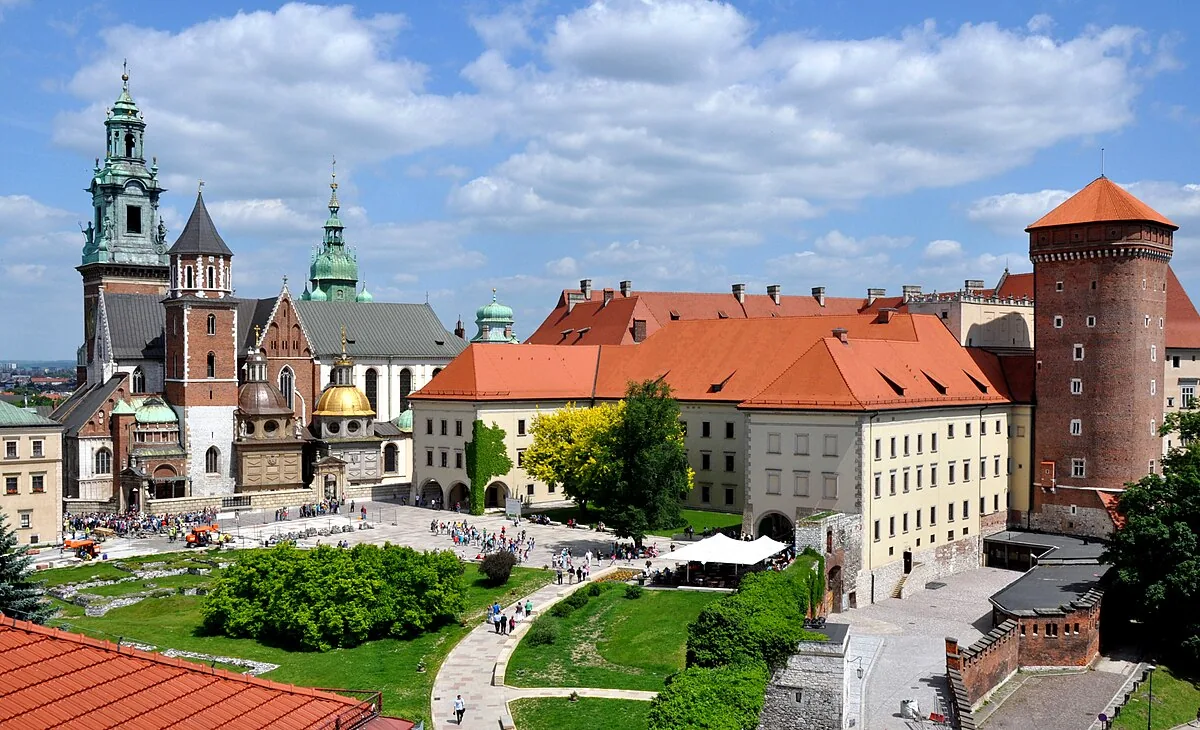
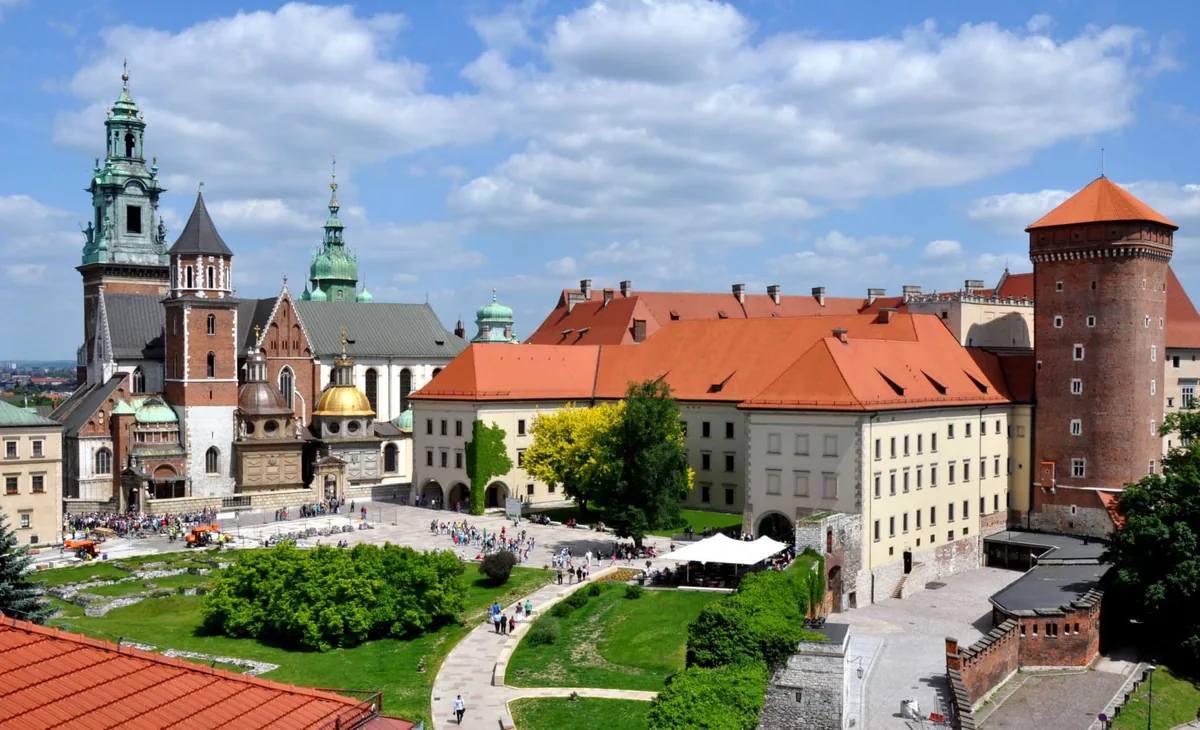
Perched on a limestone outcrop overlooking the Vistula, Wawel is the architectural autobiography of Poland. It is not a single building, but a fortified hilltop city where Romanesque, Gothic, Renaissance, and Baroque styles are stacked on top of each other like the layers of a long, complex memory. Across centuries, this was the residence of Polish kings and the site of their coronations and burials. The castle’s silhouette, dominated by the golden-domed Sigismund’s Chapel and the jagged towers of the cathedral, is the most iconic image of Krakow. It is a place of deep shadows and glittering treasures, where the air feels heavy with the weight of five hundred years of royal drama.
Perched on a limestone outcrop overlooking the Vistula, Wawel is the architectural autobiography of Poland.
History
The hill has been inhabited since the Paleolithic era, but its golden age began in the 14th century under Casimir the Great. In the 16th century, King Sigismund I and his Italian wife, Bona Sforza, transformed the medieval fortress into a magnificent Renaissance palace, bringing the best artists from Florence to create the stunning tiered arcade courtyard. Wawel remained the heart of the kingdom until the capital moved to Warsaw in 1596. After that, it suffered through Swedish invasions, Austrian military occupations, when it was used as a barracks, and the dark years of World War II, when it was the headquarters for the Nazi governor. Each era left its mark, yet the castle survived as the ultimate symbol of the Polish state's continuity.
Visiting Wawel Royal Castle
Entering the cathedral is a sensory overload of dark wood, red marble, and silver altarpieces. The room is cool and smells of incense and old parchment. The massive bones of a 'dragon' hanging by the entrance, actually prehistoric whale and mammoth bones, kept there for centuries as a magical ward. Inside the castle, the Royal Private Apartments feel surprisingly intimate, with their rare 16th-century tapestries from Arras depicting lush landscapes and biblical scenes. The highlight for many is the Sigismund Bell in the cathedral tower; touching its massive clapper is said to bring good luck. Outside in the courtyard, the light bounces off the pale stone arches, creating a space of perfect Renaissance symmetry like a piece of Italy transported to the North.
Wawel sits at the southern
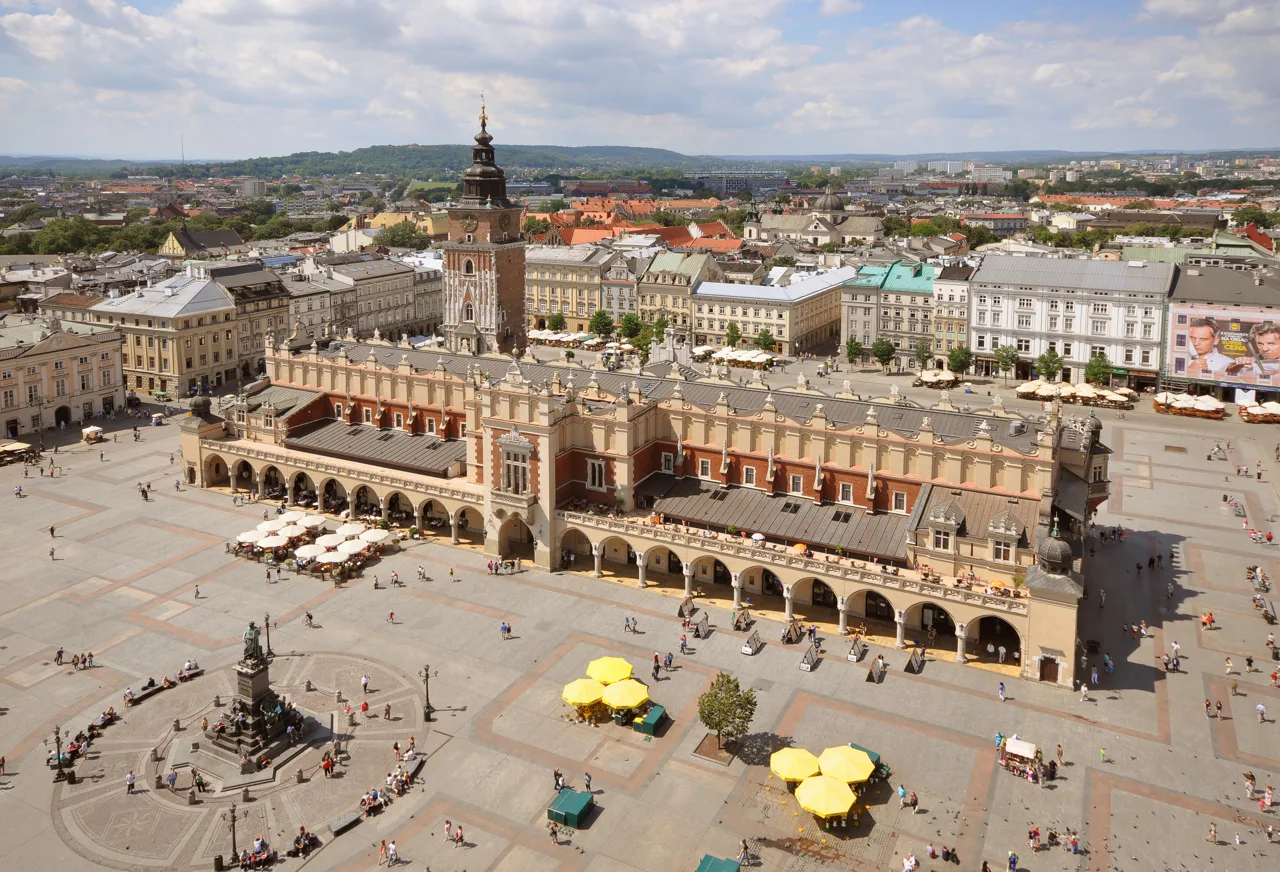
Wawel sits at the southern end of Krakow’s Old Town. It is an easy ten-minute walk from the Main Market Square (Rynek Główny) along the historic Grodzka street. The hill is accessible via two main gates: the Waza Gate and the Bernardine Gate. While the grounds are free to enter and provide some of the best views of the river, tickets for the various exhibitions, like the Royal Tombs or the State Rooms, should be purchased early in the day as they often sell out.
It is an easy ten-minute walk from the Main Market Square (Rynek Główny) along the historic Grodzka street.
The Experience
The cathedral’s bells ringing out over the river is a moment that stops you in your tracks. You discover a history in the worn stone steps of the royal chambers and the cold metal of the armor in the armory. The 'heads' of Wawel, 30 carved wooden faces looking down from the ceiling of the Envoys' Hall, each representing a different social class of the 16th century. The piece that stays with you is standing in the royal crypts, surrounded by the sarcophagi of kings, queens, and national poets, realizing that this hill is the final resting place of the Polish soul.
Why It Matters
Wawel is the most important historical site in Poland. It is a pantheon, a palace, and a fortress rolled into one. It represents the height of the Polish Renaissance and serves as a living museum of the nation’s survival. For Poles, Wawel is the tangible proof that their culture and statehood cannot be extinguished, regardless of political shifts.
Why Visit
Visit Wawel because you cannot say you have seen Poland without standing on this hill. It offers a density of art and history that rivals the Louvre or the Tower of London. From the prehistoric 'dragon’s den' at the base of the cliff to the golden domes at the top, it is a vertical route through the human experience.
✦ Insider Tips
- 1
The 'Lost Wawel' exhibition in the basement shows the remains of the 10th-century rotunda and is far less crowded than the royal apartments.
- 2
Buy a separate ticket for the Sandomierska Tower for a clear, unobstructed view of the castle’s complex rooflines and the Vistula River.
- 3
Check out the Wawel Dragon’s cave at the foot of the hill; the fire-breathing statue at the exit is a hit with kids and a quirky end to the tour.
- 4
The tapestries are light-sensitive; visit early in the morning when the rooms are quiet to truly appreciate the detail in the weaving.
- 5
The Royal Tombs are a separate entrance from the main cathedral nave; don't miss the crypt of the poet Adam Mickiewicz.