Pilgrims have been arriving at this Galician cathedral over the claimed tomb of Saint James since the ninth century, and the emotional intensity of the Plaza del Obradoiro when a Camino group completes their walk is part of the site's living reality.
About Catedral Santiago Compostela
The cathedral was begun in 1075 on the site associated with Saint James's tomb, built in the Romanesque style to rival Rome and Jerusalem as a pilgrimage destination. The current Baroque facade was added in the eighteenth century; the twelfth-century Pórtico de la Gloria inside the entrance is among the finest Romanesque sculpture in Europe.
The Cathedral of Santiago de Compostela is the destination of the Camino de Santiago pilgrimage routes, one of the most walked long-distance paths in the world. The cathedral stands over the claimed tomb of Saint James the Apostle and has been receiving pilgrims since the ninth century, making it one of the most continuously active pilgrimage sites in Christendom. The Baroque facade on the Plaza del Obradoiro, two ornate towers framing a richly carved portal, is the image most associated with the Camino's completion.
“The Cathedral of Santiago de Compostela is the destination of the Camino de Santiago pilgrimage routes, one of the most walked long-distance paths in the world.”
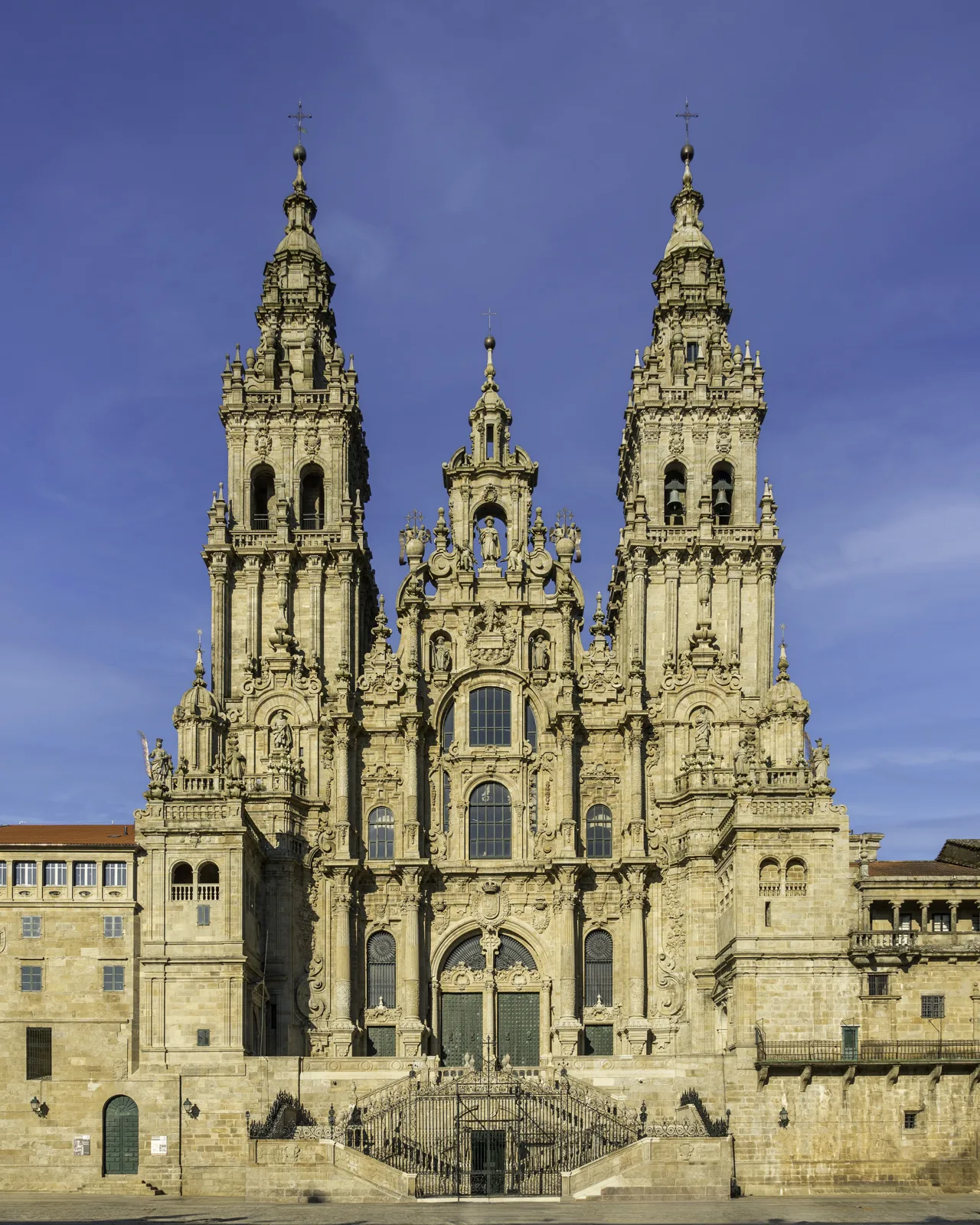
Catedral Santiago Compostela, Spain
The apostle James was reportedly martyred in Jerusalem, but tradition holds that his remains were transported to Galicia and buried here. The site became known in the ninth century through the account of a hermit guided to the tomb by a star, 'Santiago de Compostela' translates roughly as Saint James of the Field of Stars. The medieval cathedral was begun in 1075 under the patronage of Alfonso VI of León, built in the Romanesque style with the ambition of rivaling Rome and Jerusalem as a pilgrimage destination. The Baroque towers were added in the eighteenth century, giving the facade its current theatrical character.
The Plaza del Obradoiro is the arrival space for most pilgrims completing the Camino, and the emotional intensity of the square when a large group arrives, often in tears, sitting or lying on the cobblestones after weeks of walking, is a significant part of the atmosphere. The cathedral's interior follows a standard Romanesque pilgrimage plan with an ambulatory allowing pilgrims to circulate behind the high altar. The Pórtico de la Gloria, a twelfth-century carved portal inside the main entrance, one of the finest examples of Romanesque sculpture anywhere, was restored and reopened to viewing after years of conservation. The Botafumeiro, a massive silver thurible swung on a rope across the transept during special masses, is operational several times a week.
Santiago de Compostela has an international airport with connections across Europe. High-speed AVE trains connect from Madrid in approximately two hours twenty minutes. The city center is compact and fully walkable.
“Santiago de Compostela has an international airport with connections across Europe.”
The Experience
Arrive via the Plaza del Obradoiro to absorb the pilgrimage atmosphere, study the Pórtico de la Gloria's restored Romanesque carvings, attend a mass featuring the Botafumeiro thurible swung across the transept, and walk the pilgrimage ambulatory behind the high altar.
Why It Matters
The destination of the Camino de Santiago and one of Christendom's three great medieval pilgrimage sites, continuously active for over a thousand years.
Why Visit
The Pórtico de la Gloria, a twelfth-century carved portal of extraordinary quality, justifies the visit entirely apart from the pilgrimage context. The combination of the sculpture with the emotional weight of the plaza makes Santiago one of Spain's most affecting sites.
Insider Tips
- 1
Botafumeiro masses occur on specific days and feast days, check the cathedral schedule online before planning your visit.
- 2
The Pórtico de la Gloria requires a separately timed ticket; book it through the cathedral website in advance.
- 3
The roof tour gives a view from above the Baroque towers and over the city, worth the additional ticket cost.
- 4
The pilgrim office near the cathedral issues the Compostela certificate, the queue is long but the process is efficient.